

World News
Saudi Arabia, Turkey and Pakistan Hold High-Level Talks With Iran Amid Rising Regional Tensions
Senior officials meet in Tehran to discuss regional security as Houthi attacks escalate, while Egypt approves sending troops to Saudi Arabia
- Yuval Aviv
- | Updated
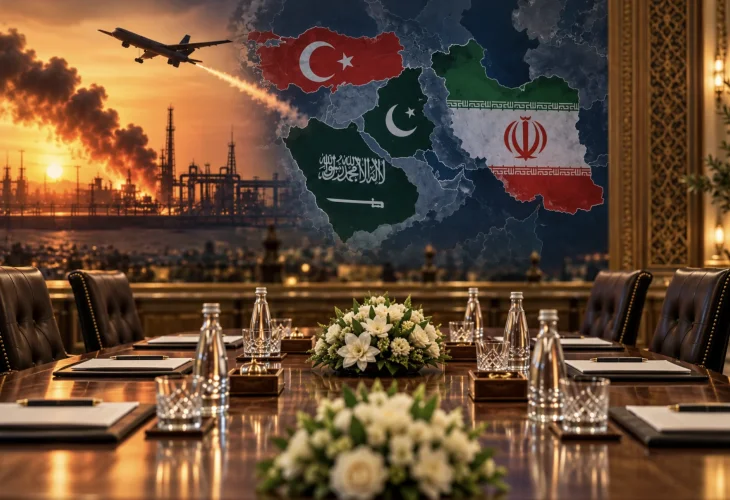 Illustration
Amid escalating tensions in the Middle East, senior representatives from Saudi Arabia, Turkey, and Pakistan met with Iranian leaders in Tehran on Monday. According to Reuters, the meeting was intended to explore ways to ease the regional crisis as tensions between Iran and the United States intensify and concerns grow over the possibility of renewed military action against Tehran.
The delegation includes Saudi Defense Minister Khalid bin Salman, brother of the Saudi crown prince; Pakistan's army chief, Field Marshal Asim Munir; and Turkish intelligence chief Ibrahim Kalin, a close associate of President Recep Tayyip Erdogan. The three officials are holding discussions with Iran's Supreme National Security Council. Ali Bagheri Kani, deputy secretary of the council, confirmed the visit on Iranian state television.
First High-Level Meeting With Members of the Mecca Alliance
This marks the first meeting at this level between Iran and the three countries belonging to the Mecca Alliance. Established in August, the alliance is based on a mutual defense agreement under which an attack on one member is considered an attack on all. The agreement calls for the use of "all necessary means" to protect member states' sovereignty and borders. Pakistan has already ratified the agreement, while Turkey's ratification process remains underway.
Earlier this month, officials in Riyadh agreed on preparations for the rapid deployment of forces to Saudi Arabia. However, neither Turkey nor Pakistan has yet launched a military response to Houthi attacks.
Iranian Foreign Ministry spokesman Esmaeil Baghaei said the talks would address "Israel's expansionist policies, developments in the Palestinian territories and Lebanon, and the consequences of US and Israeli military action against Iran." He added that the meeting could lay the groundwork for new regional security mechanisms.
Houthi Attacks on Saudi Arabia Expected to Dominate Discussions
Despite Iran's public statements, one of the main issues expected to arise during the discussions is Houthi military activity against Saudi Arabia.
According to The Wall Street Journal, Saudi soldiers and officers have been killed in attacks in Yemen. On Monday morning, the Houthis claimed to have struck pumping stations along Saudi Arabia's East-West oil pipeline using drones. The pipeline had reportedly already been shut down following an earlier attack. Saudi authorities have not yet confirmed the latest claim.
Egypt Approves Military Deployment to Saudi Arabia
Meanwhile, Egypt's parliament approved the deployment of Egyptian forces to Saudi Arabia on Monday to help the kingdom respond to Houthi attacks.
The decision followed a request submitted by President Abdel Fattah el-Sisi and Egypt's security establishment, according to parliamentarian Mostafa Bakry, who is considered close to the government. Bakry announced the decision in a post on X.
Earlier, Bakry also addressed the threat posed by the Houthis to the Suez Canal, emphasizing that Egypt would not tolerate any threat to its national security or freedom of navigation in the region.
"The Suez Canal will not remain hostage to a proxy that we know is an instrument of Iran, while they [the Houthis] demand that Egypt compromise its security because of their malicious objectives," he declared.
"Everyone must understand that Egypt's security is Saudi Arabia's security, and vice versa."

