

Personal Stories
From Chabad Emissary to Dance Instructor: A Journey of Faith and New Beginnings
After seven years running a Chabad House in Sri Lanka, Mushka Medanchik returned to Israel with five children, two suitcases, and an uncertain future. Discover how an unexpected setback led her to rediscover her passion for dance and inspire other women to embrace joy and confidence.
- Michal Arieli
- | Updated

When Mushka Medanchik arrived in Sri Lanka approximately 13 years ago, she was just 21 years old, with a nine-month-old baby in her arms. “My husband and I were offered the opportunity to serve as Chabad emissaries in this remote country, and we decided to take the plunge,” she recalls. “We went into it almost blindly. We didn't ask what would happen or how we would manage because we believed that Hashem would take care of the rest.”
Looking back, Mushka realizes just how significant that decision was. “We were diving into very deep waters. Sri Lanka is a fascinating country with breathtaking scenery, but life there bears almost no resemblance to life in Israel.”
Mushka began her new life in the small Chabad House they established, spending much of her time preparing meals, caring for her children, and welcoming Jewish travelers into her home. Visitors were treated not merely as guests but as members of the family.
Life at the Edge of the World
“Our Chabad House wasn't particularly large, but it was intimate, warm, and welcoming,” Mushka explains. “Unlike many Chabad Houses around the world, where travelers stop by briefly or come for a meal, people often stayed with us overnight. They would eat, rest, and recover from their journeys. It was almost like a roadside inn.”
How did you cope with the difficult living conditions in a developing country?
“It might surprise people, but although Sri Lanka sounds like an extremely primitive place, we lived in Colombo, the capital, which is relatively developed. I even gave birth to three of my children there, in a private hospital, where I received reasonably good medical care.”
“Of course, it was still a developing country, but we had electricity and running water. We also had an old, unreliable car that helped us get around. And no, we weren't driving along dirt tracks—we actually had paved roads!”
For an observant Jewish family, however, everyday life presented significant challenges, particularly when it came to food. “We couldn't eat most locally available foods, apart from fruits and vegetables. My husband learned shechitah, ritual slaughter, so we could have kosher poultry. If we wanted milk, we had to milk cows ourselves and prepare our own cheese and butter.”
“Naturally, our children were homeschooled. Occasionally, volunteers from Israel would come to help, but that was a luxury we couldn't always count on. There were stretches when we spent months entirely on our own.”
The greatest challenge, Mushka admits, was the loneliness. “I'm a very sociable person. Whenever I watched visitors arrive and then move on, I felt a pang of sadness. Everyone came to us, received so much, and continued with their lives. But I was still there, at the edge of the world, so far away from everything familiar. The loneliness was very real, and it was incredibly difficult.”
Leaving Sri Lanka Behind
Mushka and her family spent seven years in Sri Lanka and would have been willing to remain even longer. Then the COVID-19 pandemic changed everything.
“Like everyone else, we initially had no idea how serious the virus would become or how completely it would bring the world to a standstill,” she recalls. “So we stayed where we were and tried to manage.”
During that period, the family experienced what Mushka describes as extraordinary instances of Divine Providence. “One time, a shipment of matzah was sent to us by air, but it couldn't be delivered because the airport had closed. Just three hours before the holiday began, the police granted special permission, and customs and postal workers were called in specifically to get the matzah to us.”
“On another occasion, we somehow managed to locate a Jewish woman who was living with her Sri Lankan husband and suffering terribly. We were able to rescue her under remarkable circumstances. We had many other extraordinary experiences. Throughout our years there, and especially during the pandemic, we witnessed what we saw as tremendous miracles, Heavenly assistance, and personal Divine Providence.”
But Mushka believes the greatest miracle occurred when the family decided to return to Israel. “After Pesach, when we realized that the pandemic wasn't going away anytime soon, we knew we had to get on a plane as quickly as possible. The last flights were leaving Sri Lanka, and we desperately wanted to catch one. But our youngest son, who had been born just a month before the pandemic began, didn't have a passport.”
The couple had applied for his passport immediately after his birth, but the outbreak of COVID-19 had led to widespread office closures, leaving them with no way to receive the document. “Then, completely unexpectedly, I found an envelope outside our front door. Inside was the baby's passport. To us, it was a miracle from Heaven. We immediately packed two suitcases, left behind our furniture and personal belongings, and headed for Israel.”
When a Dream Seems Out of Reach
Returning to Israel was far more difficult than Mushka had anticipated. “The world had moved on while we were away,” she explains. “And because the pandemic was raging, there was no real opportunity for us to establish ourselves or become involved in anything.”
“At first, we lived in a quarantine apartment with five small children. We couldn't even go outside to see the daylight. And even after quarantine ended, things didn't get much easier. We felt like strangers, completely disconnected from everything around us. All our belongings were still in Sri Lanka. After everything we had built over seven years, we had returned with just two suitcases. We had practically nothing.”
Amid the uncertainty, Mushka began thinking about something she had always loved: dancing. She had been passionate about dance for years and hoped it might offer her a way forward.
“I knew there was going to be a large Chabad women's convention that summer, so I gathered my courage and contacted the organizer. I introduced myself, explained that I'd been dancing for years, and asked whether I could perform. She asked me to send a video of myself dancing. I was incredibly excited. I cleared some space in the tiny apartment where we were staying, practiced, filmed myself, and sent her the recording. And then I heard absolutely nothing.”
Mushka pauses, taking a deep breath. “That silence really hurt,” she admits. “I remember calling my sister and telling her, 'Not everyone gets the opportunity to fulfill their dreams.' I told her how hopeless everything felt. 'I'm 28 years old, I have five children, no money, and no job. And now it seems I won't even have the chance to fulfill my dream of dancing.'”
Her sister, a practical woman, offered a straightforward suggestion: “If you want to pursue your dream and dance professionally, then go study and get proper training.”
But Mushka's confidence had taken such a blow that the idea seemed almost impossible. “After what I perceived as that rejection, my self-confidence was at rock bottom. I couldn't imagine going back to school. But Hashem had other plans for me. That very same day, I received an email from a dance school inviting me to a webinar about a professional training program.”
Mushka attended the introductory session and decided to enroll, despite the daunting tuition fee of 13,000 shekels. “At the time, that amount seemed completely beyond our means,” she recalls. “But I took the leap and began studying.” Before long, she was offering dance classes, workshops, and group dance sessions for women. The dream she had almost abandoned was finally becoming a reality.
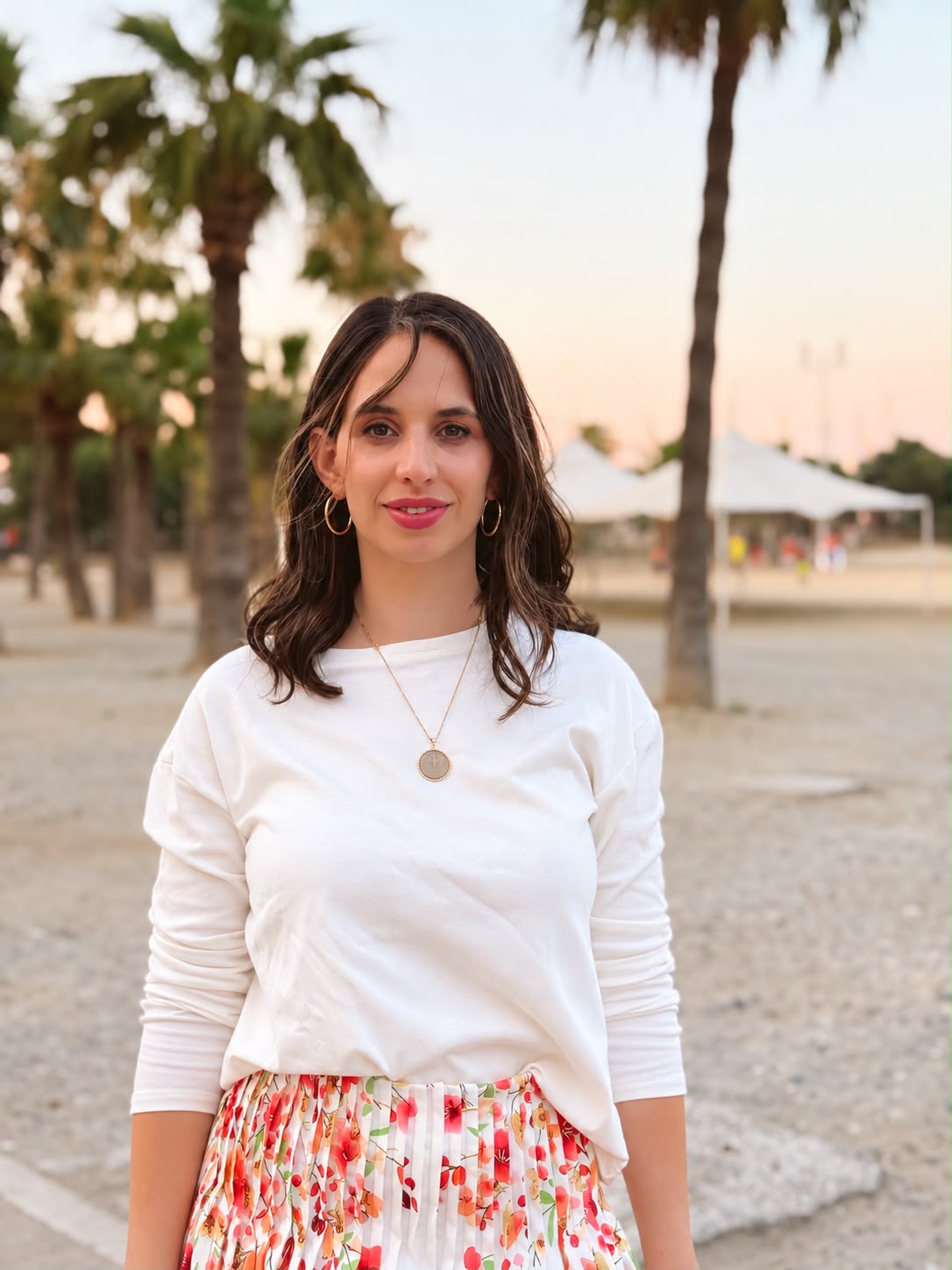
Dancing Her Way to a New Beginning
Today, five years later, dance has become much more than Mushka's profession. It is a means of self-expression, personal growth, and helping other women discover their own strengths.
“I've realized that, first and foremost, I'm a woman who wants to live joyfully, be a good wife to my husband, and be a happy, calm mother to my children,” she explains. “I've also trained as a personal coach, and today I mentor women, helping them connect with their inner strength and learn how to live more joyful lives.”
“I combine dance, mindset work, and meaningful discussions that challenge the way women think about themselves and their lives. I believe we have the power to influence our own emotional state and become stronger, more vibrant, and, most importantly, happier.”
Mushka now lives in Rishon LeZion and travels throughout Israel to lead dance events and workshops. Sometimes she serves as a dance instructor, sometimes as a mentor, and often she combines both roles.
Her journey has also brought an unexpected moment of closure. “At one of the events where I was invited to lead a session, I met the choreographer in charge. I suddenly realized that she was the same woman who had never responded to the dance video I sent when I wanted to perform at the Chabad women's convention.”
“For a moment, I felt that old sting of rejection. But then I gathered myself, walked over to her, and said, 'I just want you to know that because of your rejection, I've become the person I am today.'”
The choreographer looked completely surprised. “But I never rejected you!” she replied. “I simply overlooked your video and forgot about it.”
“To this day, I'm amazed by the Divine Providence of it all,” Mushka says. “What I had experienced as rejection became the very thing that pushed me to pursue professional training and develop my passion into a career.”
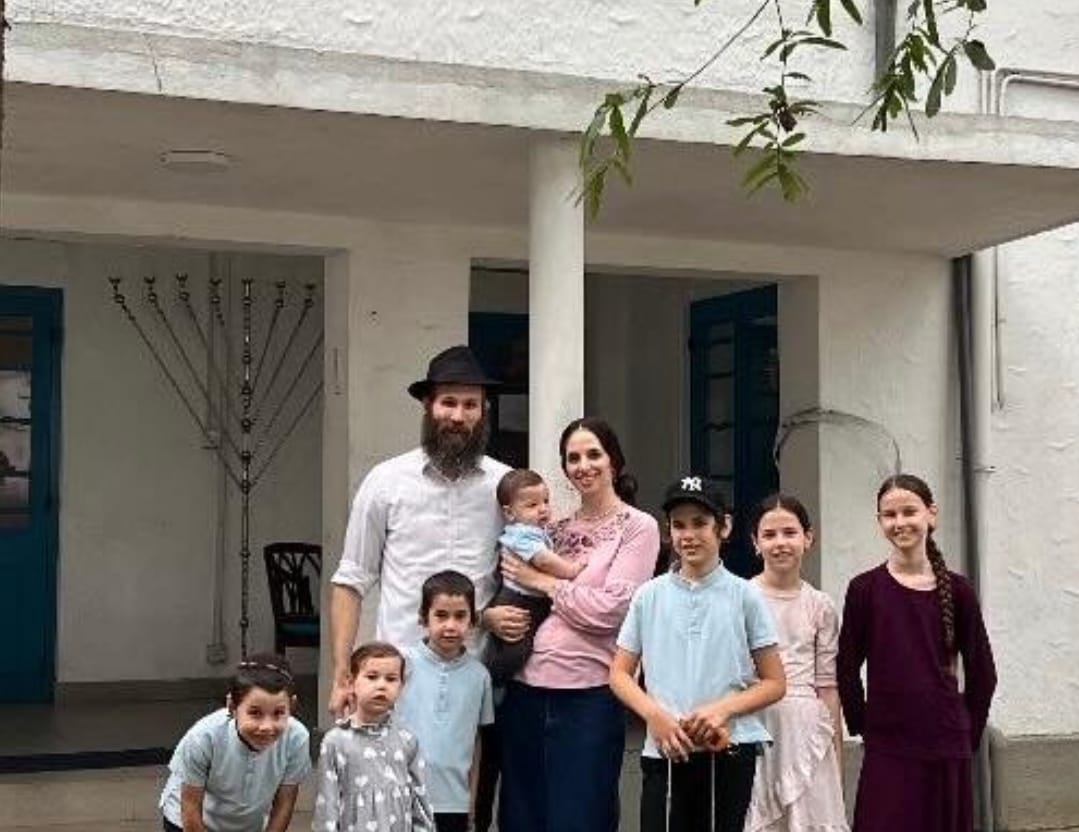 Mushka with her family visiting the Chabad house
What is it about dance that helps women reconnect with themselves?
“Movement itself is a powerful tool for releasing tension and breaking through emotional barriers,” Mushka explains. “When a woman allows herself to move freely, she often goes home feeling lighter, more connected to herself, and better able to listen to her inner voice.”
“In a sense, dance provides a shortcut to greater self-awareness. Instead of simply learning about emotions or analyzing everything intellectually, movement allows women to experience those ideas physically. That can create a powerful sense of emotional release and healing.”
What about women who insist they simply don't enjoy dancing?
Mushka understands their hesitation but believes there is often more beneath the surface. “In many cases, it isn't really that they don't connect with dance. It's that they're afraid of being judged. Many women feel embarrassed. They're uncomfortable being seen, or they're trying to hide aspects of themselves that they don't particularly like.”
“But the truth is, you don't need professional training or special talent to enjoy dancing. The whole point is to let go. Dance like King David, who danced before Hashem with all his strength. Or dance like a little child who moves with complete freedom, without a trace of self-consciousness or self-criticism.”
“In my dance sessions and workshops, women learn to set aside their masks for half an hour or forty minutes. They give themselves permission to stop worrying about how they appear, surrender to the music and movement, and simply be free.”
For Mushka, the journey from a remote Chabad House in Sri Lanka to leading dance workshops across Israel has become a powerful lesson in faith, perseverance, and the unexpected ways life can unfold. What once seemed like a devastating rejection ultimately opened the door to an entirely new chapter.
And through dance, she now hopes to help other women discover the same freedom, confidence, and joy that she has found in her own life.

