

World News
Iran Threatens Retaliation Beyond Middle East as US Weighs New Military Strikes
Tehran warns of a wider military response as Trump reportedly considers renewed strikes against Iran. Regional powers intensify diplomatic efforts to prevent war, while Israel reviews emergency preparedness in schools.
- Shlomi Diaz
- | Updated
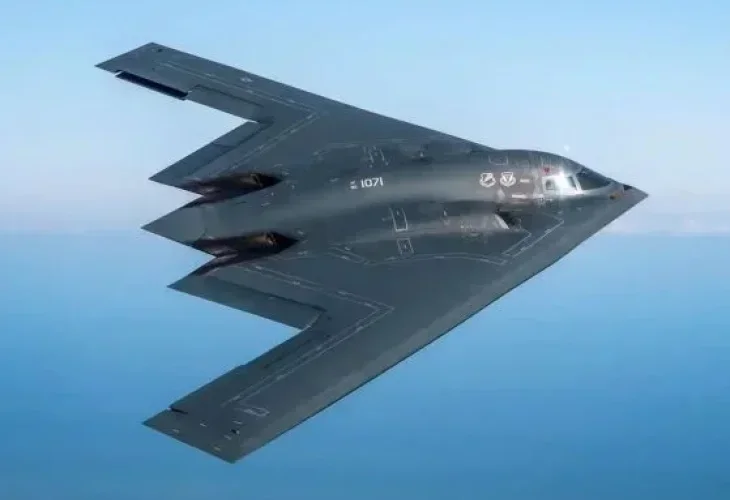 American B-2 bomber (Photo: Senior Airman Joel Pfiester - US Air Force)
Iran has warned that its armed forces are prepared to respond to any renewed American military action, potentially extending their retaliation beyond the Middle East, as diplomatic efforts intensify to prevent another regional conflict.
Iranian military spokesman General Mohammad Akraminia said Sunday evening that "Iran's armed forces are prepared to respond to any new American aggression, even beyond West Asia." Meanwhile, Mohammad Mokhber, an adviser to Iran's Supreme Leader Mojtaba Khamenei, announced a shift in Tehran's defense strategy, signaling that Iran could retaliate against threats regardless of their geographical origin.
"Iran's defense doctrine is undergoing rapid changes," Mokhber wrote on X. He explained that the geographical location of a threat would no longer determine where Iran chooses to respond. According to Mokhber, Tehran's deterrence strategy now extends beyond the region, and neither the source of a threat, its scope, nor the location where it materializes would necessarily limit Iran's military response.
A social media account affiliated with Khamenei also published an image of a stopwatch under the headline "If the Enemies Decide to Act." The accompanying message warned that if Iran's adversaries resumed military attacks or acts of terrorism, the Islamic Republic's armed forces would determine when and under what conditions those attacks would end.
Separately, Iran's Fars News Agency reported that Captain Nasser Ebrahimi-Nezhadan was killed in a U.S. strike in the Persian Gulf on Friday.
Diplomatic Efforts Intensify to Prevent Renewed Fighting
Amid growing concerns over a possible escalation, Egypt has stepped up diplomatic contacts with Tehran and Washington, coordinating closely with Qatar, Turkey, and Pakistan in an effort to prevent renewed hostilities.
Iranian Foreign Minister Abbas Araghchi addressed the negotiations Sunday evening, saying discussions between the Iranian delegation and mediators in Qatar were continuing over a proposed two-day framework. He indicated that progress was being made toward implementing the proposal but emphasized that no final agreement had been reached. According to Araghchi, the success of the initiative depends on the other side's responses to questions raised by Iran.
Anwar Gargash, diplomatic adviser to UAE President Mohamed bin Zayed Al Nahyan, said Sunday that the United Arab Emirates opposes another war with Iran but is prepared for the possibility of renewed military escalation.
"We do not want to see another round of fighting in the Gulf region. We would prefer a diplomatic and political agreement," Gargash said at a conference in Bahrain. "However, we are also prepared for the worst-case scenario and are ready to do whatever is necessary to protect our country, our citizens, and our achievements."
Gargash emphasized that the Gulf states, particularly the UAE, are demanding a return to the conditions that prevailed in the Strait of Hormuz before the outbreak of war with Iran. Describing the strait as a vital route for international trade and energy supplies, he argued that Gulf nations should not be forced to bear the consequences of a crisis they did not create.
Trump Reportedly Considers Further Military Action Against Iran
The developments follow reports Saturday that U.S. President Donald Trump warned Gulf countries about the possibility of another military campaign against Iran following the congressional midterm elections scheduled for Tuesday, November 3.
According to the reports, Washington is considering a limited but intensive military operation against Iran. However, no official decision has been announced regarding whether an attack will take place or when it might begin.
Israel Reviews Emergency Preparedness in Schools
In Israel, the Ministry of Education announced Sunday that it had instructed educational institutions to review and update their emergency preparedness procedures. The directives include refreshing emergency protection protocols among educational staff, updating contingency plans, and checking the readiness of designated protected spaces.
The ministry stressed that the measures are part of an ongoing process of preparedness and lessons learned, rather than a response to any new security development. Officials emphasized that there has been no change to public safety instructions or the regular school schedule, and educational institutions will continue operating as usual.

