

Jewish Law
What Blessing Do You Say on Pizza? Jewish Laws of Food and Free Will
Rabbi Ovadia Yosef's halachic guidance on when to recite Hamotzi or Mezonot over pizza, cakes, and pastries, along with the Jewish perspective on free will and personal responsibility
- Hidabroot
- | Updated
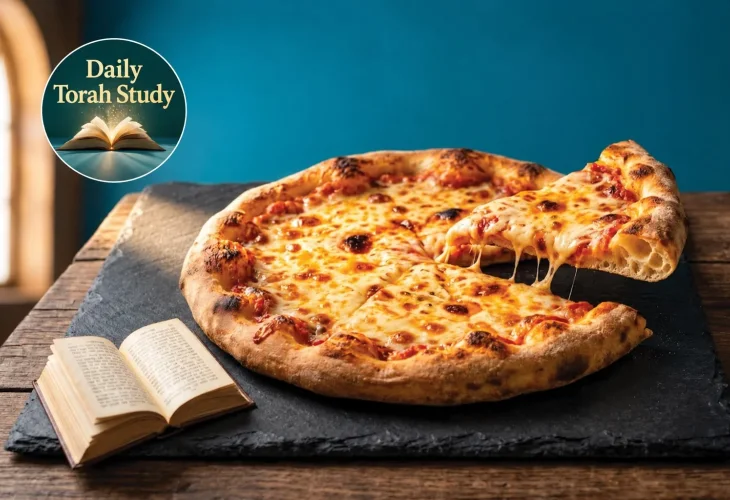
Two daily halachot from Behalachah UbeAggadah, based on the rulings of Rabbi Ovadia Yosef.
What Blessing Is Recited Over Cakes and Pastries?
Our Sages teach (Berachot 42a) that the blessing over pat haba'ah b'kisnin—a category of baked goods that includes certain cakes, pastries, and crackers—is Borei Minei Mezonot.
Three interpretations are given for the term kisnin:
Filled pastries: Dough shaped into pockets and filled with sweet ingredients such as honey, nuts, almonds, or similar fillings.
Sweetened or enriched dough: Dough prepared with flour mixed with honey, oil, fruit juice, sugar, spices, or similar ingredients.
Dry, crisp baked goods: Dough baked until it becomes dry and crunchy, such as pretzels and savory crackers.
Because of the uncertainty surrounding these interpretations, the blessings recited over cakes are generally Mezonot before eating and Al Hamichyah afterward.
What Blessing Is Recited Over Pizza?
The blessing over pizza commonly sold in stores today is Hamotzi, whether the dough is prepared with water or milk. A G-d-fearing person should not automatically rely on signs displayed in pizzerias claiming that the blessing over their pizza is Mezonot.
Similarly, even when a pizza package bears a recognized kosher certification and states that the blessing is Mezonot because the dough was prepared with fruit juice, that declaration alone is insufficient. One should taste the dough separately to determine whether the appropriate blessing is Mezonot or Hamotzi.
However, when ingredients such as cultured milk, cream, or sugar are mixed into the dough and their flavors are noticeable, the blessing over such pizza is Mezonot.
Anyone who takes the observance of halachah seriously should carefully consider which blessing applies before eating pizza. Sometimes, the desire to avoid washing one's hands before eating bread or reciting Birkat Hamazon afterward can influence the decision. An individual may convince himself that the appropriate blessing is Mezonot, even when halachah clearly requires Hamotzi beforehand and Birkat Hamazon afterward.
Today's Jewish Concept: Free Will
Free will is one of the fundamental principles of Jewish faith. It refers to the freedom granted to every individual to make choices regarding their actions, thoughts, and moral conduct.
According to Jewish belief, although Hashem knows everything in advance—"Everything is foreseen"—human beings retain the freedom to choose between good and evil—"Yet freedom of choice is given" (Pirkei Avot 3:15).
This principle gives profound meaning to the entire system of mitzvot. Without genuine freedom of choice, there would be no basis for reward and punishment, no meaningful concept of teshuvah (repentance), and no personal moral responsibility.
Free will enables every individual to take responsibility for their actions, improve their character, and participate in the ongoing work of perfecting themselves and the world.

