

Israel News
Herzog Invites Party Leaders for Coalition Talks to Avoid New Elections
President Isaac Herzog invites Knesset factions for coalition consultations, urging party leaders to compromise and prevent another Israeli election.
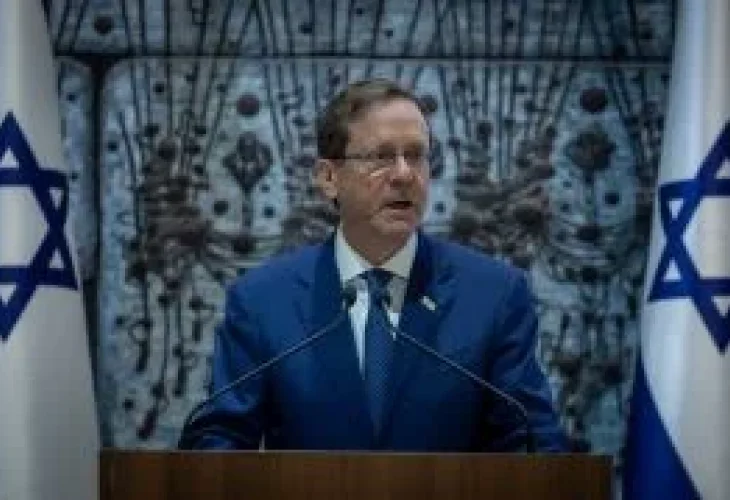 Herzog (Photo: Oren Ben Hakoon, Flash90)
The director general of the President's Residence, Eyal Shviki, sent invitations to representatives of Israel's Knesset factions on Sunday evening, ahead of consultations to determine who will receive the mandate to form the next government.
“The President's Residence is wide open to all the factions, and the president expects their representatives to come to the consultations with an open mind, ready to listen and to put forward ideas, and to prevent another election,” Shviki said.
President Isaac Herzog is expected to receive the official election results on Monday from Central Elections Committee Chairman Justice Noam Sohlberg. He will then begin consultations with representatives of the political parties to determine which Knesset member has the best chance of forming a government.
Earlier Sunday, Herzog urged party representatives to approach the discussions with an open mind and an open heart, emphasizing the importance of finding a solution that would prevent Israel from heading to another election.
Referring to the political positions and promises made during the election campaign, Herzog called on party leaders to set aside their differences and consider possible compromises.
“During an election campaign, naturally and predictably, the candidates climb up tall trees. But the election is over. And this is the time to tell all the leaders: Stop climbing the trees and face this reality. This week, at the President's Residence, we will try to set up ladders.”
Under Israeli law, the president has one week to complete consultations, select a candidate, and formally assign the task of forming a government. The deadline for doing so is November 11.
The first Knesset member entrusted with the mandate will have 28 days to form a coalition and present a government. The president may grant an extension of up to 14 additional days.
If the candidate fails to form a government within that period, the president has two options.
The first is to assign the mandate to another Knesset member, potentially a candidate from the opposing political bloc. That person would have 28 days to form a government, with no possibility of an extension.
Alternatively, the president may announce that he sees no viable path to forming a government.
In that case, a 21-day period begins during which at least 61 members of Knesset can submit a written request asking the president to assign the mandate to a specific Knesset member. If such a request is submitted, the chosen candidate receives 14 days to form a government.
If all these attempts fail and no government is formed, the 26th Knesset will automatically dissolve, triggering another round of elections.
Herzog's upcoming consultations will therefore be a crucial step in determining whether Israel's political parties can reach an agreement on a governing coalition or whether the country will face another election.

