

World News
Democrats Seize Control of Congress in Midterm Elections, Dealing Major Blow to Trump
A sweeping Democratic victory reshapes Washington's political landscape, threatening to derail Trump's legislative agenda and raising questions about the future of U.S. policy toward Israel and Iran
- Yuval Aviv
- | Updated
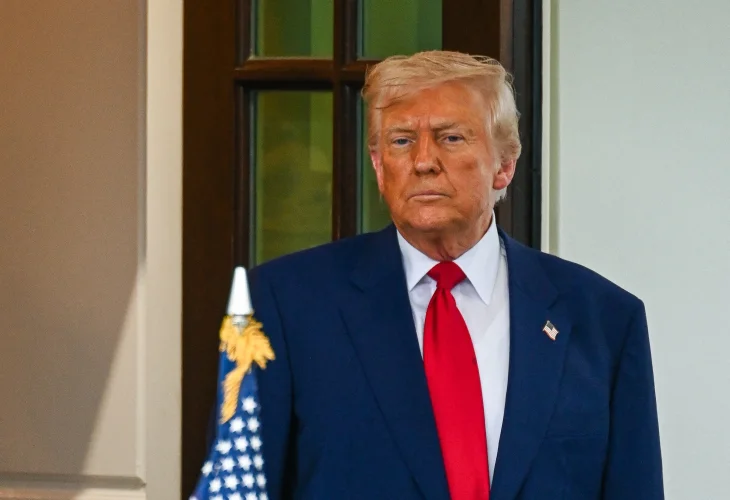 Trump (Photo: Liri Agami, Flash90)
U.S. President Donald Trump suffered a major political setback as the Democratic Party secured control of both chambers of Congress on Wednesday morning following a sweeping victory in the midterm elections. Although vote counting has not yet concluded, American media outlets have projected that Republicans no longer have a path to securing a majority. The outcome, described as a "blue tsunami," is expected to significantly restrict Trump's ability to advance legislation during the final two years of his presidency.
The Democratic gains extended into states traditionally considered Republican strongholds. In South Carolina, Annie Andrews defeated Darline Graham, the sister of the late Senator Lindsey Graham. In Texas, James Talarico became the first Democrat to win a U.S. Senate race in the state since 1988, while Kansas recorded its first Democratic Senate victory in 94 years. Overall, Democrats flipped seven Republican-held Senate seats, securing at least 54 seats compared with 42 for Republicans.
How Democratic Control of Congress Could Affect Trump's Presidency
Democratic control of both chambers is expected to create substantial obstacles for Trump during the remaining two years of his presidency, ahead of the 2028 presidential election. Having lost the Republican majority in Congress, the president will now face an opposition with considerable power to obstruct his legislative agenda and scrutinize his administration.
Democrats will be able to block legislation promoted by the White House, demand concessions during negotiations over the federal budget, and launch congressional investigations into administration officials. The shift in power is likely to intensify political confrontations in Washington and limit the president's ability to advance major domestic initiatives.
What the Election Results Could Mean for Israel
The change in congressional leadership is also expected to draw considerable attention in Israel. Democratic control of committees responsible for foreign affairs, defense, and appropriations could affect discussions concerning U.S. military assistance to Israel, the approval of arms deals, and the delivery of weapons and ammunition.
Democratic lawmakers may seek stricter oversight of how American weapons are used and introduce additional conditions during negotiations over military aid. At the same time, they are expected to increase pressure on the administration regarding its policy toward Iran, particularly concerning the use of military force and the continuation of diplomatic efforts.
Although primary responsibility for foreign and national security policy will remain with the president, Democratic control of Congress will give the party greater influence over the political and public debate surrounding these issues.
For Israel, the election results could create a more complicated diplomatic environment in Washington. Israeli officials will need to maintain close relations not only with the Trump administration but also with Democratic congressional leaders whose positions on regional and security issues may differ from those of the White House. This division could present new challenges at a time when important decisions are being made concerning Iran, military assistance, and the future of U.S.-Israel relations.
Trump Responds to the Republican Defeat
Trump sought to distance himself from the election results, writing on Truth Social: "I wasn't on the ballot, and if I had been, we would have won a landslide!" His remarks came despite his repeated appeals during the campaign for Republican supporters to vote as though he himself were a candidate.
The president subsequently congratulated Democrats on their victory and expressed a willingness to cooperate, while warning that he would veto legislation he considered "crazy." He suggested that after several months of political confrontation, both sides would eventually be forced to reach agreements.
Trump also acknowledged that the war with Iran, which contributed to rising fuel prices, had played a role in the Republican defeat. Nevertheless, he defended his decision, declaring: "I did the right thing. I would do it again."
Iran Welcomes the Democratic Victory
In Tehran, Iranian officials celebrated the election results, portraying the Democratic victory as a rejection of Washington's military confrontation with Iran.
Iranian Parliament Speaker Mohammad Bagher Ghalibaf declared: "The American people said no to war with Iran, and we support that message." He also issued a warning to the U.S. administration against continuing the confrontation, stating: "If the American administration serves international extortionists, it will learn that our 'no' comes with a nightmare."
The election results mark a significant shift in Washington's political balance, raising the prospect of two years of legislative gridlock, heightened congressional oversight, and renewed debate over American foreign policy, particularly regarding Israel and Iran.

