

Israel News
Israel Approves Official Election Results Despite Likud Objections
Israel's Central Elections Committee approved the official results of the 26th Knesset elections after reviewing more than 9,000 ballot boxes, despite concerns raised by Likud.
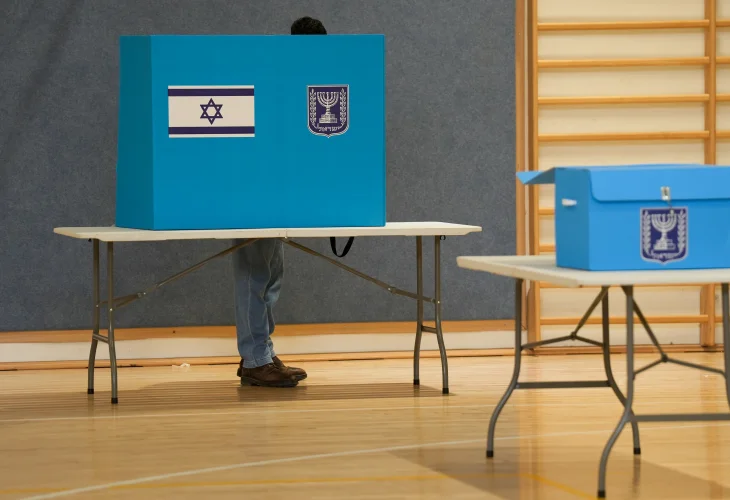 (Photo: Eyal Margolin, Flash90)
Israel's Central Elections Committee officially approved the results of the elections to the 26th Knesset on Wednesday, despite concerns raised about possible voting irregularities and objections from some members of Prime Minister Benjamin Netanyahu's Likud party.
The results were approved with the support of opposition representatives, while representatives of Likud and Shas abstained from the vote.
The decision followed an extensive review of the election results, during which the committee said it found no evidence of irregularities that would undermine the integrity of the voting process or alter the final outcome.
Ahead of the vote, Likud lawmaker Amit Halevi announced his resignation from the Central Elections Committee, saying he could not participate in certifying the results while questions surrounding the election remained unresolved.
Halevi also criticized Likud's decision to abstain rather than vote against approving the results, arguing that the outstanding suspicions warranted a stronger response.
The committee's decision followed a large-scale election oversight operation conducted between October 28 and November 3, involving the examination of thousands of polling station records and complaints submitted by political parties and members of the public.
Over the six-day review period, officials examined records from 9,069 ballot boxes, representing approximately 75% of the 12,018 regular ballot boxes used in the election.
The review was significantly broader than the one conducted following the elections to the 25th Knesset, when approximately 5,100 ballot boxes were examined.
At 350 ballot boxes, officials conducted more detailed inspections of voting materials and documentation, including ballot papers and voter registries where necessary.
The committee also reviewed 2,452 inquiries submitted by political factions and candidate lists concerning 1,350 ballot boxes, along with 1,239 complaints and inquiries from the public relating to incidents at 750 ballot boxes.
Central Elections Committee Chairman Supreme Court Justice Noam Sohlberg emphasized the unprecedented scope of the review.
“As part of the election integrity operation, an unprecedented number of ballot boxes was thoroughly examined,” Sohlberg said.
He added that “the scope and quality of the operation attest to the Elections Committee's high level of commitment to reflecting the will of the voter as accurately as possible.”
The committee's acting director general, attorney Dean Livne, also stressed that every complaint had been assessed individually and that corrections were made wherever the evidence justified them.
“Every inquiry received from the factions, from the candidate lists and from the public was examined on its merits,” Livne said. “In the places where corrections were required, they were carried out on the basis of the records and the voting materials.”
With the results now approved, they are expected to be formally presented to President Isaac Herzog, marking the next stage in the process of forming Israel's new government.
Herzog will begin consultations with the political parties elected to the Knesset before deciding which lawmaker should receive the mandate to form a governing coalition.

