Interesting
Are Store Brands as Good as Name Brands? What a New Survey Reveals
A new consumer survey finds that 69% of shoppers consider store-brand products just as good as or better than name brands. Discover how to save money on groceries without sacrificing quality.
- Yitzchak Eitan
- | Updated
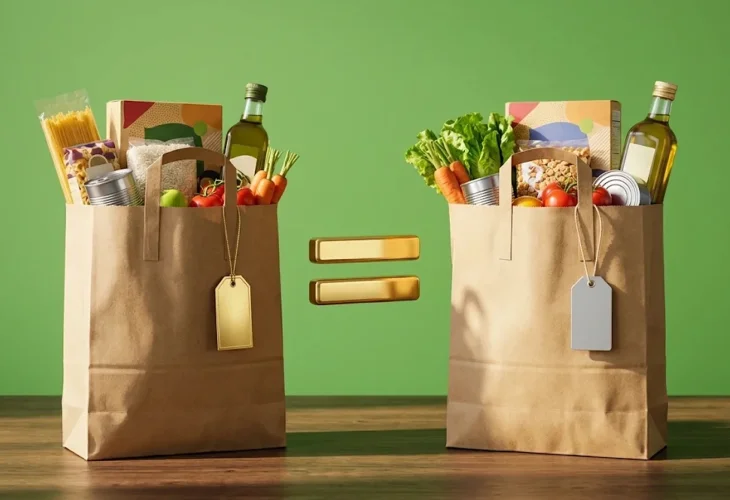
Two packages of pasta sit side by side on a supermarket shelf. One carries a familiar brand name, while the other bears the store's private label and costs considerably less. Does the lower price necessarily mean lower quality?
A new consumer survey suggests that more shoppers are choosing store-brand products over well-known national brands, and price is no longer the only reason.
More Consumers Are Choosing Store Brands
Consulting firm Alvarez & Marsal recently released its semiannual consumer survey, conducted among more than 2,000 adults in the United States. According to the findings, 84% of consumers believe store brands are less expensive than national brands, while 69% rate their quality as equal to or better than that of well-known brands. The survey also found that 71% of respondents believe store-brand products meet their nutritional needs, up from 66% a year earlier.
Chad Lusk, a managing director in the firm's consumer division, described a growing tendency among shoppers to save money on products they consider interchangeable while paying more for items where they perceive a noticeable difference in quality. These choices are often made during the same shopping trip. According to Lusk, retailers' lower-priced private labels have earned consumers' trust, making them a preferred choice rather than simply a budget alternative.
The survey also revealed a change in how shoppers plan to reduce their grocery expenses. Among consumers intending to cut food costs, 26% said they would continue buying their preferred brands but switch to a less expensive supermarket, compared with 16% the previous fall.
Which Store-Brand Products Are Worth Buying?
For shoppers looking to reduce grocery bills without compromising on quality, the first place to start is with everyday essentials. Products such as flour, sugar, rice, legumes, cooking oil, paper goods, and cleaning supplies often have relatively small differences between store brands and national brands. In some cases, both are manufactured in the same facility.
The key is to compare prices by weight or quantity rather than simply looking at the price printed on the package. Checking the unit price, such as the cost per kilogram or 100 grams, provides a more accurate comparison, particularly when package sizes differ.
The second consideration is nutritional value. When comparing processed foods such as breakfast cereals, snacks, or packaged meals, shoppers should examine ingredient lists and nutrition labels carefully. A less expensive product may contain more sugar or sodium than its branded counterpart, making the higher-priced option preferable when the budget allows.
Finally, there is a simple way to determine whether a store-brand product meets your expectations: try it. Purchase the private-label version once, and if your family notices no meaningful difference in taste, quality, or performance, consider making the switch permanent. If the product falls short, return to the familiar brand.
How Much Can Families Save by Switching?
Even replacing a handful of regularly purchased household staples with store-brand alternatives can lead to meaningful savings on weekly grocery bills. In certain cases, the very same product may be sold under two different labels: one bearing the manufacturer's established brand name and the other carrying the supermarket's private label at a lower price.
While products made by the same manufacturer are not always identical, checking ingredients, nutritional information, package sizes, and manufacturer details can help shoppers identify worthwhile alternatives.
A familiar brand name does not automatically guarantee better quality. By comparing products carefully and being willing to try lower-priced alternatives, families may be able to reduce their grocery expenses without sacrificing the products they enjoy.