

Health and Nutrition
A Healthy Weight May Not Be Enough: Study Reveals Why Waist Size Matters
A massive study of more than 17 million adults finds that waist circumference may reveal mortality risks that BMI alone misses, even among people with a normal weight
- Yitzchak Eitan
- | Updated
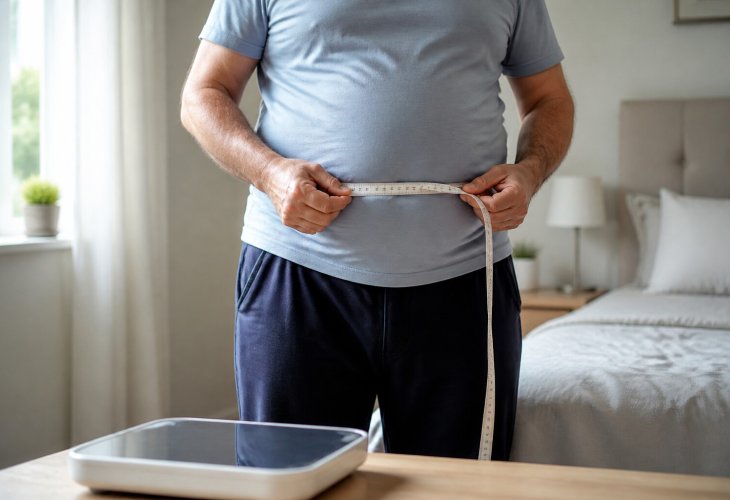
Most of us step onto the scale, check the number, and breathe a sigh of relief when it falls within the normal range. However, a large-scale study suggests that body weight tells only part of the story. What matters is not just how much we weigh, but also where fat accumulates in the body.
The study, published in a medical journal belonging to the BMJ group, was conducted by Professor Sang-Wook Yi of Catholic Kwandong University, together with researchers from Hallym University Medical Center and Yonsei University.
Study Tracks More Than 17 Million Adults
The researchers analyzed data from South Korea's National Health Insurance Service, which covers nearly the entire population. More than 17 million adults between the ages of 18 and 99 underwent routine health examinations in 2009 and 2010, during which their height, weight, and waist circumference were measured directly by healthcare professionals rather than self-reported.
The final analysis included approximately 8.9 million men and 8.3 million women, who were followed for an average of nearly 14 years. During that period, approximately 1.57 million participants died. To examine the relationship between body fat distribution and mortality, the researchers divided participants into weight categories and then grouped them according to waist circumference in 5-centimeter increments. They also accounted for factors such as age, income, smoking, alcohol consumption, and physical activity.
Why a Healthy BMI May Not Tell the Whole Story
The findings revealed that having a normal body mass index (BMI) does not necessarily indicate a lower mortality risk. Among men aged 50 to 64, those with a normal BMI and a waist circumference of 85–89 centimeters had a higher mortality risk than overweight men with a similar waist circumference.
Beyond a typical waist circumference, every additional 5 centimeters was associated with a 16% increase in mortality risk among men and a 14% increase among women. The researchers also found that both unusually large and unusually small waist circumferences were associated with higher mortality risks within each weight category.
These associations were strongest among adults aged 50 to 69 and weakest among those aged 75 and older.
What Waist Circumference Was Associated With the Lowest Risk?
The lowest observed mortality risk was associated with a waist circumference of approximately 80–94 centimeters in men and 75–89 centimeters in women. However, the researchers emphasized that these ranges represent statistical findings across a large population and should not be interpreted as individual health targets.
The results suggest that waist circumference may provide valuable information about health risks that BMI alone cannot capture. Two people with similar body weights may have different risk profiles depending on how their body fat is distributed.
Important Limitations of the Study
The researchers cautioned that the study was observational, meaning it identified statistical associations rather than establishing a direct cause-and-effect relationship between waist circumference and mortality.
Additionally, participants' measurements were taken only once, at the beginning of the study, and all participants were from South Korea. These factors may limit how broadly the findings apply to other populations.
Nevertheless, the study highlights an important consideration in assessing long-term health: A number on the scale does not necessarily provide a complete picture of a person's health risks, and waist circumference may offer additional insight beyond body weight alone.
 Health and NutritionWorld's Oldest Tortoise May Hold Secrets to Slowing Human Aging
 Health and NutritionLove Eggs? A 15-Year Study Links Them to Lower Alzheimer’s Risk
 Health and NutritionCan a Healthy Diet Slow Aging? New Study Reveals Surprising Benefits
 Health and NutritionIs Organic Milk Healthier? Surprising Benefits of Omega-3 and Pasture-Raised Dairy

