

Raising Children
When a Child Struggles at School, Is the Child Always the Problem?
Educational psychologist Dr. Tim Corcoran explains why schools often misunderstand struggling students and how empathy, connection, and acceptance can make a greater difference than punishment
- Shira Priant
- | Updated
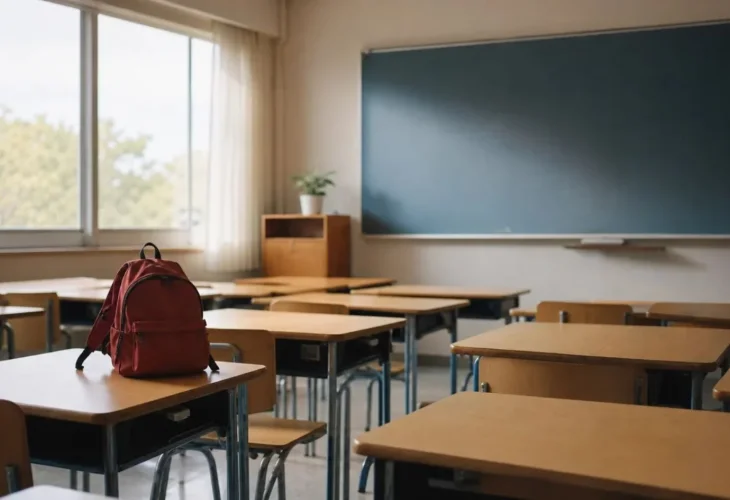
Every parent of more than one child knows that no two children are alike. Yet when children enter the school system, that fundamental truth often seems to disappear. According to Dr. Tim Corcoran of Victoria University in Australia, teachers generally recognize that every child learns differently and at their own pace. In practice, however, schools are designed to accommodate students who fit a similar mold, often struggling to support those who do not.
While the education system emphasizes inclusion and equal opportunities, it also frequently expects students to conform to the same standards of learning and behavior. This contradiction becomes particularly apparent when a child struggles to adapt, whether by falling behind academically, disrupting lessons, having difficulty following instructions, experiencing social challenges, or refusing to attend school.
Corcoran, who worked as an educational psychologist for approximately a decade, explains that teachers often have both the experience and the desire to help but face significant limitations. Heavy workloads, pressure to meet standardized testing requirements, and a shortage of professional support leave them with few resources to address individual needs. Under such circumstances, it becomes all too easy to label a struggling child as the problem.
Not Every Child Who Struggles to Fit In Needs to Be Fixed
According to Corcoran, schools find it easier to accommodate children who are similar to one another. When educators encounter students whose needs or behavior fall outside the expected pattern, the focus often shifts from understanding their differences to trying to "fix" them, placing the responsibility for change entirely on the child.
This shift in perspective can have serious consequences. Rather than recognizing a student's unique circumstances, educators may begin to view their differences as personal deficiencies. Once that perception takes hold, disciplinary measures often follow.
Corcoran recalls that nearly all the students referred to him during his years as an educational psychologist were children whose schools were already considering permanent expulsion because they had struggled to fit in.
One particularly revealing case involved Kevin, a 10-year-old fifth grader who was at risk of dropping out after several suspensions. His teachers described him as easily distracted, unable to concentrate, and constantly falling behind. His mother believed he simply disliked school, which explained why he struggled to get out of bed each morning.
Only after several weeks of conversations did Kevin reveal what was really happening. His father worked as a truck driver and was frequently away from home for weeks at a time. On the rare evenings when his father returned, Kevin desperately wanted to spend time near him. To stay awake, he would prepare himself strong black coffee with plenty of sugar in the afternoon. Later that night, he would quietly hide behind the living room sofa while his parents watched television, remaining there until well after midnight.
He wasn't trying to misbehave or avoid responsibility. He simply wanted to feel close to his father. What appeared to teachers as a lack of motivation and an inability to concentrate was, in reality, connected to a child's longing for his often-absent parent.
Why Connection Matters More Than Punishment
Corcoran emphasizes that he does not expect teachers to become psychologists. Rather, he encourages them to reconsider how they interpret and respond to students' behavior. One question he repeatedly posed to educators was whether their interactions with students, both in the classroom and during recess, were actually helping to build the relationships they hoped to establish.
That simple question often prompted educators to reconsider their approach. Instead of focusing exclusively on correcting behavior through punishment, they began recognizing the importance of building trust and understanding the circumstances behind a child's difficulties.
Kevin's story illustrates an important lesson for parents and educators alike: A child who behaves differently does not necessarily need to be changed. Sometimes, what that child needs most is someone willing to listen, understand, and respond to the needs beneath the behavior.
Schools Should Embrace Differences, Not Erase Them
Corcoran argues that the assumption that struggling students must be "fixed" to fit into the education system reveals as much about the limitations of schools as it does about the children themselves. Teachers enter the profession because they want to make a positive difference in children's lives, he explains, and there is no contradiction between helping a child grow and accepting that child for who they are.
Rather than expecting every student to learn, behave, and develop according to identical standards, schools should recognize that differences are a natural part of human development. Corcoran notes that increasing numbers of educators are beginning to question the wisdom of measuring all children against the same expectations.
When a student struggles, the solution should not automatically be to identify a personal deficiency or impose another punishment. Instead, educators can ask what the child's behavior may be communicating, what support might be missing, and whether changes in the learning environment could help the student succeed.
Ultimately, the goal of education should not be to produce children who think, learn, and behave alike, but to create an environment in which every child has the opportunity to belong and thrive. Rather than viewing children's differences as problems that need correcting, schools can recognize them as opportunities to build a more understanding, compassionate, and inclusive learning environment.
 Raising ChildrenHelping Kids With ADHD: 5 Simple Ways to Stay Organized
 Raising ChildrenTeachers: The Torah Lesson That Can Transform Your Classroom
 Raising ChildrenSchool Morning Chaos? 5 Ways to Start the Day Calm
 Raising ChildrenWhen Your Child Misbehaves at School but Not at Home: What Parents Should Do

