

Israel News
Netanyahu Calls for End to Corruption Trial as Judges Raise Serious Doubts About Key Charges
Prime Minister Benjamin Netanyahu declares his corruption trial should end immediately after judges question major charges in Cases 2000 and 4000, while prosecutors consider a possible plea agreement and mediation
- Yuval Aviv
- | Updated
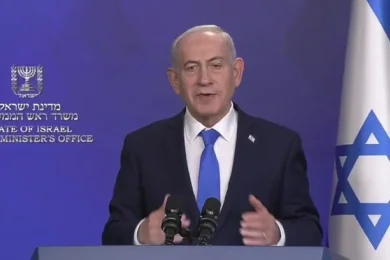
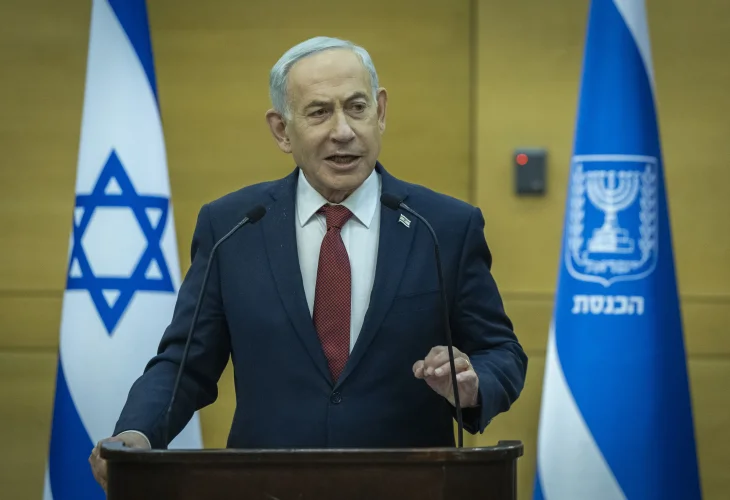 Netanyahu (Photo: Chaim Goldberg, Flash90)
Israeli Prime Minister Benjamin Netanyahu called for an immediate end to his corruption trial on Wednesday after the judges overseeing the proceedings raised significant doubts about the prosecution's case in two of the three cases against him.
"Something significant happened today. Today, the trial collapsed," Netanyahu declared in a statement at the Knesset. "A decade ago, I said, 'There will be nothing because there was nothing.' But it took ten years for this truth to become clear to everyone."
The prime minister described what he said was a decade of suffering for himself and his family, accusing those behind the investigations of attempting to manipulate public opinion and politically isolate him. He also criticized the media for what he characterized as biased coverage and argued that the legal proceedings had contributed to deep political divisions and repeated elections.
Netanyahu Calls for Unity and an End to Political Boycotts
"Citizens of Israel, this trial must end immediately," Netanyahu said, calling for an end to the hatred, incitement, and division he claimed had resulted from the proceedings. He argued that billions of shekels spent on repeated elections and extensive investigations could instead have supported military reservists, communities in northern and southern Israel, and other public needs.
Netanyahu also condemned efforts to advance legislation that would allow a prime minister to be disqualified following an indictment, describing such a measure as a tool of political elimination. Despite his accusations and the suffering he said his family had endured, he called for an end to political boycotts and extended an invitation for reconciliation to Gadi Eisenkot, chairman of the Yashar! party.
"Especially on this day, I extend my hand in reconciliation," Netanyahu said. "I know the enormous dangers facing our country, and we must unite to secure Israel's future. My hand is extended in unity."
Judges Question Key Charges in Netanyahu's Trial
Earlier Wednesday, Attorney General Gali Baharav-Miara and State Attorney Amit Aisman attended an unusual hearing convened at the judges' request. The discussion lasted approximately ten minutes and followed developments in Netanyahu's testimony.
The judicial panel stated that "the public interest requires reconsideration," while emphasizing that its comments represented a preliminary assessment of Netanyahu's case rather than a final determination.
In Case 4000, the Bezeq-Walla affair, the judges suggested that prosecutors consider withdrawing the bribery and fraud and breach of trust charges. They cited difficulties with the testimony of former Communications Ministry director-general Shlomo Filber, as well as questions about whether the evidence established unusually favorable media coverage and Netanyahu's awareness of the alleged arrangement.
In Case 2000, concerning Netanyahu's dealings with newspaper publisher Arnon Mozes, the judges expressed "serious doubt as to whether the conduct described in the indictment constitutes a criminal offense" and proposed hearing further arguments from both sides.
Regarding Case 1000, the gifts affair, the judges indicated that most of the evidence had already been presented and that the case could move toward a decision, subject to a pending request to obtain testimony through an international judicial assistance procedure.
Prosecutors Consider Plea Agreement and Mediation
Judge Rivka Friedman-Feldman urged the parties to work toward concluding the proceedings. Baharav-Miara agreed to review the judges' proposals with the prosecution team and indicated that a plea agreement remained possible "at any stage."
Netanyahu's attorney, Amit Hadad, proposed court-assisted mediation and discussions outside the courtroom to explore a potential resolution.
The hearing ended without a final decision. Although Netanyahu portrayed the developments as a collapse of the prosecution's case, the judges' remarks did not constitute an acquittal or formally end the proceedings. The prosecution and defense must now consider the court's proposals and the possibility of resolving the long-running trial.
 Israel NewsNetanyahu Trial: Defense Questions Identical Signatures on Indictments
 Israel NewsNetanyahu Trial: Prosecution Opposes Summoning Attorney General
 Israel NewsNetanyahu and Eisenkot Clash Over Security Decisions as Government Faces Political Uncertainty
 Israel NewsNetanyahu Calls for National Unity Government; Eisenkot Dismisses Appeal as Political Stunt

