

Facts You Didn't Know
Not Trivial 18: Test Yourself With These 10 Trivia Questions
From fascinating Torah facts and Jewish history to science, geography, and world history, challenge your general knowledge with 10 intriguing questions—and discover the answers to our previous quiz
- Hidabroot
- | Updated
What was the original name of the city that Jacob renamed Bethel?
Which chemical element is the most abundant in Earth's crust?
Who was the printer responsible for producing the first complete printed edition of the Babylonian Talmud?
Which bird reaches the highest speed in the animal kingdom when diving toward its prey?
What is the sum of the interior angles of a pentagon?
Which king of Judah destroyed the bronze serpent made by Moses because the Israelites had begun burning incense to it?
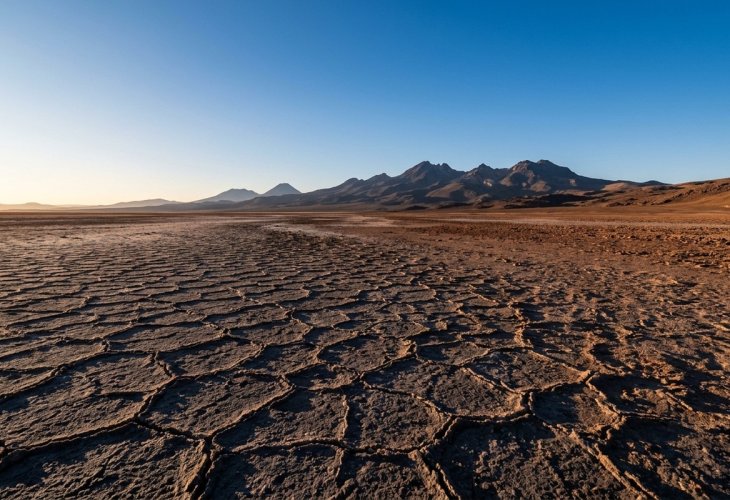
Which desert is considered the driest place on Earth outside the polar regions?
From which country did the composer Frédéric Chopin originate?
Which classic work of Jewish ethics did the Ramchal write, following the spiritual progression outlined in the teaching of Rabbi Pinchas ben Yair?
What was the name of the ship that brought the Pilgrims from England to North America in 1620?
Answers to General Knowledge Quiz #17
Before you begin tackling this week's questions, here are the answers to Quiz #17.
1. Rabbi Shimon bar Yochai
After speaking critically of the Romans, Rabbi Shimon bar Yochai was sentenced to death. He and his son, Rabbi Elazar, fled and hid in a cave. The Gemara relates that a miracle occurred: a carob tree and a spring of water appeared to sustain them. They remained in the cave for twelve years, immersed in Torah study, and later returned for another twelve months (Shabbat 33b).
2. The Koala
In 1996, researcher Maciej Henneberg of the University of Adelaide in Australia reported that the ridges and loops on koala fingerprints closely resemble those of humans, even when examined under an electron microscope. Despite its common nickname, the koala is not a bear but a marsupial that feeds almost exclusively on eucalyptus leaves.
3. Tractate Yoma
Tractate Yoma belongs to Seder Moed, the section of the Mishnah dealing with Shabbat and the Jewish festivals. Its Aramaic name means "the day," referring to Yom Kippur, the most sacred day of the Jewish calendar.
The tractate contains eight chapters. The first seven describe the service of the Kohen Gadol in the Beit Hamikdash on Yom Kippur, while the eighth discusses fasting and repentance. It includes the famous teaching: "For transgressions between one person and another, Yom Kippur does not atone until one has appeased the other person" (Yoma 8:9).
4. The Congo River
The Congo River initially flows northward across the equator before turning west and south, crossing the equator again on its way to the Atlantic Ocean. Approximately 4,700 kilometers (2,920 miles) long, it ranks second only to the Amazon River in water discharge and is considered the deepest river in the world, reaching depths exceeding 200 meters (656 feet) in certain sections.
5. The Pancreas
Insulin is produced by beta cells in the islets of Langerhans, small clusters of cells scattered throughout the pancreas. The hormone allows the body's cells to absorb glucose from the bloodstream, helping regulate blood sugar levels.
In 1921, Frederick Banting and Charles Best successfully extracted insulin in Toronto. In January 1922, 14-year-old Leonard Thompson became the first patient to receive successful insulin treatment for diabetes.
6. Eliab
Eliab was the eldest son of Jesse, as stated in I Chronicles 2:13: "And Jesse fathered Eliab his firstborn."
When the prophet Samuel visited Jesse's home to anoint a king, he initially believed Eliab was the chosen one. However, Hashem told him: "Do not look at his appearance or his height, for I have rejected him ... for man sees what is visible to the eyes, but Hashem sees into the heart" (I Samuel 16:7).
Later, during the confrontation with Goliath, Eliab became angry with his younger brother David for coming to the battlefield, accusing him of arrogance and wicked intentions (I Samuel 17:28).
7. Russia
In 1867, Tsar Alexander II of Russia sold Alaska to the United States for $7.2 million, equivalent to approximately two cents per acre. The purchase was championed by U.S. Secretary of State William H. Seward, whose critics mockingly referred to the transaction as "Seward's Folly."
Alaska became the 49th U.S. state in 1959 and remains the country's largest state by area.
8. 86,400 Seconds
There are 86,400 seconds in a day.
The calculation is straightforward: 24 hours × 60 minutes × 60 seconds = 86,400 seconds.
9. The Kiyor (Copper Washbasin)
The Torah commands: "You shall make a copper washbasin and its copper base for washing" (Exodus 30:18).
The washbasin was fashioned from the copper mirrors donated by the Jewish women, as described in Exodus 38:8. Rashi explains that Moses initially hesitated to accept these mirrors, but Hashem instructed him to do so, declaring that they were especially precious to Him.
During the Second Temple period, the Kohen Gadol Ben Katin installed twelve faucets on the washbasin, enabling several Kohanim to wash their hands and feet simultaneously (Yoma 3:10).
10. The Barometer
The barometer is an instrument used to measure atmospheric pressure. Its invention is credited to Evangelista Torricelli, who filled a glass tube with mercury and inverted it into a basin containing the same liquid.
The mercury column fell and stabilized at approximately 76 centimeters (30 inches), supported by atmospheric pressure acting on the mercury in the basin. Changes in the column's height reflect variations in air pressure and can help predict weather conditions. The pressure unit torr is named in Torricelli's honor.
 InterestingTest Your Knowledge 15: 10 Challenging Trivia Questions on Science, History, and Judaism
 InterestingTest Your Knowledge 17: 10 Fascinating Trivia Questions on Torah, Science, and History
 Facts You Didn't KnowMorning Blessings, Ashkenazi Nusach: Birkot Hashachar in Hebrew and English
 Facts You Didn't Know10 Genius Japanese Innovations You’ll Wish We Had Everywhere

