עברית
עברית

Magazine
From Bnei Brak to the Saddle: How a Haredi “Rescue Horse” Trainer Heals Kids and Saves Lives
Menashe Goldis, a Boyan Hasid, uses therapeutic horseback riding as a powerful tool for emotional healing
- Hidabroot
- |Updated
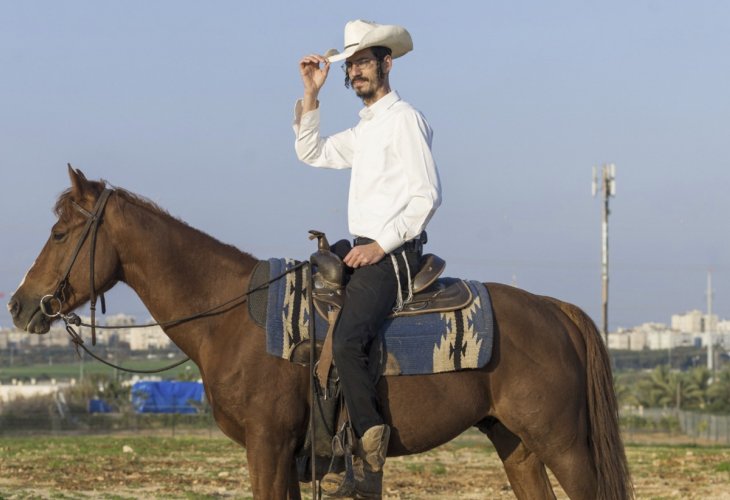 Goldis with Chumi the horse
On a busy afternoon, there was a loud screech on the highway, a powerful explosion, and then a frightening silence. A car accident. The injured are lying helpless, desperate for help. Not far from there, Menashe Goldis, an Ultra-Orthodox man from Bnei Brak, was returning from a ride with a friend. When he heard the sounds, he immediately understood what had happened.
“I jumped back onto Jimmy and galloped with him to the highway. I was the first medic at the scene, and no one understood where this paramedic with a horse suddenly came from…”
If until today we’ve heard of an ambulance motorcycle, Menashe introduces us to his own unique option – a rescue horse.
How did you end up at the scene of the accident on a horse? That’s definitely not your typical Haredi scenario.
“At that time our horse ranch was located near Highway 4. I’m a certified medic with United Hatzalah and, thank God, thanks to my loyal horse Jimmy, I was able to give medical assistance to the injured as quickly as possible.”
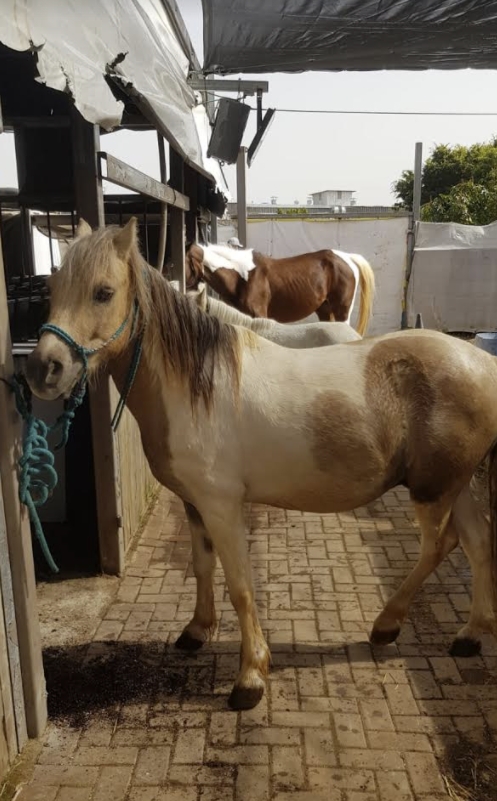 שוקי הפוני
It’s surprising to see a Boyan chassid riding horses with such skill. How did you get into this field?
“In the past I worked in the organization ‘Bayit Cham,’ where I was exposed to the possibilities of therapy with horses, and I really loved the idea. I asked our Rebbe whether I should go study the field, and he gave me his blessing. I studied sports riding at Ruppin College and therapeutic riding at the Wingate Institute. I was the first Haredi in the country to study this field.
“After I trained and worked in it, we opened a few training cycles for Haredi riding instructors, and three more cycles for Haredi women. The courses took place at our ranch together with several colleges that provided the certification. Today, being a Haredi riding instructor is no longer an impossible dream.”
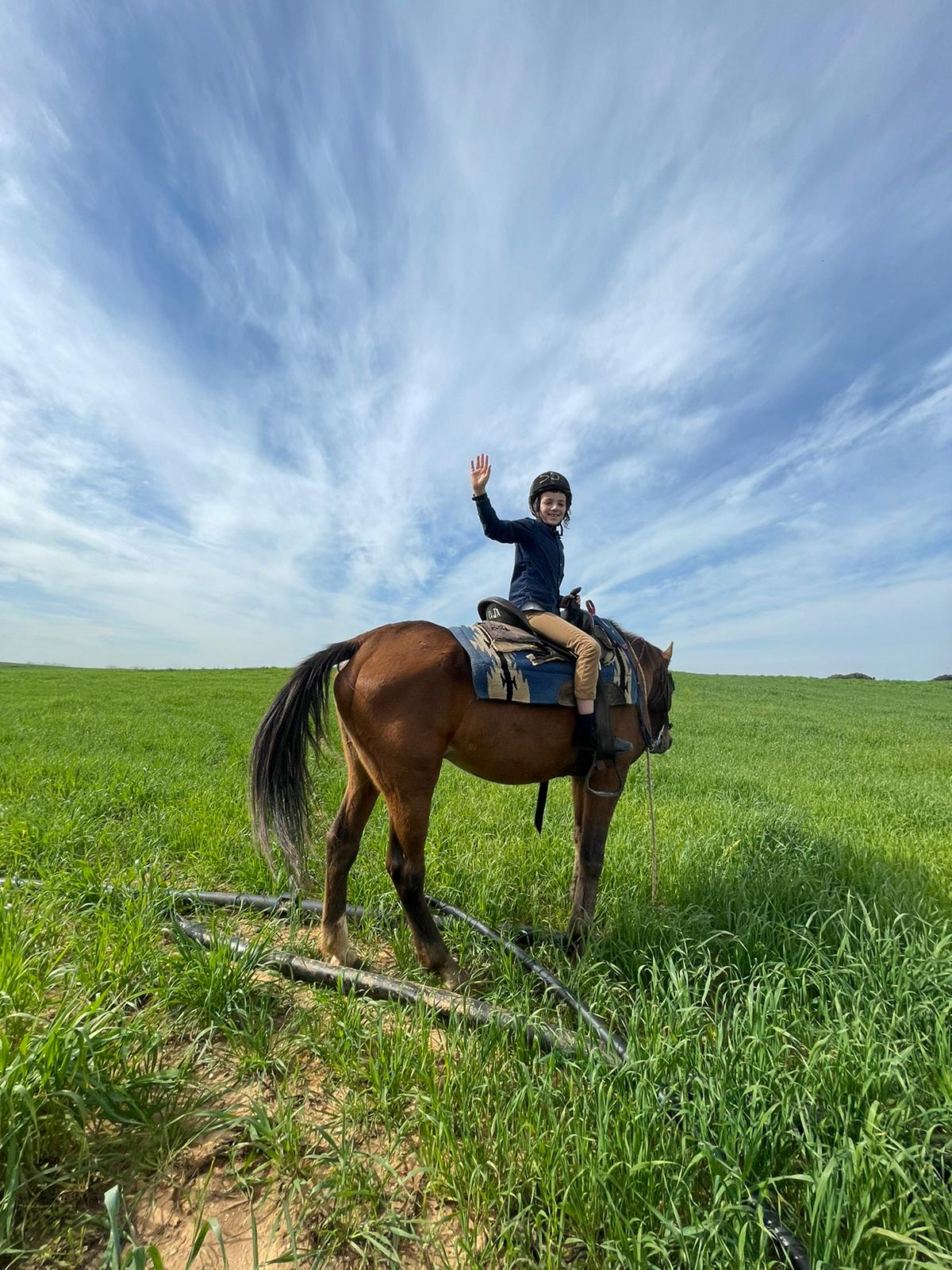 שרוליק, בנו של גולדיס על הסוס
 How did the community react to this new, unconventional profession you chose?
“I wasn’t interested in how they would react, and I didn’t check what everyone was saying. Only Hashem interests me. And thank God, the field was actually received very positively everywhere. Further, after I’d gained experience, I came to the horse ranch founded by Rabbi Lawrence with the encouragement of Rabbi Shteinman, and he asked me to manage the ranch. Today I work with many Talmudei Torah (religious boys’ schools), and the ranch has become an established reality.”
A Day in the Life at the Ranch
Every day at nine in the morning, Menashe leaves his home in Bnei Brak and heads to his horse ranch in Rishon LeZion.
“The morning air is clean and pure, and I feel a connection to Hashem through the earth, the plants, and the animals. The 13 horses are already waiting for me after a night of resting and spending time in their stalls, while another worker stays there overnight to watch them. As soon as they hear the lock on the gate open, the horses neigh loudly. At that time, the other two workers arrive as well, and together we do a round of the ranch, say good morning to the horses, and check that everything is in order.
“Then we feed the horses hay and grain, and organize the ranch ahead of the students’ arrival. At this point, it’s time for our black coffee. Coffee at the ranch has a special aroma you won’t find anywhere else. Shuki the pony likes to poke his head in during coffee time and ask for attention.
“After that we take the horses out to pasture, and at the same time we use the opportunity to clean the stalls. The morning hours are calm hours at the ranch, when the horses rest. They can graze and wander freely as they please, without a trainer telling them which direction to go. That is rest for them, and they recharge their strength for the rest of the day.
“In the afternoon, students arrive for therapy and riding lessons. Mostly children and teens come for individual therapy sessions, and sometimes groups come for group treatment. After every 45–60 minute lesson, the horses get a 15-minute rest. It’s beautiful to see four horses heading out together on a group trail ride, or the arena full of pairs – trainer, child, and horse walking together as a team.
“The lessons continue until about 8:00 in the evening. The horses are active and not tired, and even on winter evenings when it gets dark relatively early, it doesn’t bother us. We have lighting in the arena, and sometimes the darkness itself is an advantage; it even helps speed up the therapeutic process, by forcing the rider to find a way through a dark area and discover resourcefulness.
“After that we bring the horses into their stalls – a closed area of about 12 square meters – where they eat dinner and rest. Horses don’t sleep many hours. In captivity, a horse sleeps at most three hours. In nature it sleeps even less – about one single hour – because the horse is afraid of potential predators, whereas in captivity it feels more relaxed. (By the way, halacha even mentions the concept of ‘the horse’s sleep.’)
“During that time we run workshops, and at 10:00 p.m. the ranch closes. One of us stays to sleep there overnight and watch over the horses.”
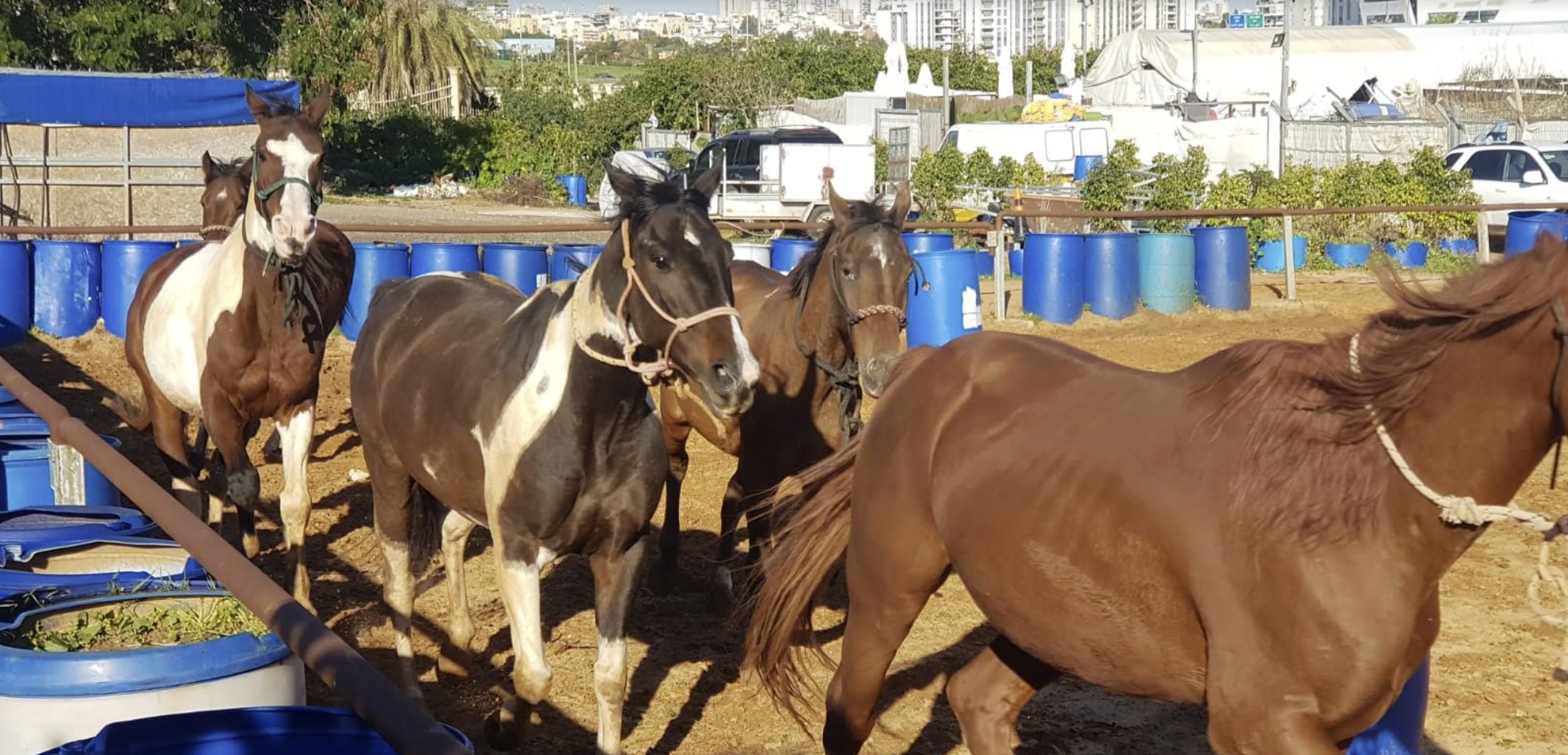 הסוסים באימון בוקר
How are the therapeutic lessons conducted at the ranch?
“The structure of the sessions varies greatly from student to student. It depends on the student’s age, personal needs, and physical ability. Some therapy sessions take place inside the riding arena, and some out in the open fields. In addition to riding, there are children who like to feed the horses, and some who ask to tack them up by themselves and prepare them for riding. There are others who prefer to brush the horses’ coats, and even help the trainer wash them.
“Most children love the horses,” Goldis explains, “but of course there are also children who are afraid. In those cases, a large part of the therapy focuses on dealing with fear, and that gives the child huge benefit, because usually he’s dealing with fears in other areas of life as well. Some children have gone through trauma in the past, which now expresses itself as a strong aversion to the horse, and specifically working with the horse helps them overcome that trauma.
“There are also those who are afraid of the responsibility of caring for a horse, and they’re simply lacking self-confidence in all areas of life. Others claim that they’re ‘grossed out’ by horses. In reality, the horses themselves are actually very sensitive, finicky animals who love order and cleanliness; there is nothing truly disgusting about them. Most of the time this is just a cover for a deeper fear hiding underneath. But we’re not intimidated by any difficulty. With patience, we crack the right approach for each person, so that the riding will carry them forward, beyond the problems causing them distress in everyday life.”
“There are three of us working at the ranch, and each of us has an official certification as a therapeutic riding instructor. Some of us also have additional qualifications – for example, I have a CBT (Cognitive Behavioral Therapy) certificate and certification as a therapist in the 12-step method. But we don’t treat in a regular clinic like typical therapists. Instead, we integrate all the methods and tools we have during the riding sessions and the time out in the field. The trainer talks with the child and directs the therapeutic process while also handling the horse.
“The only therapy I do in a clinic-room setting is parent guidance. Sometimes the child goes out to the arena for a riding session, and while he’s out riding with his horse, the parents get guidance in the clinic. Only rarely do we put parents on a horse – and that’s a fascinating experience in itself…”
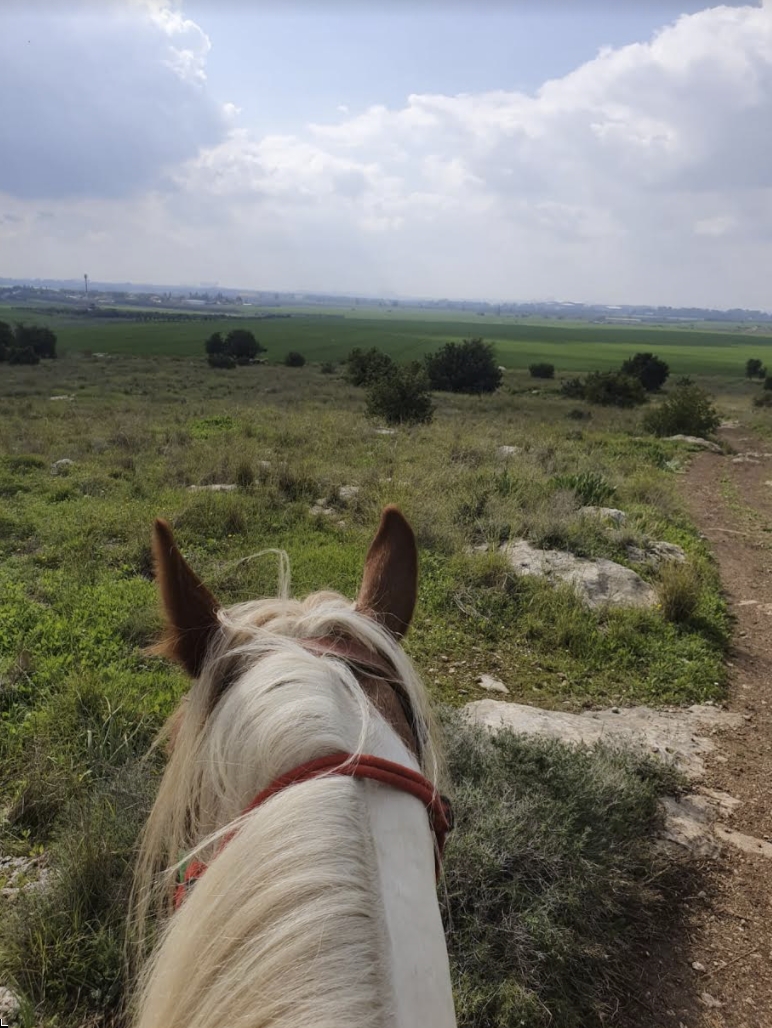 רכיבה בטבע - ליד החווה
Who Is Therapeutic Riding For?
“Horseback riding is intended for anyone who wants to live a better and higher-quality life. There’s no area or difficulty that horses can’t help with. Personally, I’ve met many children whose parents had given up on them, and adults who had given up on themselves – and at the ranch they were rebuilt and rehabilitated. They moved from a place of suffering and struggle to a life filled with joy and pleasure. There is no despair in the world at all, and therapeutic riding is one of the amazing tools that help everyone not to give up and to succeed.”
Goldis adds that one of the special experiences is seeing how students take the riding experience with them and, thanks to it, look at life differently. The insights and strengths they discover during riding accompany them in other situations in real time. The younger ones even start playing at home with a “horse ranch” Playmobil set and imitate the therapy session in their own play. The children love riding time and look forward to it all week.
The Horses’ Fights – And a Child’s Healing
“A child once came to us for therapy whose parents were going through a divorce,” Menashe relates. “He suffered greatly from the fights at home, developed anxiety, and reacted with wild outbursts and tantrums. I built a riding-based treatment plan for him, but it seemed that the therapy wasn’t affecting him at all. The child remained with the same difficulties, as if I hadn’t treated him. I didn’t know what to do, and after I prayed to Hashem to help me help him, an idea came to mind. I asked his father that the next session be scheduled for the morning.
“The ranch was empty of visitors, and only the horses were busy with themselves in the paddock. I took two chairs and sat the child down facing the horses. I sat beside him and let him watch them. And as on every morning, the horses were busy fighting and scuffling with each other. Some horses don’t get along with others, and in the morning they ‘settle accounts’ and squabble nonstop – just like angry little children, or like members of Knesset in parliament…
“After the boy had watched the many horses for a bit, I asked him what he saw. The child described the horses’ fights with anxiety, and I answered with another question: ‘Do I intervene in their fights the way I do during lesson time in the afternoon?’ The boy shook his head and was surprised. Then I explained to him that I have to allow the horses to fight – it’s part of their need to let off steam. During lesson time I stop any fight so the children won’t get hurt, but in the morning, when there’s no danger to anyone, I don’t interfere and don’t separate them.
“Yes, it’s unpleasant and can even cause damage to my horses, but I can’t step between such strong animals. That’s their time, and I only make sure no one gets hurt by them. ‘It’s the same with your parents,’ I explained simply. ‘You have no ability to stop their arguments and you can’t control them. It’s simply not your job. All you can do is make sure you don’t get hurt and ask them not to fight in front of you.’
“From that day on, the boy internalized what is connected to him and what isn’t. He learned to protect himself and to respectfully ask his parents not to argue in front of him, and the entire therapeutic process moved forward in huge steps. The live demonstration with the horses gave him the best lesson possible. I saw in this great Heavenly help that led me to the right conclusion – and in that way, even the horses’ fights helped the child move to a better place for him.”
“Therapeutic riding is suitable for all ages,” says Menashe. “From age one–two, up to 120. I have a 67-year-old student who comes every week to ride! He does it to strengthen his muscles and enjoy a sport he loves. Riding is a high-level sport that activates all the body’s muscles together. Even people who are not in great shape can enjoy riding if they start with slow riding on a calm, obedient horse, and then gradually increase the level of training at a pace that suits them.”
Every Horse Has a Personality
“Each horse has its own personality and pace. An interesting fact is that among horses, just like among people, there is a very clear hierarchy. For example, at our ranch the big mare Venus is the one who dominates, and no one will mess with her. Julio is the naughty one of the bunch – he’s always the adventurer who, while everyone else is resting, looks for a way to run off and nibble on greenery. As soon as he realizes the trainer is busy with something, he immediately takes advantage of it.
“Milky is a very strong mare who still doesn’t really know what’s expected of her, but she’s learning slowly. Jimmy is the elder of the herd – a mature horse with a lot of life wisdom, the kind who knows how to give in in order to achieve peace and quiet. And I could go through all the horses of the ranch like this, but the idea is clear: every horse has its own character and needs its own personal ‘education.’”
Education? How do you “educate” horses? Or do you mean training?
“Call it whatever you want. In my eyes, the horses are like children who at first behave like little rascals and slowly learn proper behavior. For example, a young horse is not polite enough and might act without tact, compared with older horses who behave nicely and with tact.”
What does ‘tact’ mean when it comes to horses?
“A horse with less tact, for example, might lightly shove a person standing near him with his head. But a mature horse knows not to behave that way and doesn’t push. We teach them how to behave.”
Goldis describes “horse-style” education: he gives the horses rewards for good behavior. The rewards can be grain or a special treat the horse particularly enjoys. He also “knows” how to talk to the animals in their own language and even scold an impolite horse: “Don’t push me!” According to him, the horse understands what is being said from his tone of voice and changes its behavior for the better.
He repeats his motto: “The horses are exactly like children, and they need a lot of attention, effort, and care. And we are three friends working together with love, making sure the place feels like a home and a family for every person. We love every creature that Hashem made and try to shine the Divine light to everyone.”
Wouldn’t it be more comfortable for the horses to live in the wild, and don’t they long to be free in nature?
“That’s a good question, and there isn’t one simple answer. In my opinion, if a horse is in a good place where it gets food, a fixed time for sleep, and proper training, then it will prefer living there rather than in the wild, where predators lurk and it has to protect itself and find food on its own. Horses love a steady framework and feel secure when they’re trained and shown how to behave – just like children… And it’s no coincidence that the life expectancy of a horse in captivity is higher than when it’s free in nature.”