עברית
עברית

Wonders of Creation
How Animals Communicate Without Words: The Hidden Languages of Nature
Discover how animals transmit messages through color, sound, pheromones, touch, and movement — and what humans can learn from their brilliant communication
- Shalom Freund
- |Updated
Is it possible to speak without a mouth? Itdepends whom you ask. Yet, it is certain that even in humans — the only creatures in the universe endowed not only with the full range of senses but also with the faculty of speech, communication exists that goes beyond words. Alongside verbal language, humans rely on gestures and body language, not only on the mouth.
Who among us is unfamiliar with the situation in which we need directions and ask a passerby how to reach a destination? Often, more than answering verbally, the person uses hand and body movements, signaling to go straight, turn left, or turn right. Although humans primarily communicate through speech, when we want to make someone feel good — by offering a compliment, expressing affection, or simply conveying our feelings toward another, we often do so through a pat on the shoulder, a hug, applause, a wrinkled nose, a nod of the head, or a wink.
Communication Without Words in the Animal World
As an alternative to spoken language, the Creator endowed animals with diverse and fascinating ways of communicating with one another. Just as humans supplement speech with gestures, movement, touch, or sight, animals, through their particularly developed senses, possess remarkable systems of communication that enable them to obtain food, raise offspring, protect their homes and companions, strengthen family bonds, defend themselves from enemies, and more.
Animal communication is varied and captivating, based primarily on four prominent senses that may be more developed in one species than another: vision, hearing, smell, and touch. These four senses form a unique language through which an entire world of message transmission, interaction, and connection exists, both within a species and between different species.
Nature’s Many Languages
What do a peacock spreading its colorful feathers and frogs inflating their throats and croaking in a pond have in common? What connects fireflies glowing in the dark, fragrant flowers, and brightly colored fish on coral reefs?
All of these are expressions of messages transmitted in nature among living creatures. They are examples of the wondrous “languages” of living beings, through which they connect with one another.
Communication among animals is the way living creatures transfer information using signals and messages. For effective communication to exist, three elements are required: a message, a signal, and interpretation.
The message is the information one animal wishes to convey to another. The sender transmits the message in order to sustain its own survival, whether to obtain food or for other needs. The receiver, in turn, absorbs the signal and responds, becoming a sender as well through feedback. Communication thus functions as a continuous cycle: message → sender → signal → receiver → response → sender, and so on.
Signals and Interpretation
Messages, sometimes even between animals of different species, are transmitted through signals. A signal is an innate and inherited behavior, action, shape, or color that influences the behavior of another individual and usually benefits the sender.
Signals are interpreted by the animals for whom they are intended, and this interpretation is expressed in their response. Identical signals can be interpreted very differently by different animals. For example, the song of a nightingale is perceived by a female nightingale as a positive identifying signal, while a predatory bird may interpret it as a convenient opportunity for food — posing mortal danger to the singer.
Through the four senses mentioned earlier, animals use various communication channels: visual communication through vivid colors; unique sounds and calls; highly developed hearing and smell; body language expressed through touch, movement, dancing, or emphasizing the head, tail, horns, or ears; and even ultra- or infra-sonic sounds at frequencies humans cannot hear.
The Adorned, the Imitator, and the Threatener
Although animals lack speech, the Creator compensated them with extraordinary abilities that surpass verbal language. Ironically, despite being the only speaking creature, humans are often less capable of coping than animals, who manage remarkably well without words.
Having understood the mechanisms of animal communication, we now turn to the primary forms through which animals interact:
Visual communication
Vocal communication
Chemical communication
Communication through movement and touch
Visual Communication: Color as Language
Visual communication relies heavily on color and includes several subcategories: warning, camouflage, disguise, and mimicry.
Warning Colors
Some animals possess bright, striking colors that signal the presence of toxins or venom. These warning colors play a crucial role in predator–prey communication, clearly signaling: “You’ve been warned — don’t mess with me.”
Such colors adorn many of the most beautiful creatures on Earth, from frogs to butterflies shimmering in every hue of the rainbow. While visually stunning to humans, these colors function as warning signs indicating extreme toxicity. Rather than hiding, these animals attract attention, reminding predators — who may have once tasted them, not to repeat the bitter experience.
Camouflage
One of nature’s most sophisticated survival strategies is camouflage — blending into the environment. In nature, a species that fails to survive faces extinction. Camouflage allows animals to evade predators by matching their body colors, shapes, and behaviors to their surroundings.
This strategy benefits predators as well, enabling them to approach prey unnoticed. Desert animals often have sandy hues, while plant-dwelling species tend toward green. The polar bear’s white fur provides perfect camouflage against snow, while the Arctic fox changes coat color — white in winter and brown in summer, to match its environment.
An interesting example is the African penguin. Unlike many birds known for bright colors and elaborate displays, penguins are black and white. This dual coloring provides two-way camouflage: predators from below see the white underside blending with light from the water’s surface, while predators from above see the black back blending with the dark ocean depths.
Disguise and Mimicry
Mimicry is a widespread phenomenon in both plants and animals. When an animal mimics its environment, it is camouflage. But sometimes a species — the mimic, closely resembles another species — the model, that is dangerous or toxic.
Although the mimic itself is harmless, its resemblance provides a survival advantage, as predators mistake it for the dangerous model and avoid it.
For example, the coin-marked whip snake is non-venomous yet closely resembles the highly venomous Palestinian viper. This mimicry is effective only in areas where the viper is known, ensuring predators recognize and avoid the similar-looking snake.
Other examples include the hoverfly, which resembles a bee and even mimics its buzzing, though it has no sting, and the emperor moth, whose wings display eye-like patterns resembling a bird of prey. When startled, the moth spreads its wings, startling predators into retreat.
Do Giraffes Have a Voice?
Beyond visual communication lies vocal communication, which plays a vital role in species identification, defense, and warnings. Frogs croak, crickets chirp, cicadas buzz, lions roar, hippos grunt, birds sing, and wolves howl.
Wolves, for instance, hunt in packs and rely on howls and growls for coordination, locating pack members, and communicating with neighboring packs.
Some animals communicate using frequencies humans cannot hear. Hippos use infra-sonic sounds underwater and ultra-sonic sounds above water. Whales and dolphins communicate through clicking sounds.
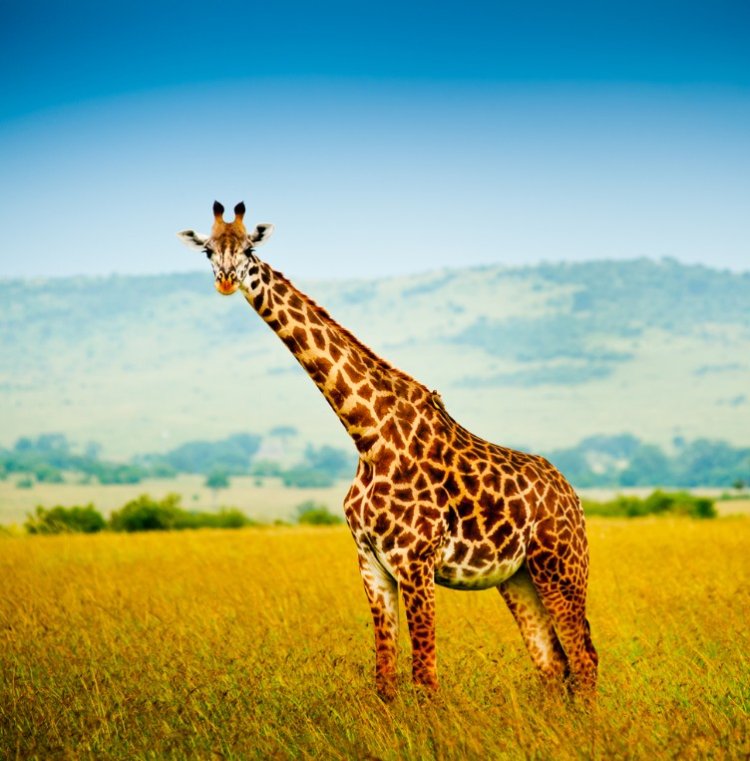
Researchers have discovered that elephants communicate through infra-sonic vibrations transmitted through the ground, which is inaudible to humans yet capable of warning herd members over great distances. Similar research has shown that giraffes communicate using low-frequency sounds beyond human hearing, enabling long-distance communication through obstacles like trees without alerting predators.
Scent Battles and Mutual Grooming
Chemical communication involves transferring information through chemical compounds — primarily scents and pheromones. Many mammals, including bears, wolves, and elephants, rely on scent marking to communicate territory and identity.
Lemurs, for example, engage in “scent battles” by rubbing their tails with scent secretions and waving them at rivals to defend territory.
Touch, Movement, and Social Bonds
Touch-based communication is widespread. Many animals perform ritual dances, including birds like cranes and peacocks, as well as insects, much like humans.
Elephants communicate through touch, smell, sound, and memory. Using their trunks, they touch, smell, and even mourn deceased herd members, interacting with bones years later.
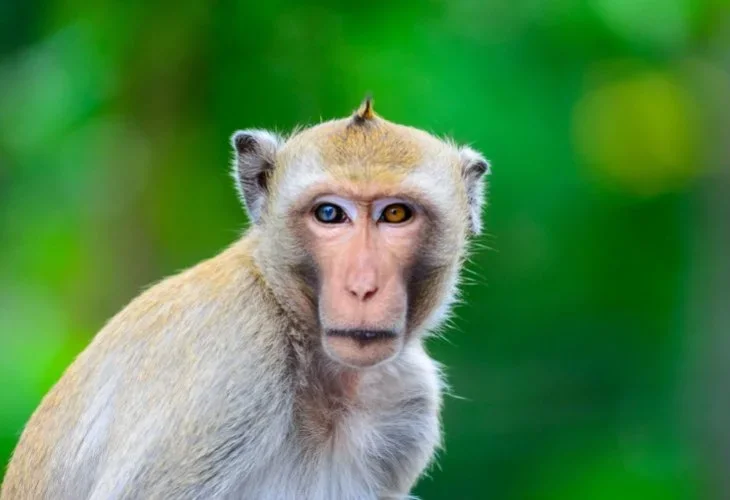
Monkeys engage in grooming, a social practice that reduces tension and reinforces hierarchy. After conflicts, grooming restores calm within the group.
Wolves use body language extensively: dominant wolves raise tails and bare teeth, while submissive wolves lower tails and flatten ears.
Horns and the Handicap Principle
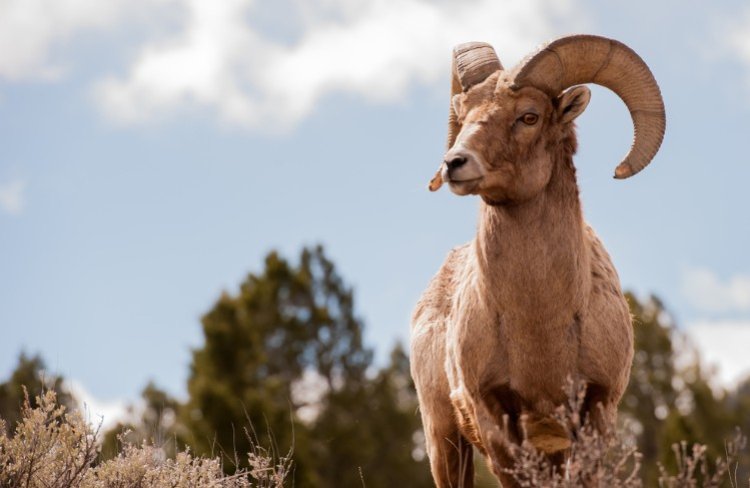
Many animals bear horns of various shapes and sizes. These horns often indicate status, explained by the biological concept known as the handicap principle. Large horns are burdensome, signaling strength, health, and survival ability.
Horns also serve in defense and communication between predator and prey. A gazelle facing a predator head-on signals awareness, often causing the predator to abandon the chase.
Lessons From the Ark
A Midrash recounts Noah’s struggle to feed a chameleon in the Ark until he discovered its diet by chance. The Ark — the first recorded zoo, teaches us the value of creation and respect for all life.
As Pirkei Avot teaches: “Be bold as a leopard, light as an eagle, swift as a deer, and strong as a lion.”
Those who cannot see well rely on hearing. Those who cannot hear develop vivid colors. Those lacking both use scent. What humans may find repulsive is, for animals, a precious tool.
We, too, must learn to value others’ differences. What seems strange to one may be a strength to another. Often, the “different” individual possesses a unique and impressive gift.
If you ask what we have learned from animals, the answer is simple: We have learned how to be human.