

World News
Trump Says U.S. ‘Knew Nothing’ About Israel Strike on Iran Gas Field
After Israel hit Iran’s largest gas field and Iran retaliated against Qatar’s LNG hub, Trump warned further escalation could trigger U.S. intervention.
- Brian Racer
- | Updated
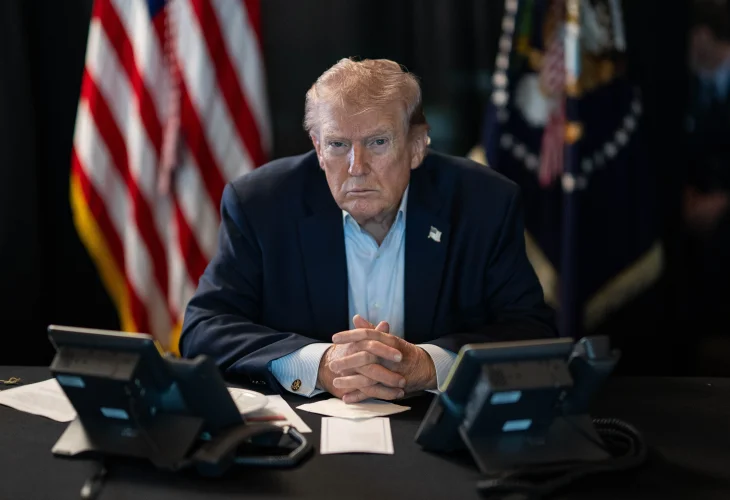 Donald Trump (Shutterstock)
U.S. President Donald Trump said Wednesday night that the United States “knew nothing” about Israel’s strike on Iran’s massive South Pars gas field, while also declaring that Israel will not carry out further attacks on the site after a rapid escalation involving Iran and Qatar.
In a post on Truth Social, Trump said Israeli forces had struck part of the field but declared that “NO MORE ATTACKS WILL BE MADE BY ISRAEL pertaining to this extremely important and valuable South Pars Field,” unless Iran again targets Qatar. His statement came hours after Iranian missiles struck Qatar’s Ras Laffan Industrial City, one of the world’s most important liquefied natural gas hubs.
The Iranian strike on Ras Laffan marked a dramatic expansion of the conflict beyond Israel and Iran. QatarEnergy confirmed that gas facilities at the site were hit, causing fires and damage at parts of the complex, though authorities said emergency crews brought the fires under control and no casualties were reported. Ras Laffan is the center of Qatar’s LNG industry and the largest liquefied natural gas processing facility in the world, making it a critical node in global energy markets and raising concerns that the Israel-Iran conflict could spread into infrastructure vital to international gas supply.
The escalation began earlier Wednesday, when Israeli aircraft struck gas-processing infrastructure connected to Iran’s South Pars field near the southern city of Asaluyeh. South Pars is part of the world’s largest natural gas reserve and is jointly shared by Iran and Qatar across the Persian Gulf.
According to U.S. and Israeli officials cited in multiple reports originally, the strike was coordinated with Washington and intended to increase pressure on Tehran as the conflict expanded beyond military and leadership targets. Israeli officials said the operation was also meant to signal deterrence after Iranian threats to disrupt shipping through the Strait of Hormuz.
Iran responded by launching missile strikes toward energy infrastructure across the Gulf. One of the missiles hit Qatar’s Ras Laffan complex, prompting a sharp reaction from Doha. After the first Iranian strike, Qatari officials contacted senior U.S. officials, including White House envoy Steve Witkoff and commanders at U.S. Central Command, seeking clarification about whether Washington had advance knowledge of the Israeli attack. According to a source familiar with the matter, Witkoff held multiple calls with Qatari officials while working to arrange an urgent conversation between Trump and the emir of Qatar.
Qatar’s Foreign Ministry condemned the Iranian attack in the “strongest terms,” saying Tehran’s actions had crossed “all red lines” and represented a serious threat to regional security.
Trump’s Truth Social statement attempted to both calm the situation and warn Tehran against further escalation. While declaring that Israel would not strike South Pars again, he also threatened a far larger response if Iran targets Qatar’s energy infrastructure in the future.
“If Qatar’s LNG is again attacked,” Trump wrote, the United States would “massively blow up the entirety of the South Pars Gas Field at an amount of strength and power that Iran has never seen or witnessed before.”
At the same time, Trump insisted that the United States had no prior knowledge of the Israeli strike. “The United States knew nothing about this particular attack,” he wrote, adding that Qatar was “in no way, shape, or form involved with it.”
The confrontation marks the first time in the current conflict that energy infrastructure has become a central target. With Iran striking Qatar’s LNG hub and Israel attacking Iran’s largest gas field, the war now threatens to extend beyond military installations into the economic foundations of the region’s energy industry.

