

Behind the News
Lebanon Ceasefire Breaking Down As Hezbollah Escalates Drone Campaign
Rubio’s warning, Qassem’s threat to Beirut and the 11th IDF soldier killed since the truce show the ceasefire is failing on the ground
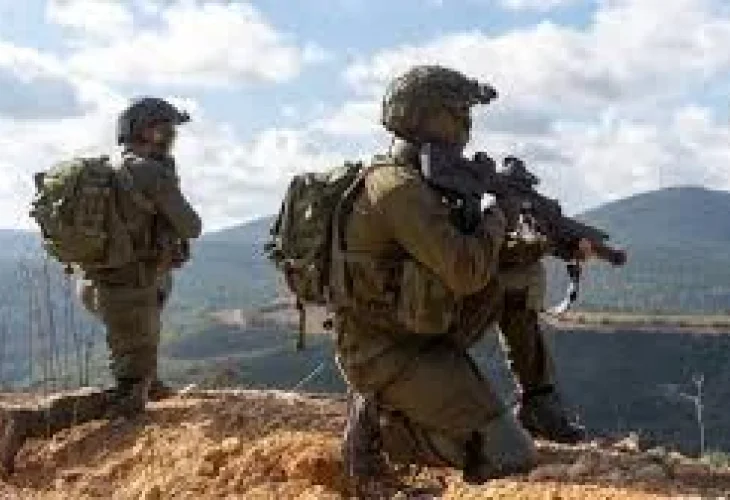 IDF
IDFThe ceasefire between Israel and Hezbollah is increasingly unraveling on the ground. As Hezbollah intensifies explosive drone attacks against Israeli forces, threatens Lebanon’s own government and continues clashes despite the truce, Israel is preparing for the possibility of broader renewed fighting in the north.
Secretary of State Marco Rubio on Sunday accused Hezbollah of trying to destabilize Lebanon after Hezbollah leader Naim Qassem called for street action against Beirut’s government. At the same time, the 11th IDF soldier has been killed since the ceasefire began, while IDF Chief of Staff Eyal Zamir approved plans for continued operations against Hezbollah in Lebanon.
The ceasefire, which technically began in April and was later extended, still exists diplomatically. But on the ground, Israel and Hezbollah are continuing to fight. Hezbollah has fired at Israeli positions and IDF troops in southern Lebanon, while Israel has continued striking Hezbollah targets across Lebanon.
Qassem escalated the political confrontation on Sunday, warning Lebanon’s government that Hezbollah “will confront with all [its] strength all those who confront it.” He added, “The people have the right to take to the streets to topple the government.” The statement came due to Hezbollah anger over Israeli strikes and U.S. sanctions targeting Al-Qard Al-Hassan, the Hezbollah-linked financial institution.
Rubio responded with one of Washington’s strongest public statements against Hezbollah since the ceasefire began.
“The United States condemns in the strongest terms Hizballah’s reckless call to overthrow Lebanon’s democratically elected government,” Rubio said Sunday. He accused Hezbollah of ignoring repeated calls from Lebanon’s government to stop attacks and respect the ceasefire. Instead, Rubio said, Hezbollah has continued firing on Israeli positions and moving fighters and weapons into southern Lebanon.
“This is a deliberate campaign to destabilize the country and maintain its power at the expense of the future of the Lebanese people,” he said. Rubio added that Washington stands with Lebanon’s government as it tries to restore its authority, deliver reconstruction and secure international assistance. He closed with a direct warning: “The era in which a terrorist group held an entire nation hostage is coming to an end.”
The warning came as the IDF absorbed another deadly Hezbollah attack. Nehoray Leizer, 19, was the latest IDF soldier killed in southern Lebanon Monday and the 11th soldier killed since the ceasefire began. The death added to a growing list of battlefield losses caused by Hezbollah’s explosive drones.
The drone threat has become urgent. Hezbollah has launched more than 100 explosive drones in the past month, using highly maneuverable systems with a low signature that makes them difficult to detect. The drones have caused direct hits and casualties among Israeli troops.
Israel is now rushing a new defensive package for frontline forces. The plan includes ordering 5 million shotgun rounds, deploying small mobile radars for infantry forces and developing an active protection system for vehicles, designed to detect and destroy explosive drones and UAVs before impact.
Zamir made clear Sunday that the northern campaign is not over. During a visit to Northern Command and the 401st Brigade, he approved plans for continued fighting against Hezbollah in Lebanon, according to the IDF.
“In Northern Command, we continue to strike Hezbollah in every dimension. I emphasize: the security of residents and the safety of our forces are above all else,” Zamir said.
That is the reality behind the ceasefire. Diplomats are still working to preserve a framework, and Washington is still backing Lebanon’s government against Hezbollah. But Hezbollah is threatening Beirut, Israeli soldiers are still being killed, drones are reshaping the northern front, and the IDF is preparing for more fighting.
The ceasefire has not formally ended. On the ground, it is no longer functioning as one.

