

Behind the News
What Would Saudi Arabia And Others Joining The Abraham Accords Actually Look Like?
Trump’s proposal remains highly theoretical, but it points to a regional vision linking Israel with Arab, Muslim and Gulf states
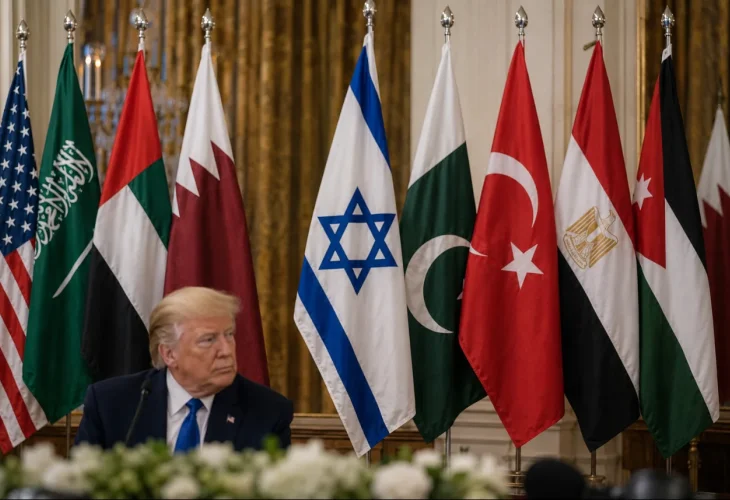
President Donald Trump’s demand that Saudi Arabia, Qatar, Pakistan and other countries join the Abraham Accords is unlikely to happen quickly, and parts of it may not happen at all. But the proposal shows the scale of the regional order Trump is now trying to build around Israel.
Trump said he told regional leaders that “it should be mandatory” for countries including Saudi Arabia, Qatar, Pakistan, Turkey, Egypt and Jordan to join the Abraham Accords as part of a broader settlement with Iran. He said the process should begin with “the immediate signing by Saudi Arabia and Qatar,” and even floated the possibility of eventually bringing Iran itself into the framework.
“The Middle East would be United, Powerful, and Economically Strong,” Trump wrote. “It would be an Honor to have [Iran] also be part of this unparalleled World Coalition.”
The Abraham Accords are not a NATO-style military alliance, but normalization agreements. In practical terms, joining means open diplomatic relations with Israel, embassies, direct flights, trade, tourism, investment, technology cooperation and, in some cases, closer security coordination. For some countries, that would formalize ties that already exist quietly. For others, it would require a public political shift.
The UAE and Bahrain are already members of the Abraham Accords. Egypt and Jordan already have peace treaties with Israel. That means the real change in Trump’s proposal would be Saudi Arabia, Qatar, Pakistan and Turkey entering a wider U.S.-backed framework with Israel.
Saudi Arabia would be the central prize. If Riyadh joined, it would move relations with Israel from quiet coordination to public normalization, potentially including embassies, direct business ties, tourism, investment and open strategic coordination against Iran. The impact would also extend far beyond Israel and the Gulf. As the most influential Sunni Arab power and center of Islam’s two holiest cities, Saudi recognition could make open ties with Israel more acceptable across many parts of the Muslim world. But the move remains difficult politically, with Riyadh continuing to publicly link normalization to the Palestinian issue.
Qatar would be a different case. Doha already plays a major role as a mediator between Israel, Hamas and the United States. Joining the Abraham Accords would shift Qatar from a back-channel mediator to an open diplomatic partner of Israel. That could mean Israeli representation in Doha and expanded economic ties, but it would challenge Qatar’s role as a state that maintains relations with Hamas, Iran and Islamist movements.
Pakistan would be one of the most dramatic additions to the Abraham Accords. Unlike countries such as the UAE or Bahrain, Pakistan has never recognized Israel and has historically strongly supported the Palestinian cause. If Islamabad were to normalize relations, it would mean that one of the world’s largest and most influential Muslim countries, and a nuclear power, had decided to openly accept relations with Israel. That could have a symbolic impact far beyond the Middle East. But for now, strong public opposition inside Pakistan and the Palestinian issue still make such a move highly unlikely.
Turkey is different because it already recognizes Israel. For Ankara, joining the Abraham Accords would be less about creating relations from zero and more about a political reset. It would mean President Recep Tayyip Erdogan placing Turkey inside a U.S.-led regional framework with Israel, despite his harsh rhetoric against Israel during the Gaza war.
Iran is the most unrealistic part of Trump’s statement, but also the most revealing. Trump said it would be “an Honor” to have the Islamic Republic join the Accords if it signs an agreement with him. In reality, that would require a complete strategic shift by Tehran, including an end to direct confrontation with Israel and acceptance of Israel’s legitimacy.
That is why Trump’s proposal should not be read as an imminent diplomatic roadmap. It is better understood as his theoretical vision for the day after an Iran deal: a Middle East where open relations with Israel become the entry point into a U.S.-backed regional order.
Whether any of that happens is uncertain, but Trump is trying to make normalization with Israel not a side agreement, but the foundation of a new Middle East alignment.

