

Family Purity
The Night the Baba Sali Revived a Forgotten Mikveh
A moving story of faith, determination, and the extraordinary moment rain suddenly poured down after the Baba Sali’s prayer.
- Hidabroot
- | Updated
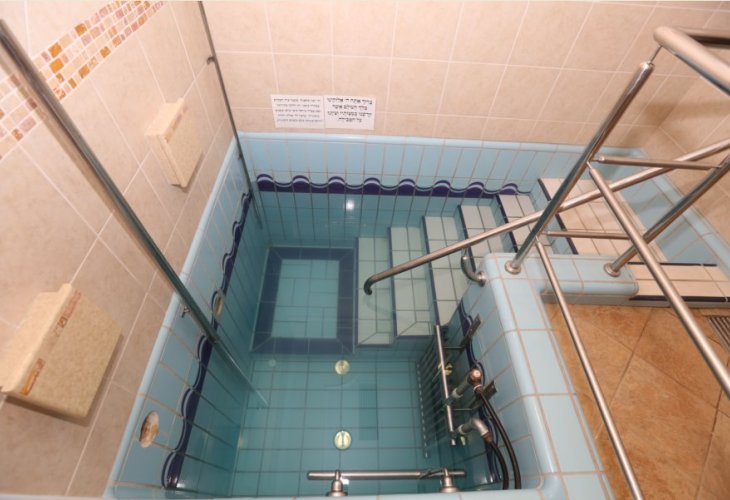 (Photo: shutterstock)
The holy tzaddik Rabbi Yisrael Abuchatzeira, known throughout the Jewish world as the Baba Sali, would often travel through the towns and villages of Morocco to strengthen Jewish communities in Torah and mitzvot.
On one such journey, he arrived late one evening in a distant town. News of the tzaddik’s arrival spread quickly, and the entire community gathered in the synagogue to welcome him and hear words of inspiration from his holy mouth.
After the sermon ended, the crowd prepared to escort the rabbi to the home where he would be staying. But before leaving the synagogue, the Baba Sali surprised everyone with an unexpected request:
“I would first like to see the town’s mikveh.”
“The Mikveh Has Been Abandoned for Years”
The community leaders lowered their heads in embarrassment.
With great shame, they explained that the town’s mikveh had not been used for many years. The building had fallen into terrible neglect. The walls were unstable, parts of the ceiling had collapsed into the water, and the place had become almost impossible to enter safely.
When the Baba Sali heard this, he was deeply shaken.
“And what do the women do when they need to immerse?” he asked.
The leaders answered that the women traveled to a nearby town instead.
But the Baba Sali immediately objected.
“That cannot continue,” he said firmly. “Halacha teaches that building a mikveh takes precedence even over building a synagogue. We must go there now, and with Hashem’s help, we will prepare it properly.”
The townspeople were stunned. It was already nighttime, and no one had entered the abandoned building for years. The idea of making it usable again seemed impossible.
“I Will Not Leave Until It Is Fixed”
Despite repeated warnings about the danger inside, the Baba Sali insisted on going.
People begged him not to enter. They warned him about the collapsing structure, the terrible smell, and the animals crawling through the ruins. But the tzaddik would not back down.
“I will not return home until the mikveh is fit for use again,” he declared.
Finally, they brought him the key.
The Baba Sali entered the ruined mikveh, removed his shoes, lifted his robe, and stepped directly into the filthy water.
The crowd stood frozen in shock.
The sight of the revered rabbi personally entering the neglected mikveh and involving himself in such difficult physical labor overwhelmed everyone with emotion and embarrassment.
But the Baba Sali paid no attention to their protests.
“All of us together will do this work,” he said.
Taking a bucket into his own hands, the rabbi began drawing out the old water from the mikveh. One by one, the community leaders joined him, until together they emptied the entire pool.
“We Have Done Our Part, Now You Do Yours”
When the work was finally complete, the people began wondering how they would refill the mikveh. There had been no rainfall, and no obvious source of water nearby.
But before anyone could speak, the Baba Sali walked outside, lifted his eyes toward Heaven, and said:
“Master of the Universe, we have done what is incumbent upon us. Now You too, do Yours.”
Almost immediately, dark clouds filled the sky.
A powerful rain began pouring down upon the town.
The crowd scattered in every direction searching for shelter, while the Baba Sali remained standing outside, watching as the rainwater filled the mikveh.
When the storm finally stopped, the townspeople returned and saw what had happened before their eyes.
The mikveh had filled.
Overcome with emotion, the community broke out into song. The miracle they had witnessed shook them deeply, filling them with renewed faith and spiritual awakening.
The neglected mikveh that had stood abandoned for years became a symbol of renewed purity, unity, and emunah.
(Netivot HaTaharah, p. 233)

