

World News
Trump Pauses Major Iran Escalation as U.S. Interceptor Stocks Run Low
U.S. commanders are reportedly rationing air-defense missiles as advisers warn that a wider campaign could leave regional bases increasingly exposed
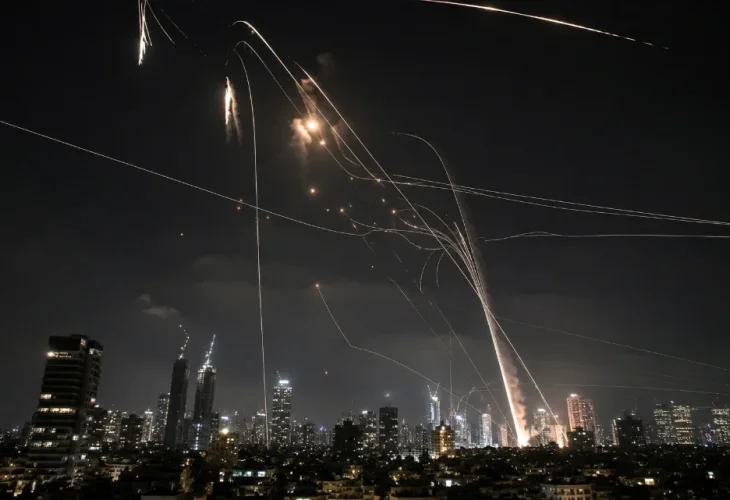
President Donald Trump has temporarily set aside plans for a major expansion of the U.S. military campaign against Iran after senior advisers warned that heavier fighting could further reduce American air-defense stocks needed to protect troops and allies across the Middle East, The New York Times reported.
The concern is already changing how American forces respond to Iranian attacks. Two senior U.S. officials told NBC News that commanders are allowing some Iranian missiles and attack drones to penetrate air defenses as they seek to conserve the Pentagon’s shrinking supply of interceptors.
Commanders continue to engage threats believed to be headed toward American personnel. However, projectiles expected to strike runways, radar systems, fuel depots or unoccupied sections of military bases may be allowed to land, according to NBC.
The network also reported that Iran has launched nearly 9,000 missiles, drones and other projectiles since the war began. NBC did not specify how many were directed at U.S. forces rather than Israel, Gulf countries or other regional targets.
The heaviest pressure is on Patriot, THAAD and SM-3 systems designed to intercept ballistic missiles. Precise American inventories and wartime expenditure totals are classified, but an April assessment by the Center for Strategic and International Studies estimated that the military had fired between 190 and 290 THAAD interceptors from a prewar stock of approximately 360.
CSIS also estimated that between 130 and 250 SM-3 missiles had been used from a stockpile of approximately 410. It placed Patriot use between 1,060 and 1,430 interceptors from a prewar inventory of about 2,330. The organization said the United States retained enough munitions to continue fighting Iran under plausible scenarios, but warned that the expenditures could weaken preparations for another major conflict.
American stocks of long-range strike weapons have also fallen. According to figures reported by ABC News and estimates compiled by CSIS, U.S. forces have used more than 1,000 Tomahawk cruise missiles and over 1,100 JASSM air-launched missiles. CSIS estimated that between 40 and 70 Precision Strike Missiles were fired from a small prewar inventory of approximately 90.
Restoring the selected missile inventories examined by CSIS could take several years because of limited production capacity, long manufacturing timelines and competing demand from American allies.
The danger to American forces was demonstrated in Jordan, where an Iranian ballistic missile penetrated U.S. defenses and killed three service members, according to a senior American official cited by The New York Times. The attack intensified concerns about whether regional bases could withstand a larger Iranian response following an expanded U.S. bombing campaign.
Gen. Dan Caine, chairman of the Joint Chiefs of Staff, told Trump that the proposed campaign was militarily feasible but could dangerously reduce the number of interceptors available to U.S. Central Command, according to the Times.
The Pentagon had prepared a multistage operation that could begin with attacks on Iranian coastal radar systems, anti-ship missile launchers, attack boats and other sites connected to strikes on commercial vessels in the Strait of Hormuz. Later stages could have included energy infrastructure and nuclear sites, including the deeply buried facility known as Pickaxe Mountain.
Trump had publicly suggested that escalation was imminent.
“Look, we’re locked and loaded,” he told reporters Friday. “We’re ready to go, but we’re talking to them, so maybe there will be, maybe there won’t be a tipping point.”
Military supplies were not the administration’s only concern. The New York Times reported that advisers also warned about Iranian retaliation against Gulf allies, a wider regional war, further pressure on energy markets and a worsening refugee crisis. Some officials questioned whether renewed bombing would force Tehran into negotiations or instead unite Iran’s political and military leadership.
The United States subsequently completed two nights without announced strikes after attacking Iran for 13 consecutive nights. Iran also refrained from launching further attacks on American positions, according to The Guardian and Reuters.
“Our strategy has essentially been retaliatory; we have also halted our retaliatory operations,” Iranian army spokesman Mohammad Akraminia said, according to The Guardian.
Oman has continued efforts to revive negotiations and reach an agreement governing shipping through the Strait of Hormuz. The Financial Times reported that an Omani delegation visited Tehran to discuss a provisional arrangement for safe passage through the strategic waterway.
The broader U.S. campaign has been postponed rather than abandoned. Trump could reconsider if Iran again attacks American forces, Gulf allies or commercial shipping. For now, the reduced interceptor stocks are influencing both which incoming threats U.S. commanders engage and how far the White House is prepared to escalate the war.

