

World News
Brooklyn Food Coop Votes To Pull Israeli Products From Shelves
The Park Slope Food Coop decision affects a small list of Israeli goods but sparked a wider fight over BDS, antisemitism and Jewish safety
 Google Maps
A famed Brooklyn grocery cooperative voted Tuesday night to boycott Israeli products after a years-long fight that divided members of the Park Slope Food Coop and drew warnings from Jewish leaders over antisemitism and communal safety.
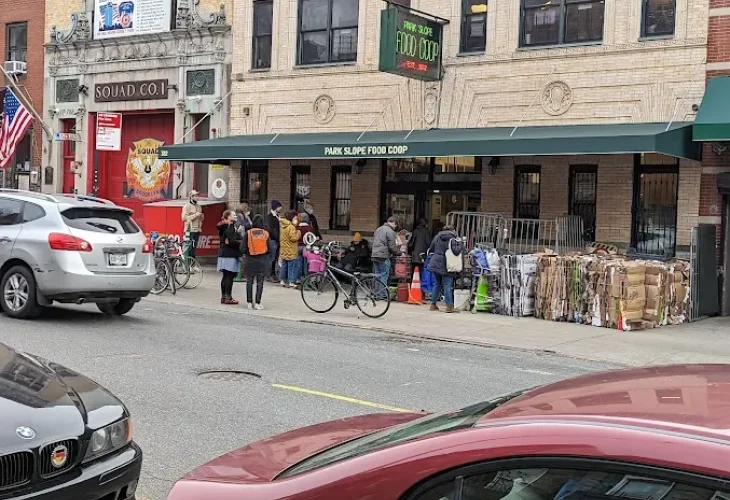
The Park Slope Food Coop is a member-owned grocery store where shoppers also work shifts and vote on store policy, making the boycott a direct decision by thousands of local residents rather than a corporate move by a grocery chain.
The vote passed with 67% in favor, 31% opposed and 2% abstaining, according to immediate results viewed by JTA. In all, 6,772 votes were cast at a meeting that lasted for hours and was held remotely because of security concerns.
The decision affects a small number of Israeli goods sold at the member-owned grocery store, including Bamba, Dorot frozen herb cubes, olive oil, sesame products, persimmons and seasonal bell peppers. The products are now expected to be removed from shelves, though the timing of the removal was not immediately clear.
Before voting on the boycott itself, members approved a separate resolution lowering the threshold needed to pass such a measure from a 75% supermajority to a simple majority of 51%. That measure passed 68% to 31%, with 1% abstaining.
The boycott resolution said the Coop would stop selling goods produced in Israel, including inside the pre-1967 borders and in Israeli communities over the Green Line, “until Israel complies with international law.” Supporters argued the move was in line with the Coop’s history of political consumer boycotts.
The debate over Israeli products at the Park Slope Food Coop has lasted for more than a decade. It intensified after the October 7, 2023 Hamas attacks in Israel and the Gaza war, turning the Brooklyn store into a local flashpoint over Israel, BDS and antisemitism.
Tuesday’s meeting was moved fully online after Coop staff said the expected turnout was unusually large and that they could not guarantee security for an in-person gathering, even with additional measures. Nearly 7,000 of the Coop’s roughly 16,000 members participated in the vote.
The dispute also drew in Jewish leaders in Park Slope. Rabbi Rachel Timoner of Congregation Beth Elohim, one of Brooklyn’s prominent synagogues, urged members to vote against the resolutions.
“This proxy war for the war between Israelis and Palestinians is now dividing our local community into two camps,” Timoner said in a sermon earlier this month. “In the end, it is about antisemitism, a real and rising threat which ultimately carries existential danger both for Jews and for every society in which it takes hold.”
The fight also entered the Democratic primary in New York’s 10th Congressional District, where two Jewish candidates are running. Rep. Dan Goldman condemned the boycott ahead of the vote, while his challenger, former New York City Comptroller Brad Lander, said he was not a Coop member but would oppose the measure if he were.
“Everyone is free to criticize the Israeli government, which I do not hesitate to do, but joining a movement that was founded on the principle of the elimination of Israel will have no impact on the Israeli government or the Israeli economy,” Goldman said. “Instead, it only succeeds at shifting the responsibility for the Israeli government’s actions to American Jews, which is quintessential antisemitism.”
Tensions around the Coop debate had already escalated before the vote. At an April meeting, one member said “Jewish supremacism is a problem in this country,” drawing criticism from Jewish groups. Coop4Unity, an anti-BDS group formed in 2024, has also filed a state human rights complaint alleging antisemitic and anti-Israel harassment at the market.
The vote leaves one of Brooklyn’s best-known progressive institutions sharply divided, with supporters celebrating a symbolic boycott of Israel and opponents warning that the campaign has made Jewish members feel targeted in their own neighborhood grocery store.

