

Parashat Tetzaveh
The Menorah’s Oil: A Symbol Far Greater Than Light
The Torah demanded only the purest olive oil for the Menorah, carrying a message far deeper than simple illumination.
- Yehosef Yaavetz
- | Updated
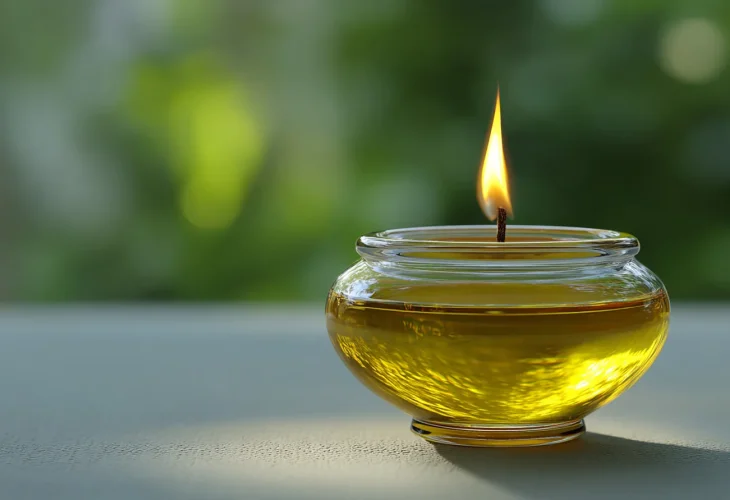
At the beginning of Parashat Tetzaveh, the Torah commands: “And you shall command the children of Israel, and they shall bring you pure olive oil, beaten for lighting, to kindle a constant lamp.”
Not every oil was suitable for the Menorah. Not every olive qualified, and not every form of crushing was enough.
The Torah specifies three precise conditions:
olive oil, pure, and beaten.
Chazal explain in the Gemara (Menachot 86b): “Beaten for lighting, and not beaten for meal offerings.” In other words, the oil used for the Menorah had to meet an even higher standard than the oil used for the Temple’s meal offerings.
For the Menorah, only the very first drops of oil extracted from the olive through gentle crushing could be used, before any grinding or mixing took place. Afterward, the lower quality oil could be used for other purposes.
The Light Was Not Meant for Visibility
Rashi explains that the olives were crushed gently in a mortar rather than ground in a mill. Grinding mixes together the pits, peels, and sediment, while the first pressing produces exceptionally pure oil without cloudiness or impurities.
This purity carried symbolic meaning.
The Menorah in the Beit HaMikdash was not simply a practical source of light. The Sanctuary itself did not require illumination for visibility, especially since the Kohanim often entered during daylight hours.
Chazal therefore explain:
“Does He need its light? Rather, it is testimony to all who enter the world that the Divine Presence rests among Israel.”
The Menorah’s light was not ordinary light. It was testimony.
The Olive and the Jewish People
The Midrash compares the Jewish people to the olive.
Just as the olive releases its precious oil only through pressure and crushing, so too the Jewish people often reveal their deepest spiritual strength through challenge, suffering, and perseverance.
The oil itself does not shine independently. Rather, it feeds and strengthens the flame.
So too, the role of Israel and the Beit HaMikdash is not merely to exist for themselves, but to nourish spiritual light in the world.
Why Olive Oil Was So Valuable
Historically, olive oil was one of the most important products throughout the Land of Israel and the Mediterranean world.
Archaeological discoveries of ancient olive presses, storage systems, and production facilities reveal how developed the olive oil industry already was during biblical times.
The Torah itself praises the Land of Israel as “a land of oil producing olives.”
Regions such as the Galilee and the Judean hills became especially known for olive cultivation and high quality oil production.
The finest oil was always considered the very first extraction, produced through gentle pressure without grinding. It was clearer, cleaner, more fragrant, and more valuable.
The Menorah required only this highest standard.
A Flame Without Smoke
The Rambam describes in Hilchot Temidin UMusafin how carefully the oil was examined before being approved for use in the Menorah.
They checked:
- Its clarity
- Whether sediment was present
- Whether it produced smoke
Pure oil burns steadily and cleanly.
Smoke appears when impurities and residue do not burn properly. The Menorah’s flame needed to rise clearly, brightly, and without interruption.
The Menorah and the Table
The Ramban points out that the Menorah stood opposite the Shulchan, the table inside the Sanctuary.
The table symbolized physical blessing and material abundance, while the Menorah symbolized spiritual illumination and wisdom.
Olive oil itself is entirely physical, yet when ignited, it transforms into something refined and elevated, becoming a symbol of spiritual light.
The Olive Represents Inner Depth
The Maharal of Prague explains that the olive uniquely symbolizes inwardness and hidden depth.
Most fruits can be eaten immediately. The olive, however, is naturally bitter and only becomes valuable after processing.
Its true essence is hidden inside it.
Likewise, the Menorah, which symbolizes inner wisdom and spiritual depth, specifically required a substance whose greatest value was concealed beneath the surface.
Olive Oil and the Light of Torah
Chazal repeatedly connect olive oil with wisdom and Torah.
The Gemara (Horayot 13b) teaches that someone who regularly uses olive oil merits stronger memory and retention of Torah learning.
The olive tree itself became a symbol of wisdom, endurance, and permanence. It is deeply rooted, resilient, and capable of surviving for generations.
Even after being cut down, olive trees often grow again.
The Olive as a Symbol of Renewal
The olive already appears in the Torah as a symbol of hope and renewal.
After the Flood, the dove returned to Noach carrying an olive leaf, signaling that life was beginning again after destruction.
Later, in the prophecy of Zechariah, two olive trees appear beside the Menorah as symbols of the renewed Second Beit HaMikdash.
And centuries later, during the Chanukah story, olive oil once again became the symbol of spiritual endurance and Divine favor.
The miracle of the oil represented far more than physical light. It symbolized the survival of Torah, holiness, and the eternal connection between Hashem and His people.

