

History and Archaeology
The Forgotten Holocaust Story: How Albania Saved the Jews
Why did Albania become the only country in Europe with more Jews after World War II than before it? The answer begins with a promise.
- Yehosef Yaavetz
- | Updated
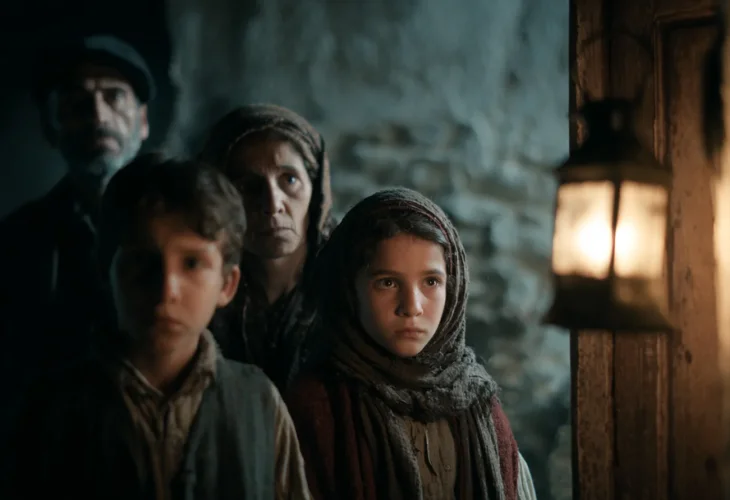
On a winter evening in 1943, German soldiers knocked on the stone door of a remote house in the Albanian mountains.
Inside sat a Muslim Albanian family gathered around the fire, alongside a Jewish family that had fled from Yugoslavia. Moments earlier, the Jewish children had quickly been dressed in local village clothing, and the tiny stone home seemed to stop breathing. The head of the household opened the door and calmly declared: “There is no one here from outside the village. Only my children.”
Scenes like this played out again and again across Albania during World War II. One of the best-known examples is the story of the Veseli family, who hid two Jewish families above a cowshed in the village of Krujë.
Remarkably, Albania became the only country in Europe to emerge from the Holocaust with more Jews than it had before the war began.
The Meaning of “Besa”
To understand how this happened, it is impossible to separate the story from one deeply rooted Albanian concept: “besa.”
In Albanian culture, besa is far more than a promise. It is a sacred word of honor, an absolute commitment that obligates a person to protect and remain loyal to someone under their care, even at personal risk. Whoever receives besa must be protected, sheltered, fed, and defended unconditionally. Breaking besa was traditionally viewed as a profound moral betrayal that could bring shame upon an entire family or community.
For many Albanians, honoring besa was not considered a choice. It was simply the right thing to do.
The Ancient Code Behind It
This principle was deeply connected to the Kanun, Albania’s centuries-old customary legal code that governed everything from family relationships to hospitality and personal honor.
While the Kanun is often associated with blood feuds and tribal law, it also established strict responsibilities toward guests, refugees, and people seeking protection. According to the code, once someone entered your home under your protection, their safety became tied directly to your own honor. Allowing harm to come to them was considered a stain on the entire household.
In a time when Jews across Europe were being hunted, that belief would prove lifesaving.
A Country With Unusual Religious Tolerance
Beyond besa itself, Albania also stood out historically for its unusually tolerant religious atmosphere.
During the reign of Zog I in the early 20th century, public emphasis was placed on coexistence and equality among religions. An American diplomat stationed in Albania during the 1930s famously wrote that despite the country's religious diversity, there was “no trace of religious hatred.”
Muslims, Christians, and Jews lived side by side, and when Nazi persecution spread across Europe, many Jewish refugees increasingly viewed Albania as one of the few places where ordinary people might genuinely protect them.
The Jewish Population Actually Grew
Before World War II, Albania’s Jewish population stood at only around 200 people. But as conditions worsened across Europe, Jewish refugees began arriving from Germany, Austria, Yugoslavia, Greece, and other countries.
By the end of the war, the Jewish population had grown to roughly 1,800.
Unlike most of Europe, however, almost all of them survived.
How Families Hid Jewish Refugees
Families such as the Veselis, the Hoxhas, the Pilkus, and many others opened their homes to complete strangers. Some hid Jews above barns and cowsheds, while others concealed them in basements or introduced them publicly as relatives.
Jewish children were dressed like local villagers and taught simple phrases that would help them blend in if questioned. They played outside with local children while adults remained hidden indoors. Entire villages often cooperated quietly, maintaining consistent cover stories and protecting refugees as if they were members of their own families.
When rescuers were later asked why they had risked their lives, many gave remarkably similar answers: “We gave besa. Once someone is under your protection, you cannot hand them over.”
Even Officials Helped Hide Jews
One of the most extraordinary aspects of Albania’s story is that assistance often extended beyond individual families.
In many European countries, local authorities collaborated with Nazi deportation efforts. In Albania, the opposite frequently occurred. Officials forged identity documents, looked the other way when necessary, and quietly helped refugees remain hidden. Entire communities worked together to shield Jewish families from discovery.
Muslim and Christian families often participated side by side in these efforts, united by a shared sense of responsibility toward those seeking refuge.
“We Simply Kept Besa”
Today, more than seventy Albanians have been officially recognized by Yad Vashem as Righteous Among the Nations.
Yet historians believe the number of rescuers was far greater, since many families never sought recognition or spoke publicly about what they had done. As far as they were concerned, they had not performed extraordinary acts of heroism.
They had simply kept their word.
They had simply kept besa.

