

Parshat Behaalotecha
Parashat Beha'alotcha: The Light That Guides the Journey
Rabbi Samson Raphael Hirsch reveals how the menorah teaches timeless lessons about education, leadership, and helping others shine on their own.
- Yehosef Yaavetz
- | Updated
At first glance, Parashat Beha'alotcha seems to interrupt the flow of the Torah's narrative.
The Book of Bamidbar begins with the census of the Jewish people. Parashat Naso continues with the organization of the camp, the responsibilities of the Levites, and the dedication of the Mishkan. Everything appears ready for the nation to begin its journey through the wilderness.
Then, unexpectedly, the Torah pauses.
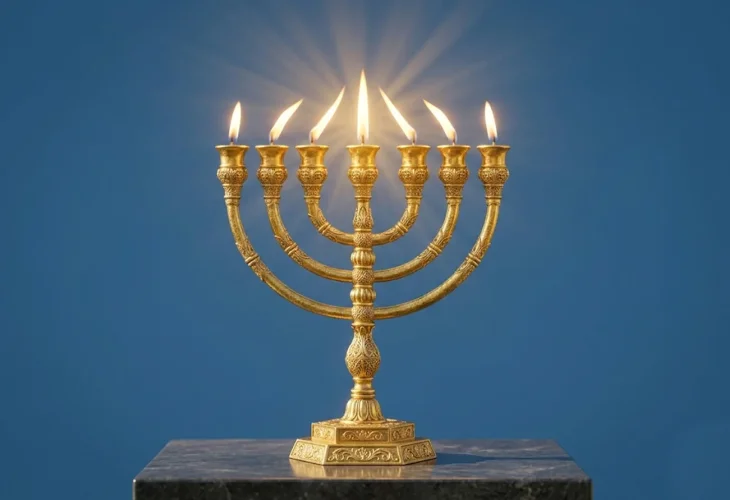
Before the camp moves forward, before the journeys begin, our attention is drawn back to the menorah and its light.
The message is profound. Before a nation can travel in the right direction, it must first know what light is guiding it.
The Light That Gives Direction
From the moment of creation, the world has been filled with light. The role of Torah and mitzvot is not simply to create light, but to give it direction.
The Torah instructs that the lamps of the menorah should face toward the center. Rabbi Samson Raphael Hirsch explains that the individual lamps do not shine for their own sake. Each light turns toward the central branch of the menorah, teaching that every talent, every form of wisdom, and every unique spiritual gift finds its true purpose when connected to a greater center.
Individual brilliance alone is not enough. Light gains meaning when it serves something larger than itself.
Until the Flame Rises on Its Own
Chazal famously teach that the word beha'alotcha hints to the requirement that the kohen light the menorah until the flame rises independently.
Rabbi Hirsch sees in this a powerful lesson about education.
The role of the kohen is not to hold the flame forever. His task is to help the wick reach the point where it can burn on its own. The same is true of Torah education and spiritual growth.
The goal is not lifelong dependence. The goal is to help another person internalize the light so deeply that it becomes part of who they are.
A teacher, parent, or mentor succeeds not when people continue leaning on them, but when those people can carry the light independently.
Learning When to Move, and When to Stay
Only after the camp is organized around the light does the Torah describe the nation's travels.
The guiding principle is simple: "At Hashem's command they encamped, and at Hashem's command they traveled."
Following the cloud when it moves may seem inspiring, but remaining in place when the cloud stops can be even harder.
At times the Jewish people camped for long periods in places that seemed unsuitable. At other times they stayed only briefly before moving again. The Torah teaches that serving Hashem requires not only knowing when to act, but also knowing when to wait.
Sometimes growth comes through movement.
Sometimes growth comes through restraint.
Both require faith.
The Lesson of the Trumpets
Another seemingly technical mitzvah appears in the parashah: the silver trumpets.
On the surface, they served a practical purpose. They gathered the nation, signaled travel, and communicated instructions throughout the camp.
Yet the Torah could have relied on word of mouth. Why the need for precise signals?
The answer lies in discipline.
The Jewish people were being trained to respond to a higher call. They were learning to act together, to listen, and to move according to a clear direction rather than personal convenience. A nation dedicated to a mission cannot function through improvisation alone.
Following Hashem
The climax of the parashah arrives when the nation finally begins its journey.
Moshe proclaims: "Rise up, Hashem, and let Your enemies be scattered."
The Jewish people are not leading the way. Hashem is.
The Ark travels ahead of the camp, searching out the path before them. The nation advances not because it knows where it is going, but because it follows the One who does.
This idea becomes the central challenge of the wilderness experience: learning to trust even when the destination is unclear.
The Root of the Complaints
Against this backdrop, the sin of the complainers becomes easier to understand.
The Torah initially describes them only as "complainers." No specific grievance is mentioned. First comes the desire to complain, and only afterward do reasons emerge.
Soon the complaints become more concrete. The people begin longing for the foods of Egypt: fish, cucumbers, melons, leeks, onions, and garlic.
But something remarkable happens in their memory.
The slavery disappears.
The suffering disappears.
The humiliation disappears.
All that remains is a nostalgic picture of food and comfort.
Rabbi Hirsch explains that desire has the power to distort reality. When people become consumed by physical cravings, they can begin viewing bondage as freedom and freedom as deprivation.
The manna represented dependence on Hashem. The complainers wanted dependence on their appetites instead.
Their problem was not hunger.
It was desire.
Moshe's Humility
As the challenges grow, Moshe appoints seventy elders to help carry the burden of leadership.
The appointment reveals both his limitations and his greatness.
Moshe recognizes that he cannot lead the nation alone, yet when two of the elders begin prophesying independently, he feels no threat. Yehoshua is alarmed and wants them stopped, but Moshe responds differently:
"Would that all Hashem's people were prophets."
True humility is not insecurity.
Moshe does not need to protect his status because his identity is rooted entirely in his mission. He does not view greatness as personal property. His desire is not to be the only source of spiritual light, but to help that light spread throughout the nation.
Bringing the Light Full Circle
This brings us back to the opening image of the parashah.
At the beginning, the lamps of the menorah face toward a common center. At the end, Moshe embodies that same principle. Though he is the greatest prophet, he does not seek to gather the light around himself.
Instead, he wants others to shine.
The message of Parashat Beha'alotcha is that true leadership, true education, and true spiritual growth all share the same goal: to receive light, direct it toward Hashem, and then help it spread to others.
Only then can the journey truly begin.

