

Magazine
An Ember Plucked From the Fire: A Holocaust Survivor's Legacy
Decades after losing everything, Rabbi Zalman stood at his great-grandson's bar mitzvah in Israel and reflected on the miracle of survival and renewal.
- Moriah Luz
- | Updated
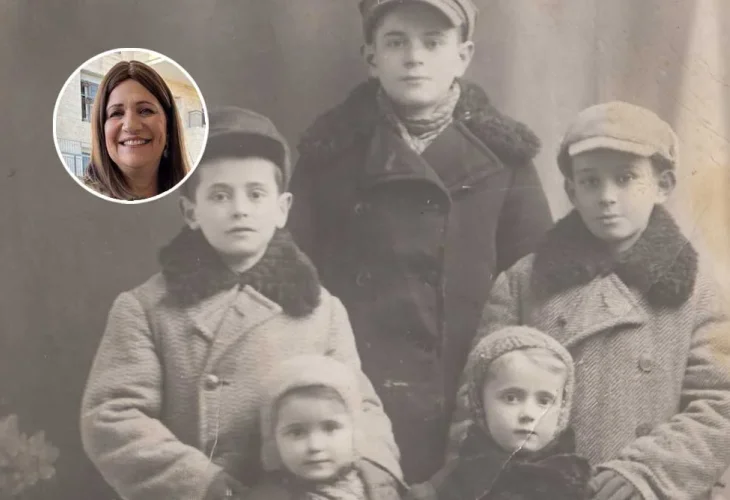 Pictured: Grandpa Zalman's siblings, all murdered in the extermination camps (circled: his granddaughter, Ronit Luz)
The crying caught Ronit off guard.
The holiday had just ended. The table was still set from the Seder, and her grandparents, visiting from the United States, were observing the second day of Yom Tov as is customary in the Diaspora.
Then she noticed her grandfather, Rabbi Zalman Uri, sitting quietly with tears streaming down his face.
"He was trembling," Ronit recalls. "He pointed to the words in the Haggadah, 'Vayare'u otanu Mitzrim'—'The Egyptians afflicted us'—and said, 'Ronitkele, I know what those words mean. I know what Vayare'u otanu Mitzrim means.'"
She did not ask any questions.
Like many Holocaust survivors, Rabbi Zalman rarely spoke about the past.
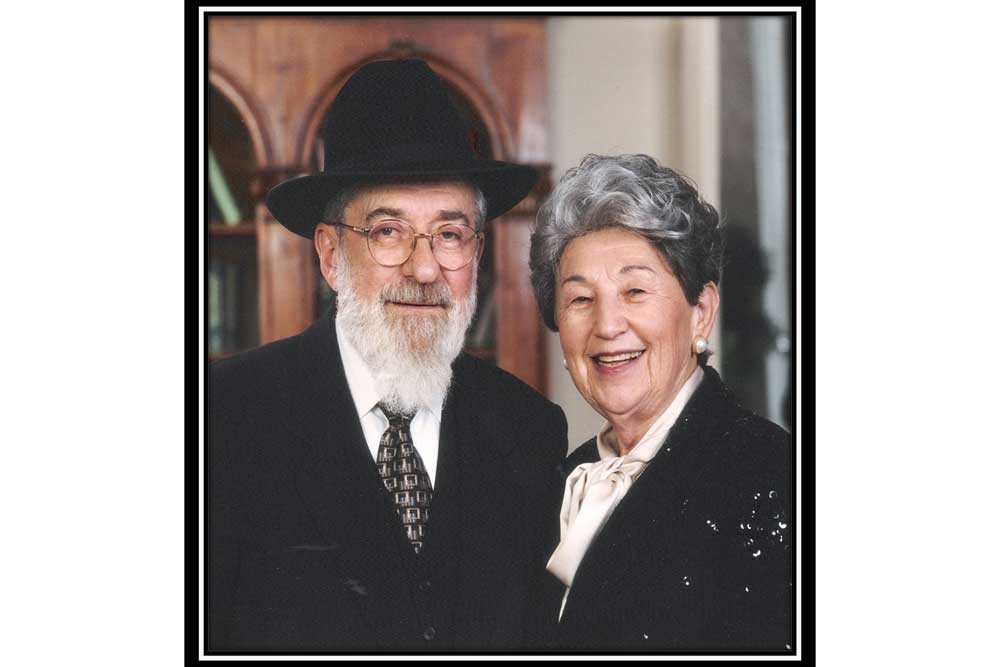 Rabbi Zalman z"l and Chava
The Family That Was Lost
For most of her childhood, Ronit knew very little about what her grandparents had endured.
A single photograph displayed near the entrance of their home hinted at an entire family that no longer existed. Beyond that, there was mostly silence.
Only years later, through interviews recorded as part of a project documenting Holocaust survivors, did the family learn the full story.
Before the war, Zalman was a gifted young Torah student from Poland and the eldest of six children. Recognizing his extraordinary abilities, relatives convinced his parents to send him to study in the yeshiva of Rabbi Aharon Kotler.
That decision saved his life.
When the Nazis invaded Poland, the yeshiva fled eastward. Zalman briefly returned home to seek his parents' permission to leave with the yeshiva.
His father understood what was coming.
The train was packed with desperate passengers. According to family accounts, he pushed his teenage son through a train window and sent him on his way.
"You will be the one to say Kaddish for me," he told him.
For the rest of the journey, the young boy cried out for his parents.
It was the last time he would ever see them.
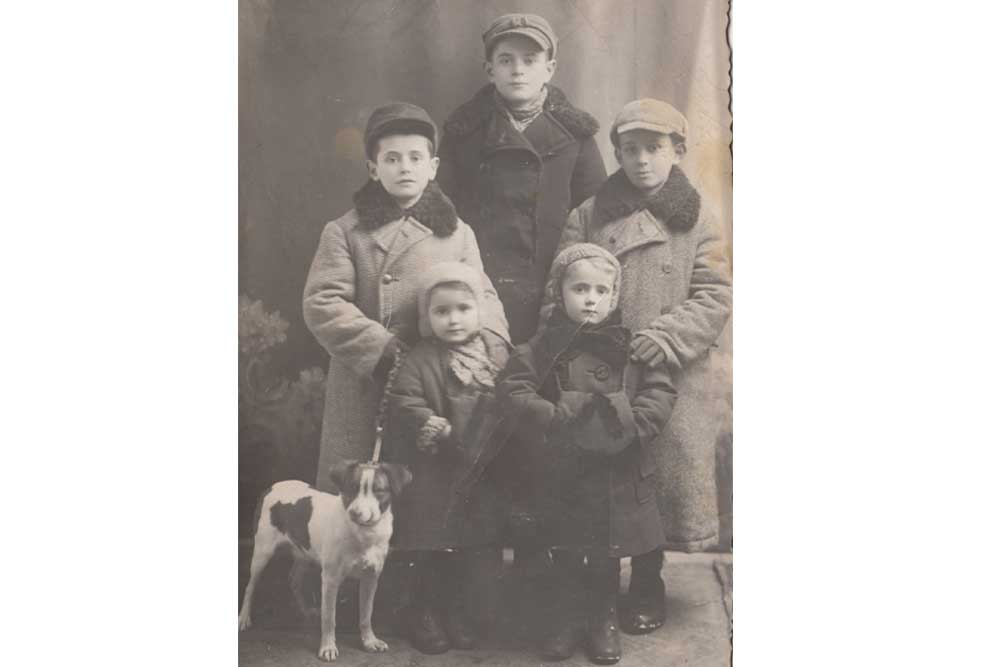 Grandpa Zalman's siblings who were murdered in the holocaust
A Chain of Miracles
As the war spread, the yeshiva continued moving from place to place. Eventually, the students were exiled by the Soviets to forced labor camps in Siberia.
The conditions were brutal.
The young men endured freezing temperatures, exhausting labor, hunger, and disease. Yet even there, they fought to preserve Jewish life.
One pair of tefillin was secretly passed from student to student. The boys risked severe punishment simply to perform a mitzvah. Despite extreme hunger, many refused non-kosher food whenever possible.
Looking back years later, Rabbi Zalman viewed those terrible years through a remarkable lens.
"The fact that they sent us to Siberia saved us," he explained.
Had they remained where they were, the Nazis would likely have murdered them.
Again and again, he described his survival not as something he accomplished himself, but as a chain of miracles guided by Divine providence.
"It was as if Someone was holding my hand," he said.
Finding Life in the Midst of Destruction
The hardships eventually took a physical toll. Zalman contracted typhus and was removed from the labor camps for treatment.
At the clinic where he recovered, he learned devastating news.
His father and brother had been murdered. His mother and siblings had been deported and never returned.
At just eighteen years old, he found himself alone in the world.
And yet it was there, in the midst of unimaginable loss, that he met Chava.
She too had lost almost everything.
Separated from her family during the war, she survived alone in Russia after her father was drafted into the Soviet army. Through a series of unlikely events, she found work assisting nurses in a clinic.
That clinic brought the two survivors together.
With the war still raging around them, they married.
Years later they would tell their grandchildren about the simple chuppah attended mostly by fellow orphans and the modest meal that followed.
Rebuilding the Jewish People
Not long after the war ended, Chava gave birth to their first child.
When people later asked where they found the strength to build a family after experiencing such devastation, the answer was always the same.
They wanted to rebuild.
They wanted to continue the Jewish people.
And above all, Rabbi Zalman believed he had been saved for a purpose.
"If Hashem saved me," he would often say, "then I have a mission in this world."
He spent the rest of his life living that mission.
The family eventually settled in the United States, where Rabbi Zalman devoted decades to Jewish education, outreach, and community leadership. Hundreds of students passed through his classrooms and guidance. He dedicated his life to teaching Torah and bringing fellow Jews closer to their heritage.
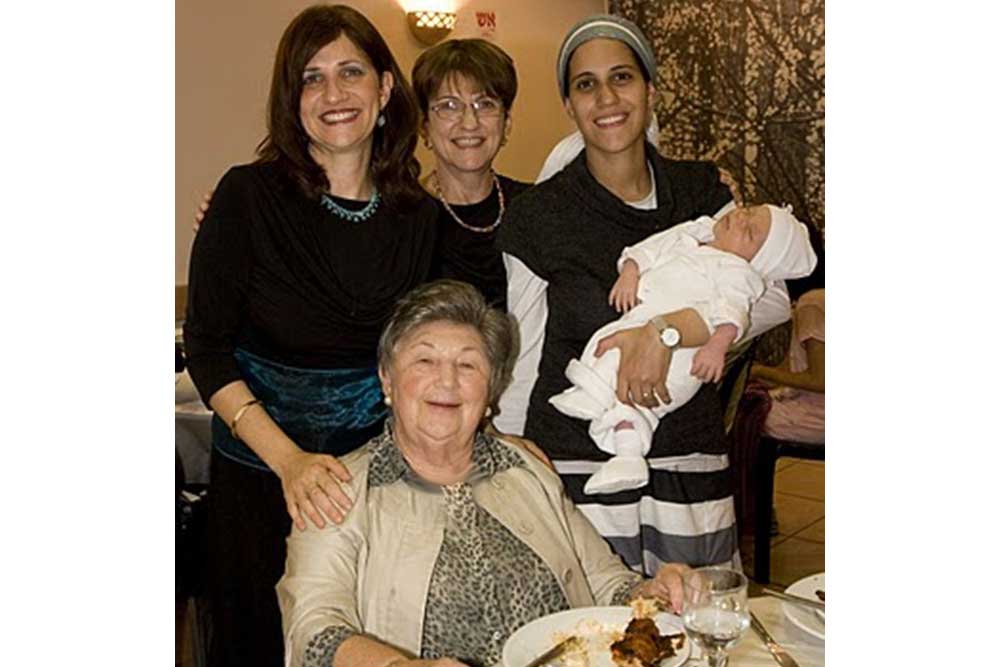 Five generations: Grandma Chava, her daughter, granddaughter Ronit, great-granddaughter, and great-great-grandson.
"I Would Have Thought He Was Crazy"
One family memory captures the magnitude of what was rebuilt.
More than sixty years after the war, Rabbi Zalman stood at the bar mitzvah celebration of his first great-grandson in Israel.
Overcome with emotion, he addressed the guests.
"If someone had told me sixty years ago that I would stand at my great-grandson's bar mitzvah in the Land of Israel," he said, "I would have thought he was crazy."
For a boy who had once believed he was the sole survivor of his family, the moment represented something far greater than personal joy.
It was victory.
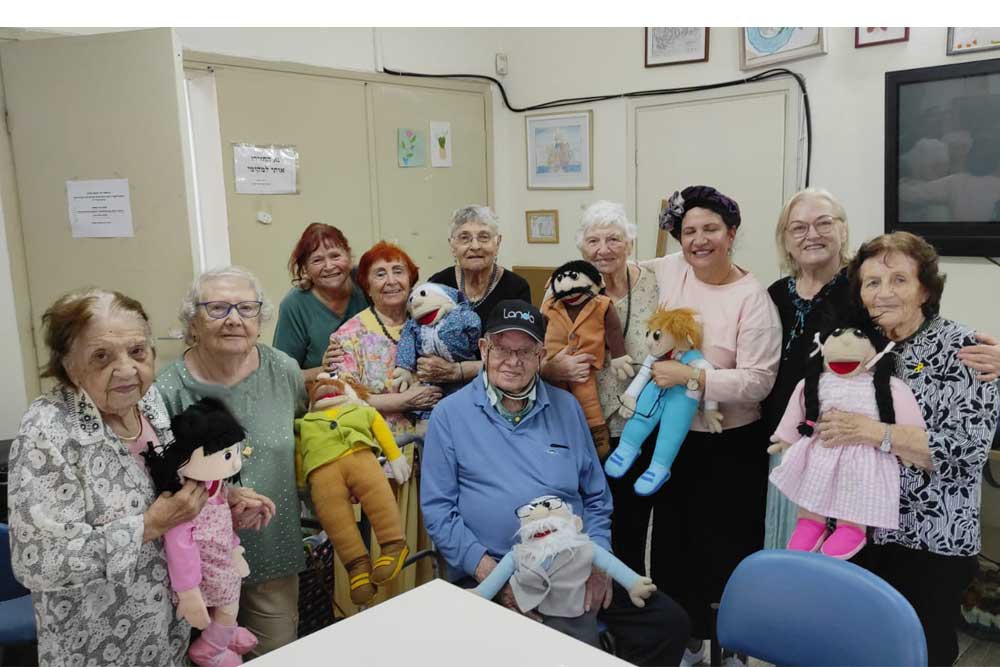 Ronit after sharing her grandparents' story
An Ember Plucked From the Fire
Rabbi Zalman often described himself with a phrase from the prophets: "an ember plucked from the fire."
Today, that ember has become an entire forest.
Children.
Grandchildren.
Great-grandchildren.
And even great-great-grandchildren.
His descendants continue telling his story, speaking to students, soldiers, seniors, and Holocaust survivors. Ronit herself now shares her grandparents' journey through educational programs and performances, determined to preserve their legacy for future generations.
Her family's story is not only about survival. It is about faith, rebuilding and the extraordinary power of one person who refused to let the Jewish future end with him.
As one survivor became many generations, the answer to those who sought to destroy the Jewish people became unmistakably clear:
Am Yisrael Chai.

