

Scientific Experiments
How Water Climbs: A Fun Science Experiment for Kids and Adults
A glass of water, a paper towel, and a few markers are all you need to see an amazing scientific phenomenon in action.
- Shira Dabush
- | Updated
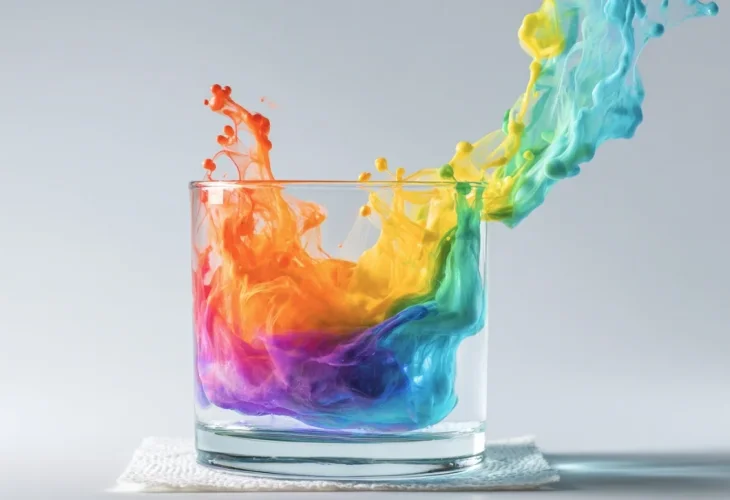
Sometimes the most fascinating science experiments are also the simplest.
You don't need a laboratory, expensive equipment, or complicated materials to witness an incredible scientific phenomenon. In fact, all it takes is a paper towel, a few colored markers, and a glass of water.
Many people remember this experiment from childhood. Watching colors slowly travel up a piece of paper feels almost magical, no matter how many times you've seen it before. In recent years, the experiment has even become popular on social media, captivating a whole new generation.
But beyond the colorful visual effect lies an important scientific principle that helps plants, trees, and entire ecosystems survive.
What Happens During the Experiment?
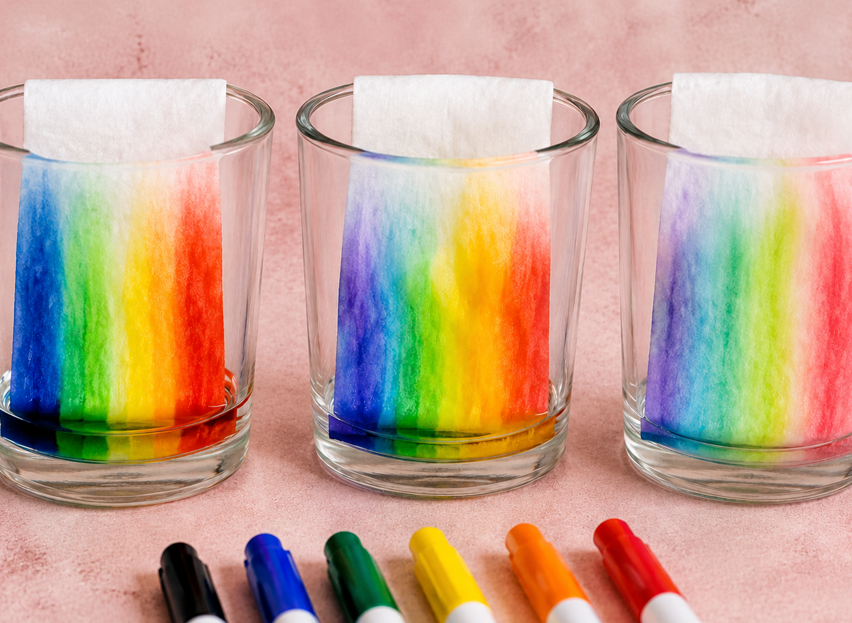
Start by drawing colored lines, shapes, or a simple picture near the bottom of a strip of paper towel or other absorbent paper.
Next, place the lower edge of the paper into a glass containing a small amount of water.
Within minutes, something remarkable begins to happen.
The water slowly climbs upward through the paper, carrying the colors with it. As the colors move, they spread across the paper and sometimes separate into entirely new shades. What started as a simple drawing can quickly transform into a colorful work of art.
To someone seeing it for the first time, it almost looks as though the colors are moving on their own.
Why Do the Colors Climb?
The answer lies in a scientific phenomenon known as capillary action.
Paper is made up of millions of tiny fibers. Between those fibers are microscopic spaces that act like narrow channels.
When the edge of the paper touches the water, water molecules begin attaching themselves to the fibers and moving through those tiny spaces. Because of the physical forces between the water molecules and the paper fibers, the water is able to travel upward, even against gravity.
As the water rises, it carries the marker pigments along with it, creating the colorful effect you see.
The Same Process Happens Inside Plants
This is the part many science teachers love to explain.
Plants use a very similar process to transport water from their roots all the way to their leaves.
Trees that stand dozens of feet tall rely in part on capillary action to move water through tiny tubes inside their stems and trunks. Without this process, plants would not be able to deliver the water and nutrients they need to survive.
In other words, this simple experiment offers a glimpse into one of nature's most important systems.
Why Do Some Colors Split Apart?
If you use certain markers, especially black, brown, or other dark colors, you may notice something even more surprising.
Instead of staying one color, the ink begins separating into different shades. Blues, greens, reds, and purples may suddenly appear.
That's because many marker colors are actually made from several pigments mixed together.
As the water moves through the paper, each pigment travels at a slightly different speed. This causes the colors to separate from one another.
Scientists use a similar technique, known as chromatography, to identify and separate substances in laboratories.
What You'll Need
- Paper towel or absorbent paper
- Colored markers
- A clear glass
- Water
How to Do the Experiment
- Draw a colored line, pattern, or small picture a few inches above the bottom edge of the paper.
- Pour a small amount of water into a clear glass.
- Place the edge of the paper into the water, making sure the drawing itself stays above the waterline.
- Wait and observe.
Within minutes, you'll see the water begin climbing through the paper and carrying the colors upward.
It's a beautiful demonstration of science in action, and a reminder that some of nature's most amazing secrets can be discovered with materials you already have at home.

