

Parashat Shelach
Parshat Shlach: If the Spies Told the Truth, What Was Their Sin?
The spies accurately described the Land of Israel, so why were they punished so severely?
- Rabbi Moshe Sheinfeld
- | Updated
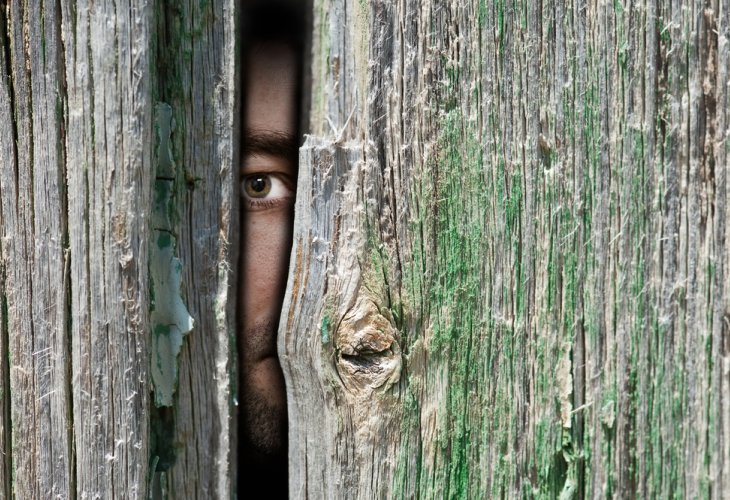 (Photo: shutterstock)
The story of the spies in Parshat Shlach is one of the most consequential episodes in Jewish history. According to our sages, the consequences of that sin continue to echo throughout the generations, making it one of the most significant and difficult sections of the Torah to understand.
Each year, when Parshat Shlach is read, we are challenged to revisit a fundamental question raised by the Ramban: What exactly was the spies' sin? After all, weren't they simply reporting what they saw?
A Difficult Question
At first glance, the spies appear to have done exactly what Moshe asked of them. They were sent to gather information about the Land of Israel and returned with a report describing powerful nations, fortified cities, and intimidating giants.
Were they wrong?
The facts they presented seem to have been entirely accurate. In fact, years later, Moshe himself described the inhabitants of the land in very similar terms: "A people great and tall, the children of Anak." He openly acknowledged that the cities were fortified and that the nations dwelling there were stronger than Israel.
This makes the question even more difficult. If the spies accurately reported what they observed, why were they punished so severely?
After all, they had been sent to evaluate the land through natural means. Had the conquest been intended as an entirely open miracle, there would have been little reason to send spies in the first place. The information they gathered was real. The challenge is understanding where their mistake began.
"Stronger Than Him"
The Gemara points us toward a possible answer.
The spies declared, "We cannot go up against the people, for they are stronger than us." The sages famously interpret the verse differently: "Do not read it as stronger than us, but rather stronger than Him"—as if, Heaven forbid, even Hashem could not remove the inhabitants from the land.
This interpretation is astonishing. How could the spies, who had witnessed the Exodus, the splitting of the sea, and countless miracles, reach such a conclusion?
What caused them to lose confidence to such an extreme degree?
The Mystery of the Nephilim
Part of the answer may lie in one of the most mysterious details in their report.
The spies described seeing the Nephilim in the land: "There we saw the Nephilim... and we were in our own eyes like grasshoppers." On the simplest level, the word refers to giants, which fits the Torah's description of the descendants of Anak.
However, Rashi departs from his usual focus on the straightforward meaning and cites a Midrash identifying the Nephilim as descendants of Shamchazai and Azael, angels who descended from heaven and sinned in the days before the Flood.
According to this understanding, the spies believed they were encountering beings connected to forces that predated the Flood itself. They were not merely facing powerful warriors; they felt they were confronting something beyond the ordinary rules of nature.
Why Does Rashi Bring This Midrash?
Rashi rarely introduces Midrashic explanations when the simple meaning of the text is sufficient. Why does he do so here?
Perhaps Rashi is trying to explain the spies' dramatic loss of perspective.
The Midrash teaches that these fallen angels descended to earth before the Flood. If their descendants were still alive generations later, the spies may have concluded that these beings had somehow survived the destruction that wiped out the entire world. In their fear, they interpreted this as proof that these giants were unconquerable.
This may explain how they reached the shocking conclusion implied by the Gemara, that the inhabitants were "stronger than Him." Their fear distorted their judgment and caused them to lose sight of Hashem's limitless power.
Yet even this does not fully answer our question. The facts they reported were still facts. So where exactly did they go wrong?
The Real Problem
A fascinating answer emerges from the opening comments of Rashi on the parashah.
Rashi asks why the story of the spies appears immediately after the story of Miriam's punishment for speaking negatively about Moshe. His answer is that the spies witnessed Miriam's punishment and failed to learn from it.
This observation points to a deeper issue.
Miriam's words were not necessarily false. The problem was the way she expressed them. Rather than addressing her concerns properly, she turned them into a public matter.
The same was true of the spies.
Their mistake was not necessarily the information they gathered. Their mistake was how they presented it. Instead of bringing their concerns directly to Moshe and discussing the implications responsibly, they transformed their report into a national crisis. They elaborated on the dangers, magnified the obstacles, and spread fear throughout the camp until the entire nation sat and cried.
There is a world of difference between reporting facts and creating panic.
Report the Facts, But Don't Draw the Wrong Conclusions
The spies saw fortified cities. They saw giants. They saw strong armies.
Those were facts.
But then they drew a conclusion: the mission was impossible.
That conclusion was their sin.
Their responsibility was to report what they observed. The decision of what to do with that information belonged to Moshe and, ultimately, to Hashem. Instead, they interpreted the facts through a lens of fear and despair.
Even when natural circumstances appear impossible, a Jew must remember that Hashem is not limited by nature. As the Torah asks elsewhere: "Is the hand of Hashem too short?"
The spies saw the obstacles but forgot the One who had promised them success.
They Saw the Land, But Did They Really See It?
The Sefat Emet offers an even deeper understanding.
The Torah states that the spies would not merit seeing the Land of Israel. Yet this seems puzzling. They had already spent forty days there. They had seen it with their own eyes.
The Sefat Emet explains that there is seeing, and then there is truly seeing.
Physically, the spies saw the land. Spiritually, they did not.
Moshe sent them to "tour" the land, to discover its beauty and greatness. The Malbim notes that they approached their mission differently. Rather than searching for the land's virtues, they acted like spies looking for weaknesses and vulnerabilities.
As a result, they saw only walls, giants, and dangers. They saw dirt, stones, and trees, but they failed to perceive the holiness of the land and its unique spiritual potential.
They did not see a land upon which the eyes of Hashem are constantly fixed. They did not see that this was a land whose destiny would transcend ordinary natural limitations.
A Timeless Lesson
In the end, the spies failed in two ways.
First, they took factual information and turned it into a public spectacle that spread fear throughout the nation. Second, they viewed reality solely through the lens of nature and failed to recognize the deeper spiritual truth standing before them.
The lesson is as relevant today as it was then.
Every one of us encounters challenges that appear overwhelming. We see obstacles, limitations, and reasons why success seems impossible. The question is whether we stop there, or whether we learn to see beyond the surface.
Do we focus only on the walls, or do we also see the possibilities?
Do we see only the difficulties, or do we remember that Hashem's plans are greater than the limitations we perceive?
The spies saw the Land of Israel. The tragedy is that they never truly saw it.
And perhaps that remains the enduring question of Parshat Shlach: How do we see the Land of Israel? And how do we see life itself?

