

Interesting
11,000 Carat Ruby Discovered in Myanmar: The Rare Gem With a Fascinating Jewish Tradition
Discover the story behind this extraordinary gemstone and its unique connection to the Jewish tradition
- Shira Dabush
- | Updated
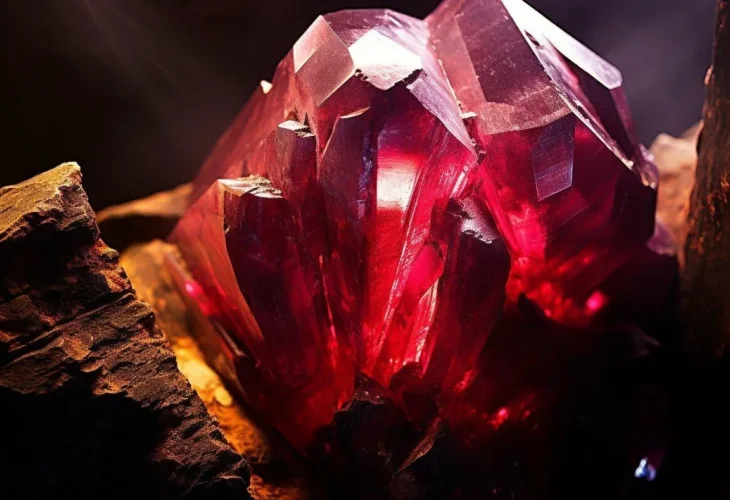
Miners in Myanmar have uncovered an enormous ruby weighing approximately 11,000 carats, a discovery considered one of the largest and rarest ever found in the war torn country. The gemstone, weighing about 2.2 kilograms (4.8 pounds), was discovered near the city of Mogok in the Mandalay region, an area renowned as the heart of Myanmar's gemstone industry.
According to state media reports, the ruby is the second largest ruby ever discovered in Myanmar.
Although it is smaller than a giant 21,450 carat ruby found in 1996, experts believe the newly discovered stone may be exceptionally valuable due to its quality, color, and clarity. The ruby reportedly displays a rich purplish red hue with subtle yellow undertones and an extraordinary natural brilliance.
Myanmar is considered one of the world's most important sources of rubies. Estimates suggest that approximately 90 percent of the world's rubies originate from regions such as Mogok and Mong Hsu.
A Valuable Industry Amid Controversy
The gemstone industry is a significant source of income for Myanmar, but it has also been the focus of international criticism.
Human rights organizations, including Global Witness, have called on jewelry companies to stop purchasing gemstones sourced from Myanmar, arguing that the trade helps fund the country's military regime.
The area where the ruby was discovered has recently experienced intense fighting as part of Myanmar's ongoing civil conflict. Despite the political instability and international scrutiny, the discovery has generated considerable excitement in the gemstone world, with many experts describing it as one of the most remarkable ruby finds of recent years.
The Spiritual Significance of the Ruby in Jewish Tradition
The ruby, known in Hebrew as Odem, is not only a precious gemstone but also one that holds spiritual significance in Jewish tradition. Throughout the generations, various special qualities have been attributed to it, particularly in connection with pregnancy, childbirth, and fertility.
The "Even Tekumah" in the Talmud
The Talmud mentions a stone known as Even Tekumah ("the preservation stone"), which was believed to serve as a protection against miscarriage.
There are differing opinions regarding the identity of this stone, but some commentators associate it with the ruby. According to traditional sources, a pregnant woman who carries a ruby on her body may receive protection from miscarriage.
A common traditional practice was to wear the stone as a necklace so that it would touch the skin directly during pregnancy. This belief appears in a number of traditional Jewish writings and has been passed down through generations as a well known segulah, or spiritual practice.
The earliest source is found in the Talmud, where it is stated that a pregnant woman may go out on Shabbat wearing an Even Tekumah to help prevent miscarriage. Some commentators identify this stone with the ruby because of its red color, which is associated with blood.
The View of Rabbeinu Bachya
Rabbeinu Bachya, in his commentary on the Torah (Exodus 28:15), describes the ruby as a stone with an intense red color and unique spiritual properties.
According to his writings, women who carry the stone are protected from miscarriage, and it may even provide assistance in difficult childbirth situations. His comments became one of the primary sources cited regarding this traditional belief.
Stories and Testimonies
Various books discussing segulot contain stories of women who used a ruby as a spiritual aid during pregnancy. Some accounts describe women who experienced successful pregnancies after previous difficulties while carrying the stone.
Certain traditions also mention that the stone may need to be removed during labor itself.
According to some traditional and Kabbalistic sources, for the segulah to be effective, the stone should touch the body directly rather than being separated by clothing or another material. This emphasis on direct contact appears in several traditional texts.
A Note of Perspective
These beliefs belong to the realm of Jewish tradition and spiritual practice. They are not established medical treatments and should not be relied upon as a substitute for professional medical care during pregnancy. Women experiencing pregnancy related concerns should always seek guidance from qualified healthcare professionals.

