

Interesting
The Science of Beauty: What Happens Inside the Brain?
From museum exhibits to breathtaking scenery, scientists are investigating how beauty affects the brain, heart, and emotions.
- Shira Dabush
- | Updated
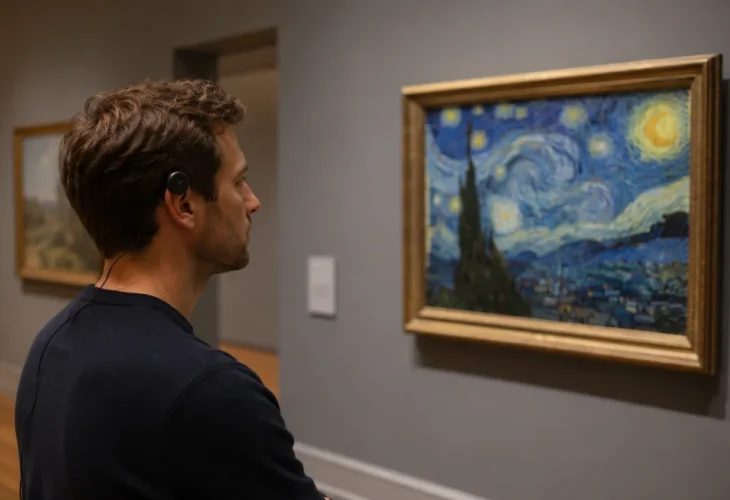
What actually happens inside our brains when we stand before a breathtaking work of art, gaze at a stunning landscape, or encounter an ancient object that fills us with awe? Is beauty simply a matter of personal taste, or is there something deeper taking place, something that can actually be measured?
A group of neuroscientists in the Netherlands is trying to answer that question through an unusual experiment that takes research out of the laboratory and into the real world.
Taking the Study of Beauty Into the Museum
Instead of placing volunteers in a sterile room and asking them to look at images on a computer screen, the researchers decided to study people in a setting where aesthetic experiences happen naturally: a museum.
Participants walk through real exhibits while wearing sensors that monitor various physiological responses. These devices measure brain activity, heart rate, and other bodily changes that occur as people interact with works of art.
"The goal of this study is to understand whether there is a biological signature of beauty," explains one of the researchers, Joey. In other words, the team is investigating whether there is a recurring pattern in the brain and body that appears when people experience something they find deeply beautiful or emotionally moving.
By studying visitors as they move through the museum, researchers hope to capture authentic reactions rather than artificial responses generated in a laboratory environment.
What Happens When We Encounter Beauty?
According to the researchers, participants wear EEG sensors that track brain waves while other devices monitor changes in heart rate and physiological arousal. In some cases, biological markers associated with hormones and neurotransmitters are also examined.
The goal is to determine whether there is a measurable connection between the subjective experience of beauty and objective physical responses.
In other words, can science identify what happens inside the body when someone is genuinely moved by a painting, sculpture, or other beautiful object?
The Growing Field of Neuroaesthetics
This question lies at the heart of a fascinating area of research known as neuroaesthetics, which explores how the brain responds to beauty and art.
Researchers in this field believe the brain does much more than simply observe beauty. When a person encounters something they find inspiring or awe-inspiring, regions associated with emotion, reward, and pleasure become active.
This suggests that beauty may be linked to some of the same neural systems involved in feelings of joy, satisfaction, excitement, and emotional connection.
Far from being a passive experience, beauty appears to engage the brain in powerful and meaningful ways.
Beauty Beyond the Museum
What makes these findings especially intriguing is that such responses are not limited to paintings hanging in galleries.
People may experience similar reactions when looking at a magnificent building, a dramatic sunset, a mountain landscape, or even a beautifully designed room. Pleasing colors, harmony, balance, and a sense of order can all evoke feelings that we describe as beautiful.
This raises an interesting possibility: perhaps beauty is not confined to art, but is woven into many aspects of human experience.
Is There a Formula for Beauty?
For thousands of years, philosophers, artists, and poets have debated the nature of beauty.
Some argued that beauty is rooted in symmetry and proportion. Others believed it comes from harmony and balance. Still others insisted that beauty exists entirely in the eye of the beholder.
Modern science is approaching the question from a different angle. Researchers are investigating whether certain patterns consistently trigger similar responses in the brains of different people. If such patterns exist, they may point to universal elements in the human experience of beauty.
A Mystery That Remains Unsolved
At the same time, scientists acknowledge that beauty is far from simple.
Every person's response is shaped by a unique combination of memories, emotions, culture, education, personality, and life experience. A painting that deeply moves one individual may leave another completely unmoved.
For that reason, researchers are cautious about claiming that beauty can be reduced to a single formula or scientific equation.
The search continues, but one thing is already clear: beauty is not merely something we see. It is something we feel, experience, and respond to with both our minds and our bodies.
Whether science ultimately discovers a universal signature of beauty or not, the very fact that researchers are searching for one highlights just how profound and powerful the experience of beauty truly is.

