

Israel News
Netanyahu Backs Plan To End U.S. Aid As Israel Prepares For Military Independence
Prime minister says Israel has “come of age” as Israel expands domestic weapons production and pushes for a partnership-based alliance with Washington
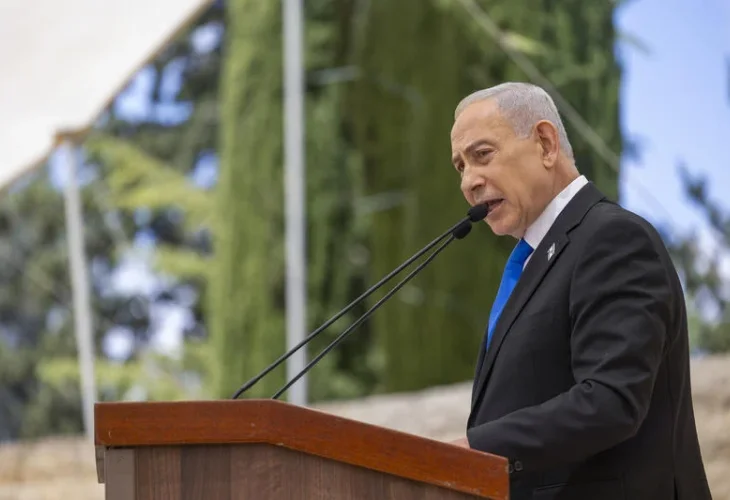 Benjamin Netanyahu (Dor Pazuelo/Flash90)
Israeli Prime Minister Benjamin Netanyahu is backing a new congressional resolution that would gradually phase out U.S. military aid to Israel, while simultaneously calling for the process to begin during the final years of President Donald Trump's administration as part of a broader effort to reshape the U.S.-Israel relationship.
The twin developments mark the clearest indication yet that Netanyahu's long-discussed vision of moving Israel from aid recipient to strategic partner is becoming official policy. Supporters argue that the shift would replace traditional military assistance with deeper cooperation on defense technology, intelligence sharing, weapons development, and joint strategic planning.
In a letter released Wednesday endorsing the legislation, Netanyahu referenced his meeting with Stutzman in Jerusalem. "As I said in our meeting in Jerusalem on May 27, 2026, Israel deeply appreciates the financial component of the military aid the United States has generously provided us over the years," he wrote. "The time has now arrived for us to move from aid recipient to partner."
Israel receives roughly $3.8 billion annually under the current U.S. military aid agreement, which runs through 2028.
Speaking to CNBC on Wednesday, Netanyahu identified ending Israel's reliance on American military aid as one of his major national goals alongside confronting Iran and its proxies, expanding Israel's technology sector, and pursuing additional normalization agreements in the Middle East.
"The other thing I want to do is move away, in America, from aid to partnership. We're now working on a memorandum of understanding, which will bring down the aid," Netanyahu said. "I want it to start now, I want it to start in the last two years of the Trump administration and I want it to keep going down, coming to zero, because I think we've come of age."
"Israel has a robust economy, and I want us to go from aid to a partnership where we both invest equal amounts and both share equally in the fruits of our innovators and technologies," he added. "It will also take away the myth that Israel is depleting America's coffers."
Stutzman's resolution was introduced one week after a meeting with Netanyahu in Jerusalem. The Indiana congressman described the proposal as the beginning of "a new era" in the alliance.
"This resolution affirms that the United States stands with Israel not out of obligation, but out of shared strength and shared strategic interest," Stutzman said. "Israel has come of age where our nations should contribute equally and share results equally."
The push reflects lessons Israeli leaders say were learned during the current war. Concerns about dependence on foreign suppliers intensified after the Biden administration temporarily halted a shipment of heavy bombs and warned that additional offensive weapons could be withheld if Israel proceeded with military operations in Rafah.
Netanyahu recently argued that weapons delays had tangible battlefield consequences.
"At a certain stage, we simply didn't have enough ammunition and people fell, heroes fell," he said. "Part of that shortage of ammunition was the result of an embargo."
Israeli officials say the response has been to accelerate efforts to build domestic production capacity. In December, Netanyahu unveiled a decade-long plan worth approximately 350 billion shekels ($108 billion) aimed at expanding Israel's independent defense industry and reducing reliance on foreign suppliers.
Defense Minister Israel Katz has tied that effort directly to Israel's wartime experience.
"The IDF must have at every moment the means to act with strength, speed, and without dependence on external factors," Katz said when announcing new domestic munitions production initiatives.
Maj. Gen. (res.) Amir Baram, director-general of the Defense Ministry, said Israel is "not only equipping for the immediate term, but laying infrastructure that will allow the IDF to reach any combat scenario while relying on independent production capabilities."
IDF Chief of Staff Eyal Zamir previously emphasized the same goal while serving as Defense Ministry director-general, saying major new procurement agreements would ensure Israel maintains "sovereign capability in producing bombs and munitions of all types."
Supporters of the transition argue that the current aid framework no longer reflects Israel's military and economic strength. Israel exported roughly $19 billion in defense products in 2025, making it one of the world's leading arms exporters. At the same time, provisions negotiated under the Obama administration are gradually eliminating Israel's ability to spend U.S. aid funds within its own defense industry, with that percentage scheduled to fall to zero by 2028.
Even U.S. Ambassador to Israel Mike Huckabee suggested this week that the future relationship should move beyond traditional aid.
"Israel receives $3.8 billion but spends far more than that buying U.S. military goods," Huckabee wrote on X. "U.S. also receives intel, tech innovations so that ROI is many times more." He later added: "New MOU w/ Israel ends aid & will be based on trade."
Critics of the idea argue that ending aid could reduce Israel's guaranteed access to American weapons and emergency wartime resupply. Supporters counter that recent disputes over weapons deliveries demonstrated the risks of dependence and reinforced the need for greater self-sufficiency.
For Netanyahu, the goal is not distancing Israel from Washington but redefining the relationship. Rather than a donor-recipient model, he envisions an alliance built on shared investment, joint innovation, and equal strategic cooperation.
"We've come of age," Netanyahu said.

