

Seventeenth of Tammuz (Shiva Asar B'Tammuz)
Five Tragedies, One Message: The Meaning of Tammuz
The shattered Tablets, the breached walls, and the burning of the Torah are not just historical events. They carry a powerful message for every generation.
- Rabbanit Hedva Levi
- | Updated
 (Photo: shutterstock)
The Mishnah in tractate Ta'anit teaches: "Five things happened to our ancestors on the Seventeenth of Tammuz: the Tablets were shattered, the daily offering ceased, the city was breached, Apostomos burned the Torah, and an idol was placed in the Sanctuary."
At first glance, these seem like events that took place long ago.
But perhaps the purpose of remembering them each year is to ask ourselves a deeper question: Are these tragedies only part of our history, or do they still echo in our lives today?
The Tablets Were Shattered
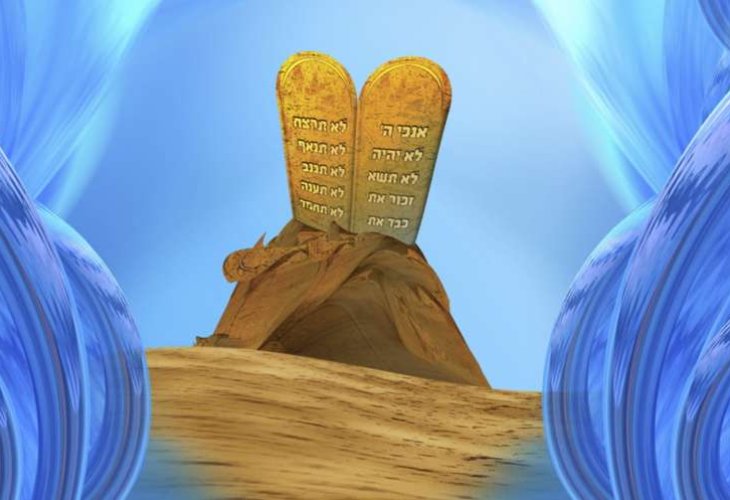
On the Seventeenth of Tammuz, Moshe Rabbeinu descended from Mount Sinai carrying the Tablets of the Covenant. When he saw the Golden Calf, the holiness departed from the Tablets, and he shattered them.
The question for us is: Are the words of Torah engraved upon our hearts?
Do we view mitzvot as a privilege, or do they sometimes feel like a burden? Are Shabbat, modesty, kindness, prayer, and our responsibilities to Hashem and to other people firmly rooted within us, or have they become "too heavy" to carry?
The Daily Offering Ceased
The Korban Tamid, the daily offering, represented a constant connection between the Jewish people and Hashem.
What does our daily connection look like?
Do we live with an awareness of Hashem "when you sit in your house, when you walk on the way, when you lie down, and when you rise"?
Or have distractions gradually taken that place? Has our constant connection been replaced by a constant stream of notifications?
The City Was Breached
Jerusalem's walls protected its holiness.
Today, the question is not about physical walls, but about spiritual boundaries.
Do we still protect our values? Do we guard our eyes, our speech, and our homes? Are there healthy limits that preserve our spiritual identity, or have the walls been breached?
Apostomos Burned the Torah
The burning of a Torah scroll represented an attack on Torah itself.
But Torah can also be "burned" in a different way—when its wisdom is pushed aside and replaced by values that pull us away from holiness.
The Torah describes a fire that must burn continuously upon the altar and never go out. The challenge is to keep that inner fire alive: our enthusiasm for Torah, our desire to learn, and our connection to Hashem.
An Idol Was Placed in the Sanctuary
The Sanctuary was meant to be a dwelling place for holiness.
Every Jewish home carries that same potential.
When influences that distance us from Torah and holiness dominate our homes and attention, we risk allowing foreign values to occupy the space meant for something greater.
The question is not merely what enters our homes, but what enters our hearts.
The Beginning of Repair
The Seventeenth of Tammuz is not only a day of mourning. It is also an opportunity for repair.
By reducing our focus on the material and turning inward, we begin rebuilding the "inner Temple" within ourselves.
The prophet Malachi concludes his prophecy with the words: "Remember the Torah of Moshe My servant."
Rebbe Nachman of Breslov points out that the initials of these words form the name Tammuz (in its abbreviated spelling). He explains that the month of Tammuz is especially connected to the power of remembrance.
Remembering What Was Lost
Our sages teach that had the first Tablets not been shattered, Torah would never have been forgotten by Israel.
According to Rebbe Nachman, the spiritual work of Tammuz is to repair forgetfulness through remembrance.
Forgetfulness creates distance. It causes us to lose sight of our purpose, our values, and our connection to Hashem.
Remembering brings light back into places that have grown dark.
The shattered Tablets symbolize what happens when spiritual awareness is replaced by illusion and emptiness. The challenge of Tammuz is to recover what has been lost and reconnect with the holiness already present within us.
Pursuing Spirituality
Rebbe Nachman teaches that Torah is entirely spiritual. When a person's thoughts and actions become more refined, the light of Torah can settle within the mind without being forgotten.
The path begins with a simple principle:
To want.
To long.
To pursue.
And ultimately, to attain.
Every act of growth begins with desire. Every step toward Hashem begins with longing.
A Prayer for Tammuz
The Pri Tzadik notes a fascinating connection: the Seventeenth of Tammuz always falls on the same day of the week as the Seder night of that year.
What links these two dates?
On Seder night, Hashem redeemed the Jewish people despite their spiritual shortcomings. Redemption came not because they were perfect, but because of Hashem's great love.
May it be Hashem's will that He look upon us with that same love.
Even when we are not where we should be.
Even when our spiritual walls need repair.
Even when the inner Temple still awaits rebuilding.
May Hashem arise and have mercy on Zion, redeem His people, and bring the final redemption speedily in our days. Amen.

