

History and Archaeology
Josefina Guerrero: The Woman the Japanese Were Afraid to Search
Discover the incredible true story of Josefina Guerrero, a Filipino resistance courier whose illness helped her smuggle vital intelligence during World War II.
- Yehosef Yaavetz
- | Updated
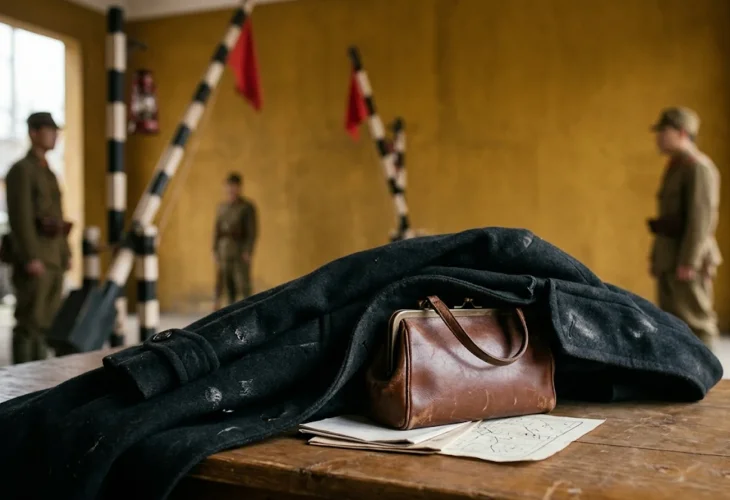
In wartime, information can be as powerful as any weapon.
During World War II, Japanese soldiers stationed throughout the Philippines closely monitored roads, checkpoints, and city streets. Anyone suspected of helping the resistance risked arrest, interrogation, imprisonment, or worse.
Yet one of the most effective spies working against the Japanese moved through these checkpoints almost untouched.
Her secret weapon was not military training or sophisticated disguises.
It was a devastating illness.
A Dangerous Mission in Occupied Manila
In 1942, the streets of Manila were filled with Japanese military checkpoints. Soldiers routinely searched civilians, examined documents, and questioned anyone who appeared suspicious.
One evening, a frail young woman approached a checkpoint.
Her hands were wrapped in bandages. Her face showed visible signs of disease. She appeared weak and sick.
The soldiers recoiled.
They believed she had leprosy.
What they didn't know was that hidden beneath her clothing were messages, sketches, maps, and intelligence intended for the Philippine resistance and Allied forces. Fear kept the soldiers away, allowing her to pass through checkpoint after checkpoint without being searched.
Her name was Josefina Guerrero.
A Life Turned Upside Down
Josefina Guerrero was born in 1917 in Quezon Province in the Philippines. Orphaned at a young age, she spent part of her childhood under the care of nuns before later studying in Manila.
Friends remembered her as lively, creative, and full of energy. She loved music, poetry, and art. At age 16, she married Renato Maria Guerrero, and a few years later the couple welcomed a daughter.
Then everything changed.
In 1941, she was diagnosed with Hansen's disease, commonly known at the time as leprosy. Fear and misunderstanding surrounded the illness. Her husband left her, and she was separated from her daughter.
Not long afterward, Japanese forces invaded the Philippines.
Turning Weakness Into Strength
As the occupation intensified, medical care became scarce and Josefina's condition worsened.
Rather than surrender to despair, she made a remarkable decision.
She approached members of the Philippine resistance and offered her services.
At first, resistance members were hesitant. She appeared physically weak and seriously ill. But they soon realized that her illness gave her something few others possessed: the ability to move where others could not.
Japanese soldiers were terrified of contracting her disease.
While other couriers risked searches and arrest, soldiers often refused to touch her.
The very condition that had isolated her became one of the resistance's greatest advantages.
An Unlikely Spy
Guerrero carried messages, maps, and intelligence through occupied territory.
She observed troop movements, identified military positions, and memorized information about weapons, fortifications, and supply routes.
She also helped deliver food and medicine to prisoners of war and assisted escaped prisoners seeking safety.
Because soldiers avoided her, she was able to move through areas that would have been extremely dangerous for other resistance members.
The more obvious her illness became, the less suspicious she appeared.
A Mission That Saved Lives
One of her most important contributions came in 1944, when information she delivered helped Allied forces prepare attacks against Japanese defensive positions near Manila Bay.
Then came an even more dangerous assignment.
In early 1945, Guerrero was tasked with delivering a map showing Japanese minefields to advancing American forces.
Traveling through active combat zones by foot and boat, she made her way toward the U.S. Army's 37th Infantry Division.
When she learned the command unit had already moved forward, she continued searching until she successfully delivered the information.
The intelligence helped soldiers avoid deadly minefields and likely saved many lives during the liberation of Manila.
Courage Amid Destruction
The battle for Manila was one of the most devastating urban battles fought in Asia during World War II.
As fighting raged through the city, Guerrero continued helping civilians and wounded individuals despite her own deteriorating health.
She assisted children, aided the injured, and continued working under extremely dangerous conditions.
Recognition at Last
After the war, Guerrero was transferred to a leprosy institution where conditions were extremely poor.
She wrote about what she witnessed, and her testimony eventually reached American officials and journalists. Public attention led to pressure for improvements at the facility.
In 1948, the United States formally recognized her wartime contributions.
She was awarded the Medal of Freedom with Silver Palm, one of the highest civilian honors granted for wartime service. She was also granted entry to the United States for treatment, becoming the first known foreign leprosy patient to receive such a visa and be admitted to the National Leprosarium in Louisiana.
Years later, she recovered from the disease, became an American citizen, and lived a quieter life away from public attention.
A Legacy of Courage
Josefina Guerrero died in Washington, D.C., in 1996 at the age of 79.
Her story remains one of the most extraordinary examples of courage during World War II.
What many saw as a tragedy, she transformed into a tool for saving lives.
The disease that isolated her from society became the disguise that helped her fight tyranny, assist the resistance, and contribute to the liberation of her country.

