

Parashat Korach
From Korach to Unity: The Three Stages of Connection in Jewish Life
Discover how the mitzvot of First Fruits, Tithes, and Challah reveal a profound journey from individuality to community, marriage, and true spiritual unity
- Rabbi Moshe Sheinfeld
- | Updated
 (Photo: shutterstock)
One of the areas that constantly requires strengthening is the pursuit of peace and the avoidance of conflict.
Korach and his followers have become the symbol of division and discord. The Talmud teaches: "Anyone who maintains a dispute transgresses a negative commandment, as it is stated: 'And he shall not be like Korach and his congregation'" (Sanhedrin 110b).
What is the best way to avoid becoming like Korach and his followers?
At the end of Parashat Korach, the Torah discusses the mitzvah of tithes (ma'aser), while at the end of the previous portion, Parashat Shelach, it presents the mitzvah of separating challah.
The Midrash (Bereishit Rabbah 1:4) states: "'He chose the first for Himself' (Deuteronomy 33:21). Rabbi Huna said in the name of Rabbi Matna: The world was created in the merit of three things: challah, tithes, and first fruits (bikkurim). Why? Because each is called 'first' (reishit): 'the first of your grain,' 'the first of your dough,' and 'the first fruits of your land.'"
In other words, these three mitzvot are all associated with the concept of reishit — "the first." The Midrash teaches that God saw these mitzvot of "firstness," and in their merit created the world.
The Maharal of Prague reveals a deeper dimension to this idea.
Two Types of Unity
The Maharal explains that there are two basic kinds of combinations in the world: a neighborly combination and a blended combination.
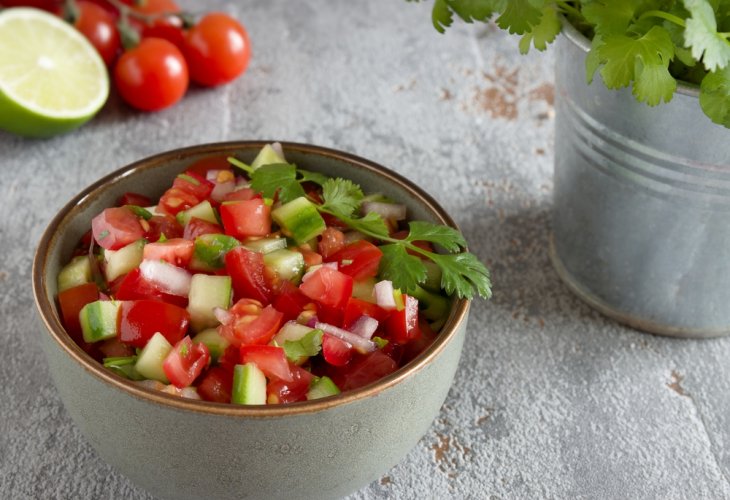
To understand the difference, imagine a vegetable salad. A salad contains different vegetables, but they remain separate entities. They merely exist side by side. If someone dislikes tomatoes, the tomatoes can easily be removed from the salad.
This is a "neighborly" combination. The vegetables are together, but they have not truly become one.
A blended combination is very different.
Consider dough. Flour and water begin as separate ingredients, but once they are mixed together, they become a completely new entity. It is impossible to separate the flour back from the water. They have fused into one.
The Maharal refers to this as a complete, blended unity.
The Journey From Individuality to Unity
The three mitzvot associated with reishit represent a journey from individuality, to association, and finally to complete unity.
First Fruits: The Individual
The mitzvah of bikkurim focuses on the individual.
What are first fruits?
They are the first ripe fruits of the Seven Species for which the Land of Israel is praised. The Mishnah describes how a farmer would walk through his field, notice the first fig, grape cluster, or pomegranate to ripen, tie a marker around it, and declare: "These are first fruits."
The Torah commands the farmer to bring these first fruits to the Temple and give them to the priests.
The entire mitzvah revolves around a single fruit — the individual.
Tithes: Learning to Belong
The mitzvah of ma'aser is different.
Tithing only exists in relation to a larger group. A farmer separates ten percent of his produce. One grain of wheat cannot be tithed on its own. Only when there is a collection of wheat does the obligation arise.
Thus, ma'aser represents the "neighborly" combination. Individual units remain separate, but they are now part of a larger whole.
Challah: Complete Unity
The mitzvah of challah represents the final stage.
It only applies after flour and water have merged into a single dough. At this point, the original ingredients can no longer be separated.
This is complete fusion and unity.
The Blueprint of Creation
The Maharal explains that all of creation follows these three stages.
First come individual entities, each standing independently. Then comes association, where distinct beings become connected while maintaining their individuality. Finally comes complete unity, where separate elements merge into something entirely new.
The mitzvah of bikkurim corresponds to the first stage of individuality.
The mitzvah of ma'aser corresponds to the second stage, of connection and community.
The mitzvah of challah corresponds to the third stage of complete unity.
These stages were present in creation itself. At first, every created thing stood independently. Gradually, relationships and connections formed between them. Finally, when creation was completed, everything became part of a unified whole.
As the Torah states: "God saw all that He had made, and behold, it was very good."
The Three Stages of Human Growth
We can observe these same stages throughout human life.
Stage One: The Child
When a child is an infant, he experiences the world as though only he exists. He wants everything immediately and naturally does not yet consider the needs of others.
Like the first fruit, he exists as a unique individual at the center of his world.
Stage Two: Learning to Live With Others
As he grows, he begins to understand that other people exist. He learns to share, cooperate, and live alongside others.
This is the stage of ma'aser.
He discovers that he is part of a larger community and must learn how to relate to it.
Stage Three: Marriage
As a person matures further, he reaches the third stage of marriage.
Marriage represents complete union. The Torah describes it with the words: "He shall cling to his wife, and they shall become one flesh."
And elsewhere: "He called their name Adam."
In the wedding blessings, we praise God as the "Creator of humanity."
When a husband and wife marry, they enter a state that resembles the blended unity of dough. Just as flour and water become a new reality, husband and wife become a new reality together.
Of course, complete unity does not mean the absence of differences. Husbands and wives naturally have different personalities, opinions, and perspectives. Yet despite those differences, they become one.
Once flour and water have become dough, it is impossible to remove whichever ingredient is inconvenient. In the same way, marriage is meant to create a profound and enduring union.
Why Challah Became a Special Mitzvah of the Jewish Home
Perhaps this also explains one of the deeper reasons why Jewish women have traditionally embraced the mitzvah of challah.
While men are equally obligated in the commandment, Jewish women have often taken special responsibility for it when possible.
Challah symbolizes the ideal model of marriage and home-building, and as King Solomon wrote: "The wisdom of women builds her house" (Proverbs 14:1).
The blending of flour and water into a single dough mirrors the creation of a home in which two individuals become one family.
The Secret Ingredient: The Divine Presence
Achieving true unity requires a powerful bond.
What is that bond? The Divine Presence.
The Talmud teaches: "When a husband and wife are worthy, the Divine Presence dwells between them" (Sotah 17a). The Shechinah transforms two individuals into a unified whole.
This principle extends far beyond marriage. Whenever God's presence enters our relationships, communities, and daily lives, genuine unity becomes possible.
That is the exact opposite of Korach.
Korach represents division, fragmentation, and conflict, while the Shechinah creates connection, harmony, and oneness.
Korach separates, while God's presence unites.
Which Stage Are We In?
Perhaps that is the question these mitzvot leave us with.
Are we still in the stage of the first fruits, focused primarily on ourselves?
Are we in the stage of tithes, learning how to live alongside others?
Or are we striving toward the stage of dough — a deeper unity in which differences remain, yet are bound together by a higher purpose?
The answer may reveal how close we are to true peace, and how far we are from becoming like Korach and his congregation.

