

Parashat Pinchas
The Power of Consistency: What Parashat Pinchas Teaches About Spiritual Growth
From the daily Temple offering to Joshua’s leadership and Pinchas’ zeal, discover why lasting greatness is built through steady commitment rather than fleeting inspiration
- Rabbi Menachem Jacobson
- | Updated
 (Photo: shutterstock)
At the end of Parashat Pinchas, the Torah details the sacrifices offered on special days — Shabbat and the festivals, when the additional sacrifices known as the Musaf offerings were brought. The Musaf prayer recited on Shabbat takes its name from these offerings.
The word Musaf means "addition." The Musaf sacrifice was an addition to the daily Tamid offering. Therefore, both in the Torah and in our prayers, it is described as being offered "in addition to the continual burnt offering and its meal offering." It was not a replacement, but rather an enhancement and completion of the daily sacrifice that was offered twice every day throughout the year.
This teaches us an important principle: the primary sacrifice was the Tamid — the regular, daily offering. The Musaf sacrifices were added according to the sanctity of the day, whether Shabbat or a festival.
The significance of the Tamid sacrifice is also highlighted on the Fast of the Seventeenth of Tammuz. One of the reasons this fast was established is because the Tamid sacrifice ceased before the destruction of the Temple. Rashi, at the end of Tractate Taanit, maintains that this occurred during the Second Temple period, while Maimonides holds that it happened during the First Temple period.
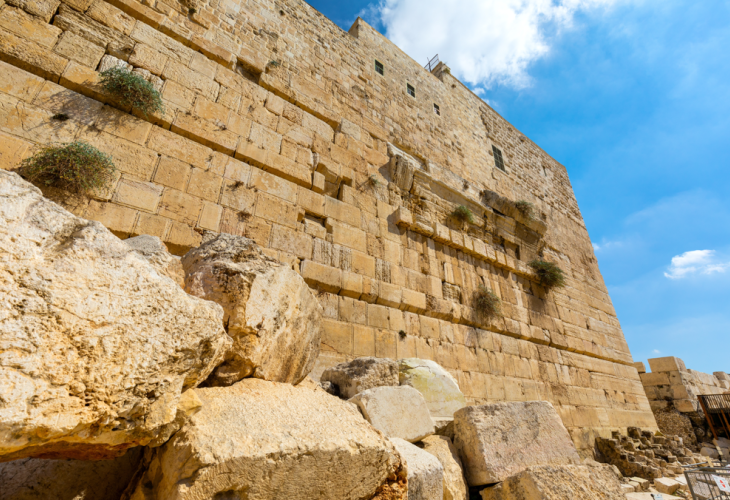
The inhabitants of Jerusalem understood that their very survival depended upon the continuation of the Tamid offering. Even during the siege of the city, they lowered baskets filled with gold coins over the city walls in exchange for lambs to use for the sacrifices.
However, those on the opposing side advised the king besieging Jerusalem: "As long as they continue their Temple service, you will not be able to defeat them."
As a result, the supply of animals was cut off, and the Tamid sacrifice ceased.
The Jerusalem Talmud (Taanit 4:5) records: "Rabbi Levi said: Even during the reign of that wicked kingdom, they would lower two baskets of gold, and they would send up two lambs. In the end, they lowered two baskets of gold, and two pigs were sent up instead... At that moment, because of the sins of the people, the Tamid sacrifice ceased, and the Temple was destroyed."
The Breach and the Continuity
The idea that the Tamid sacrifice stood at the center of Temple service symbolizes the importance of consistent, ongoing, and seemingly routine spiritual work.
The Musaf sacrifice, by contrast, represents the special spiritual illumination that arrives on Shabbat and festivals.
The Torah teaches us that the foundation is not the extraordinary moment but the steady and disciplined one. Consistent effort is what penetrates deeply and shapes a person’s character. Beyond that foundation, it is wonderful to experience additional spiritual inspiration — whether from Shabbat, a festival, a meaningful experience, or an uplifting moment, but these are additions built upon the essential daily framework.
Some people seek excitement and spiritual highs in their service of God. There is nothing wrong with that, as long as those experiences remain additions to the core. The problem begins when practical mitzvot and everyday spiritual responsibilities are neglected in pursuit of inspiration.
A wise person once said: "A person is not measured by a burst of great deeds, but by a sequence of small ones."
The greatness of consistency lies not only in the fact that it is not a fleeting emotional surge, but also in the tremendous power of continuity.
Pinchas the Zealot and the Tamid Offering
This idea brings us back to the beginning of the parsha, which discusses Pinchas and the reward he received for his act of zealotry.
Zeal can emerge from a spontaneous emotional outburst or an impulsive reaction. In such cases, even if the action is technically correct, it does not necessarily deserve praise.
This appears to have been part of the criticism directed toward Pinchas. As Rashi records, his detractors said: "Look at this man! His maternal grandfather, Jethro, used to fatten calves for idol worship, and now he kills a prince of Israel?"
Why did they specifically emphasize that Jethro "fattened calves for idol worship"? Why wasn't it enough simply to say that he had once been an idolater?
Perhaps they were suggesting that Pinchas' intense enthusiasm did not stem from a pure passion for truth, but from a personality inclined toward fanaticism and emotional excess. His grandfather had not merely practiced idol worship — he had been deeply devoted to it. He had been fervent, extreme, and passionate.
The implication was that Pinchas had inherited the same tendency toward emotional intensity.
The Torah's response, however, is that Pinchas was also a descendant of Joseph.
The Sages describe Joseph as one who "argued with his inclination" and overcame his natural impulses. He was not swept away by his emotions but mastered them.
If so, Pinchas' zealotry was not driven by uncontrolled passion. It was rooted in clear judgment and devotion to truth. The emotions that accompanied his actions were expressions of genuine zeal for God's honor, not personal impulsiveness.
Joshua: The Successor to Moses
The same theme appears later in the parsha.
Moses knows that his life is drawing to a close, and he asks God to appoint a successor — "a man over the congregation."
God chooses Joshua, the devoted student of Moses.
From the words of the Sages, it appears that Joshua was not necessarily the most brilliant among Moses' disciples. What distinguished him was his extraordinary consistency and dedication.
The Torah describes him as: "Joshua son of Nun, a young man, never departed from the Tent."
Joshua excelled in perseverance and commitment to the seemingly insignificant details of daily life. He arranged the benches in the study hall. Whether out of respect for Torah, concern for efficiency, or simple dedication, he faithfully attended to tasks that others might have considered mundane.
He did not seek prestigious positions or exciting opportunities. Instead, he devoted himself to small responsibilities with remarkable consistency.
He was always there. "He never departed from the Tent." And for that reason, he merited to become the successor to Moses.
The Message of Parashat Pinchas
From the Tamid sacrifice, to Pinchas' zealotry, to Joshua's leadership, the parsha conveys a unified message:
Spiritual greatness is not built primarily through dramatic moments, bursts of inspiration, or occasional acts of heroism. It is built through faithful consistency.
The daily offering was the foundation upon which all additional offerings rested. Pinchas' greatness lay not in emotional fervor but in disciplined devotion to truth. Joshua became the leader of Israel not because of a single extraordinary achievement, but because he remained steadfast day after day.
The Torah reminds us that while inspiration is valuable, lasting growth comes from continuity. The person who faithfully performs small acts of goodness, day after day, ultimately builds a life of greatness.

