

History and Archaeology
The Jewish Women Who Saved a Synagogue From the Soviets
When Soviet authorities arrived to shut down a synagogue in Georgia, they found the building filled with women and children determined to protect it at all costs.
- Yehosef Yaavetz
- | Updated
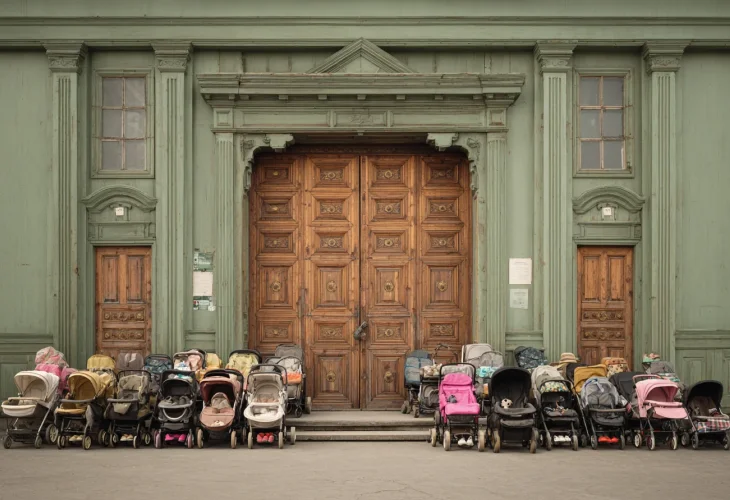
Nestled in the mountains of Georgia's Racha region stands one of the most remarkable symbols of Jewish perseverance in the former Soviet Union. The Great Synagogue of Oni has survived political upheaval, anti religious campaigns, natural disasters, and the passage of time. Its continued existence is the result of an extraordinary act of courage by a community determined to protect its spiritual heart at all costs.
A Historic Synagogue in the Mountains of Georgia
The Great Synagogue in the town of Oni was built in 1895 and remains one of the oldest active synagogues in Georgia today.
Located in the mountainous Racha region along the Rioni River, Oni was historically difficult to reach. For many years, access to the town required navigating narrow roads, steep ravines, and challenging mountain passes. Because of its remote location, the town operated with a significant degree of independence, largely removed from the direct control that authorities could easily exercise elsewhere.
The Soviet Attempt to Close the Synagogue
During the Soviet era, the government's campaign against religious life intensified across the Soviet Union. Reports eventually reached Moscow that synagogues in Georgia were continuing to operate, something Soviet authorities viewed as incompatible with communist ideology.
Determined to enforce new regulations against religious institutions, a delegation of officials and police officers was sent from Moscow to close Oni's synagogue.
When they arrived, however, they encountered unexpected resistance.
The synagogue was packed with members of the Jewish community, and its doors had been locked from the inside.
The women of the community had gathered inside together with their children and infants. Refusing to leave, they barricaded themselves in the building and made it clear that they would not allow the synagogue to be closed or destroyed.
Their willingness to put themselves in harm's way transformed the confrontation into something far more difficult than a routine enforcement action.
A Community Refuses to Surrender
The women were not alone.
Local non-Jewish residents also expressed support for the community's efforts, recognizing the synagogue's importance to the town's identity and history.
The Soviet officials, accustomed to strict obedience to orders from Moscow, suddenly found themselves facing determined resistance from an entire community.
They waited for hours, hoping the protesters would eventually give in.
They did not.
Frustrated and unwilling to escalate the situation, the officials eventually abandoned their efforts and left.
Why Oni Was Different
Oni's geography played an important role in what happened.
Unlike major Soviet cities, Oni was a remote mountain town connected to the outside world by a limited and difficult road network. Any attempt to impose sweeping changes required significant resources and planning.
Closing the synagogue would have demanded far more effort than the authorities were willing to invest in such an isolated location.
The combination of local resistance and practical difficulties ultimately helped preserve the synagogue.
A Victory for Jewish Life
The struggle was about far more than preserving a building.
The synagogue served as the center of Jewish life in Oni and the surrounding region. It was a place of prayer, learning, communal gathering, and shared memory. Closing it would have struck at the very foundation of Jewish life in the area.
By refusing to leave, the women of the community protected not only a physical structure but an entire way of life.
Their success had consequences beyond Oni itself.
Other Jewish communities throughout Georgia pointed to the synagogue's survival when arguing against the closure of their own synagogues. As a result, several additional synagogues were spared, even as countless others throughout the Soviet Union were shut down.
A Lasting Symbol of Courage
In the years that followed, the Great Synagogue of Oni became one of the most important symbols of Georgian Jewry.
Although the building suffered damage during the devastating 1991 earthquake, it was later restored and preserved for future generations.
Today, the synagogue continues to stand as a testament to faith, courage, and communal dedication.
The women who barricaded themselves inside its walls could not have known what the future would hold. Yet their determination ensured that the synagogue would survive, allowing future generations to see with their own eyes the building that a community refused to abandon.
Their story remains a powerful reminder that even in the face of immense pressure, ordinary people can safeguard their heritage and leave a lasting legacy for generations to come.

