

5 Minutes of Torah a Day
The Fast of the 17th of Tammuz: What Every Jew Should Know
Why do Jews fast on the 17th of Tammuz? Discover the five tragic events commemorated on this day and the spiritual lessons they continue to teach.
- Ronen Hazziza
- | Updated
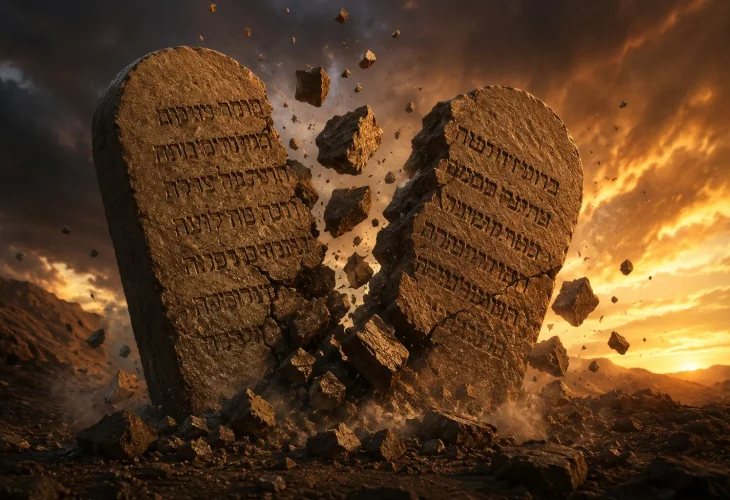
The Fast of the 17th of Tammuz marks the beginning of the Three Weeks, a period of mourning over the destruction of the Beit HaMikdash and other tragedies that befell the Jewish people. The day is observed as a public fast and serves as a time for reflection, teshuvah, and spiritual awakening.
Why do we fast on the 17th of Tammuz? The Mishnah lists five tragic events that occurred on this date, each of which contributed to its designation as a day of mourning and introspection.
- The Tablets of the Covenant were shattered.
- The daily Tamid offering ceased.
- The walls of Jerusalem were breached before the destruction of the Second Temple.
- The wicked Apostomos burned a Torah scroll.
- An idol was placed in the Sanctuary of the Beit HaMikdash.
Because of these events, the Jewish people observe a fast day to awaken their hearts to teshuvah. The purpose of the fast is not merely to remember the past, but to reflect on our actions and strengthen our connection to Hashem. By recalling the sins that led to these tragedies, we are inspired to improve our ways and return to our Father in Heaven.
Who Is Obligated to Fast?
Every Jewish male from the age of 13 and every Jewish female from the age of 12 is obligated to fast.
Our sages taught:
"Whoever mourns for Jerusalem will merit to see its rebuilding."
When Does the Fast Begin and End?
The fast begins at dawn and ends at nightfall.
Since times vary by location, everyone should consult a local Jewish calendar for the exact beginning and ending times.
Eating Before Dawn
Someone who wishes to wake up before dawn to eat or drink should make a condition before going to sleep by stating:
"I intend to wake up and eat before dawn."
Without making such a condition, one may not eat after waking.
What Is Forbidden on This Fast?
Unlike Yom Kippur and Tishah B'Av, the Fast of the 17th of Tammuz prohibits only eating and drinking.
Washing, bathing, applying lotions, and other activities remain permitted.
Regarding brushing one's teeth, it is preferable to refrain if possible. However, according to the strict letter of the law, it is permitted. One should be careful not to place a large amount of water in the mouth at one time and should take care not to swallow any water.
Who Is Exempt From Fasting?
There is a fundamental principle in halachah: the sages enacted their decrees for healthy individuals, not for those who are ill.
Since the Fast of the 17th of Tammuz is a rabbinic fast, someone who is ill is exempt, even when there is no danger to life.
The following are also exempt:
- Pregnant women
- Nursing mothers
- Women who are still physically weakened after childbirth
- Elderly individuals whose health may be affected by fasting
- Children below the age of mitzvah obligation
Anyone with a medical condition should consult a competent rabbinic authority and healthcare professional regarding their specific situation.
A Thought on Parshat Pinchas
The Torah states:
"Reuben, Israel's firstborn. The sons of Reuben: of Hanoch, the family of the Hanochites; of Pallu, the family of the Palluites; of Hezron, the family of the Hezronites; of Carmi, the family of the Carmites."
Many commentators note that these names contain a powerful lesson.
Reuben was Yaakov Avinu's firstborn, yet he lost certain privileges of the firstborn because of his actions. Before his passing, Yaakov rebuked him, saying:
"Unstable as water, you shall not remain superior."
Although Reuben acted with good intentions, he involved himself in matters beyond his understanding. Through the names of his sons, we can detect a message of personal growth and humility.
Hanoch hints to chinuch, self education and self improvement.
Pallu hints to the recognition that there are matters beyond human understanding.
How does a person develop that perspective?
Through Hezron and Carmi, which allude to the courtyards and vineyards of Hashem, the batei midrash and places of Torah learning.
The message is clear: rather than becoming preoccupied with matters beyond our grasp, we should focus on improving ourselves through Torah and spiritual growth.
The Lesson of the Village Neighbor
A well known story illustrates this idea.
A great rabbi once instructed a student to spend Shabbat with a certain Jew who lived in a distant village.
The student assumed he would meet a hidden tzaddik and learn profound lessons from him.
To his surprise, the man appeared very ordinary. He ate his Shabbat meals, enjoyed his chamin, rested, and seemed entirely unremarkable.
After Shabbat, as the student prepared to leave, he asked one final question.
"I've noticed smoke constantly coming from your neighbor's chimney. Do you know what causes it?"
The villager replied simply:
"I have lived here for twenty years, and I have never once looked to see what my neighbor is doing."
At that moment, the student understood exactly why his rabbi had sent him there.
Sometimes the greatest spiritual achievement is not knowing everything about others, but focusing on our own growth and avodat Hashem.

