

Wonders of Creation
Built to Protect: The Body's Remarkable Emergency Systems
From cellular cleanup crews to DNA repair specialists, your body is equipped with extraordinary systems that work around the clock to protect your health.
- Yehosef Yaavetz
- | Updated
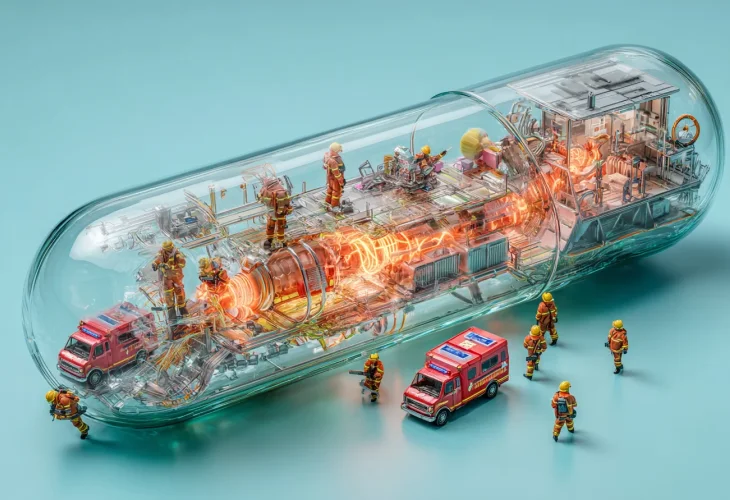
The human body is often compared to a machine, but in reality it is far more sophisticated than anything humans have ever built. Every second, trillions of cells carry out countless tasks: producing energy, repairing damage, fighting infections, and maintaining the delicate balance that keeps us alive.
Yet no system is perfect. Every day, potentially dangerous mistakes, malfunctions, and threats emerge within the body. Harmful molecules are produced, invading microbes attempt to gain a foothold, and errors can occur during vital cellular processes.
So why don't these problems overwhelm us?
Because the body is equipped with extraordinary emergency response systems that work around the clock to detect danger, prevent damage, and keep everything running smoothly. While we sleep, work, read, or spend time with family, these microscopic rescue teams are constantly at work behind the scenes.
Here are four remarkable examples.
1. The Cellular Cleanup Crew
Inside nearly every cell are tiny structures called mitochondria, often referred to as the cell's power plants.
Their job is to generate the energy that powers life. But like any power plant, they produce waste products. Among these are highly reactive molecules known as reactive oxygen species (ROS), including substances such as hydrogen peroxide.
In small amounts, these molecules are manageable. But if they accumulate, they can damage proteins, fats, and DNA, contributing to aging and a variety of diseases, including cancer, cardiovascular disease, and chronic inflammation.
Fortunately, the cell has its own cleanup crew.
Specialized structures called peroxisomes act as detoxification centers. Scientists have discovered that peroxisomes can attach directly to mitochondria through specialized protein bridges, allowing harmful molecules to be transferred safely for neutralization before they can damage the cell.
Under a powerful microscope, the process resembles two aircraft refueling in midair. The structures connect with remarkable precision, transferring potentially dangerous substances directly to where they can be safely processed.
The beauty of this system lies not only in its effectiveness, but also in its coordination. Rather than each cellular structure protecting only itself, different parts of the cell work together as an integrated emergency response network.
2. The Immune System's Scout Units
Most people know that the immune system fights bacteria and viruses.
What many don't realize is that the immune system constantly patrols the body long before illness develops.
Among its most important scouts are dendritic cells.
These specialized cells travel through tissues searching for signs of danger. When they encounter suspicious bacteria, viruses, or abnormal cells, they gather information and help activate the body's immune defenses.
Their ability to move is particularly impressive.
The body's tissues are crowded and complex, yet dendritic cells navigate through them with remarkable efficiency. Research has shown that they build specialized internal structures that push surrounding material aside, allowing them to squeeze through extremely narrow spaces.
Imagine an emergency vehicle weaving through heavy traffic. Rather than stopping when the path narrows, these cells create space and continue moving forward toward the source of danger.
Unlike some aggressive cells that force their way through tissue by breaking it down, dendritic cells use carefully controlled mechanical force, allowing them to move efficiently while minimizing damage to surrounding structures.
3. The DNA Repair Specialists
Every time a cell divides, it must create an accurate copy of its DNA.
Considering that human DNA contains billions of genetic instructions, this is an astonishingly complex task.
Occasionally, proteins can become trapped along the DNA replication machinery, creating obstacles that interfere with the copying process. If left unresolved, these interruptions can increase the risk of genetic errors.
To prevent this, the body deploys a specialized enzyme known as SPRTN.
Its job is to identify proteins that are obstructing DNA replication and remove them before they cause trouble.
What's particularly remarkable is its precision.
Protein-destroying enzymes can be dangerous if activated indiscriminately. To avoid damaging healthy cellular structures, SPRTN responds only to specific molecular signals that identify problematic proteins. Once the obstruction is removed, the enzyme immediately shuts down again.
This highly controlled system helps ensure that DNA replication proceeds smoothly and accurately, protecting the integrity of our genetic code.
4. The Airway Defense System
Every breath brings more than oxygen into our bodies.
Dust, pollutants, bacteria, viruses, and countless microscopic particles enter the respiratory tract throughout the day.
Fortunately, the airways possess a highly effective defense mechanism.
Tiny hair-like structures called cilia line the respiratory passages. For decades, scientists understood that cilia help move mucus and trapped particles out of the lungs and airways.
Recent research has revealed that they do even more.
In addition to sweeping particles outward, cilia also generate subtle upward fluid movement that helps create what researchers describe as a "dynamic barrier." This barrier helps keep harmful particles and microorganisms away from the sensitive cells lining the airways, reducing the likelihood of infection before it even begins.
Rather than simply cleaning up after a threat appears, the system helps prevent many threats from reaching their target in the first place.
A World of Constant Protection
These four systems represent only a tiny glimpse into the extraordinary complexity of the human body.
At every moment, countless microscopic processes are working together to identify threats, repair damage, maintain balance, and protect life itself.
Most of the time we are completely unaware of this activity.
Yet behind the scenes, an intricate network of cellular "emergency teams" operates with astonishing precision, ensuring that the body continues functioning despite the countless challenges it faces each day.
The more scientists learn about these systems, the more remarkable they appear, revealing a level of organization and coordination that continues to inspire wonder.

