

Main Course Recipes
Khoreshteh Sabzi: The Classic Persian Herb Stew You Need to Try
Tender beef, kidney beans, and a mountain of fresh herbs make this traditional stew unforgettable.
- Talia Zimberg
- | Updated
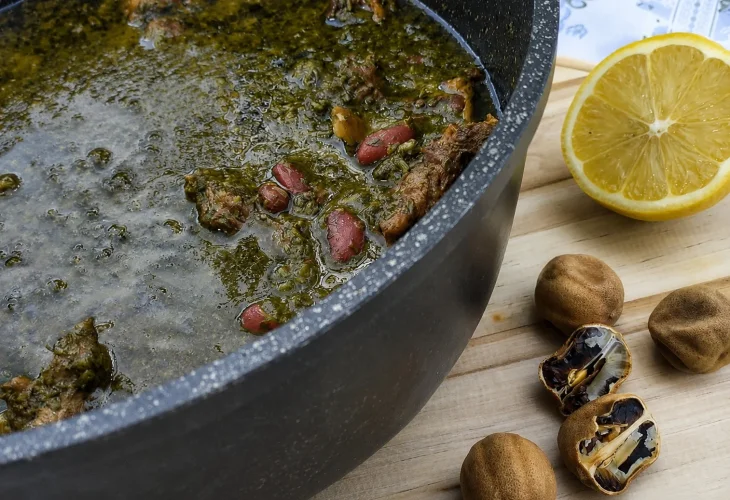 Persian herb-and-beef stew
The Jewish people are unique. Over thousands of years, Jewish communities settled in different parts of the world, bringing with them local flavors, traditions, and cooking styles. As a result, Jewish cuisine became wonderfully diverse, with every community preserving its own beloved dishes for Shabbat and holidays.
The Jewish people have also been blessed with great tzaddikim who guided and inspired generations. Many of these righteous leaders are buried in the Land of Israel, and whenever I travel home to the south of the country, I make it a point to visit the holy city of Netivot. It is a special opportunity to pray at the resting places of revered tzaddikim of blessed memory. Over the years, I have also visited many other holy sites throughout Israel.
When I return home, one of the activities my mother and I enjoy most is driving together to visit the graves of tzaddikim. There is something deeply moving about these places. They awaken within us a greater love for Torah and a stronger appreciation of Hashem's greatness.
A Love for the Warmth of Mizrahi Culture
I love traveling to the south not only because of the privilege of visiting the graves of tzaddikim, but also because it reminds me of simplicity, warmth, and a welcoming spirit. It is a place where the kitchen is always open and there is always room for another guest at the table.
Over the years, I have developed a deep connection to Mizrahi cooking, a cuisine overflowing with color, flavor, and tradition.
I cannot fully explain my attraction to Mizrahi culture, whether in the food or in the personalities. I was raised in a European Ashkenazi home. I learned the proper way to set a table, which fork to use, how to hold a knife correctly, not to fold my napkin, not to place my elbows on the table, and even that turning a teacup upside down meant you did not want a refill.
On Rosh Hashanah, there was always gefilte fish, followed by traditional strudel for dessert. Yet somehow, that was never truly me. I was always searching for stronger spices, richer aromas, and much more heat.
I became something of an odd bird in my surroundings, different from the rest of my family. My heart naturally connected with the flavors, traditions, and spirit of the Mizrahi kitchen.
The Story Behind Khoreshteh Sabzi
Part of what draws me to Mizrahi cuisine is the opportunity to learn the story behind each dish. I enjoy discovering where a recipe originated, learning about the community that created it, and even picking up a few words from the local language. It gives every dish greater meaning.
Khoreshteh Sabzi is a fragrant herb and beef stew and is considered one of the signature dishes of Persian cuisine. Persian cooking is one of the culinary traditions I feel most connected to because of its bold flavors, rich spices, abundance of fresh herbs, and nourishing ingredients.
This stew is often prepared for Shabbat, holidays, and family celebrations. Persian cooks are known for making generous portions, and sometimes the food disappears far faster than expected simply because it is so delicious. Personally, I could finish an entire pot in a single day.
The good news is that once you make it successfully the first time, the process becomes second nature. Like riding a bicycle, you never forget it, and it only gets better with experience.
Khoreshteh Sabzi: Persian Herb and Beef Stew
In Persian, "khoreshteh" means stew and "sabzi" means greens.
Ingredients
- 1½ pounds beef, such as chuck roast, short ribs, or another stew cut, cubed
- 1 large onion, diced
- 4 garlic cloves, chopped
- 1 teaspoon turmeric
- 1 cup red kidney beans, soaked for about 3 hours
- 1 bunch parsley, finely chopped
- 1 bunch cilantro, finely chopped
- 1 bunch green onions, finely chopped
- 1 bunch dill, finely chopped
- 1 bunch chard leaves, finely chopped, or spinach
- 4 to 5 dried Persian limes, pierced on both sides
- Salt and black pepper, to taste
- Oil
- ¾ teaspoon dried fenugreek leaves
- Fresh lemon juice, optional
You can adapt this recipe using different leafy greens, but it is important to use at least three varieties of fresh herbs along with fenugreek and either chard or spinach. These ingredients create the stew's distinctive flavor.
Directions
Heat a little oil in a large pot and sauté the onion and garlic until translucent. Add the turmeric and cook for another minute or two.
Add the beef cubes, season with salt and pepper, and brown the meat on all sides.
Add the soaked kidney beans, dried Persian limes, and enough water to cover the meat. Cook over medium low heat for about 1 hour.
Meanwhile, heat a little oil in a separate pan and sauté all the chopped herbs except the dried fenugreek. Cook until the herbs release their moisture and become fragrant.
After the meat and beans have cooked for an hour, add the sautéed herbs and dried fenugreek to the pot. Add about 1¼ cups additional water, stir well, cover, and continue cooking over medium heat for 2 to 2½ hours.
Occasionally stir the stew and adjust the seasoning as needed.
Serve hot and enjoy.

