

Behind the News
Why Israel Fears the U.S.-Iran Deal — and Why It May Not Be Able to Stop It
Israeli officials warn the framework could give Iran immediate relief while leaving uranium, missiles, Hezbollah and proxies for later talks
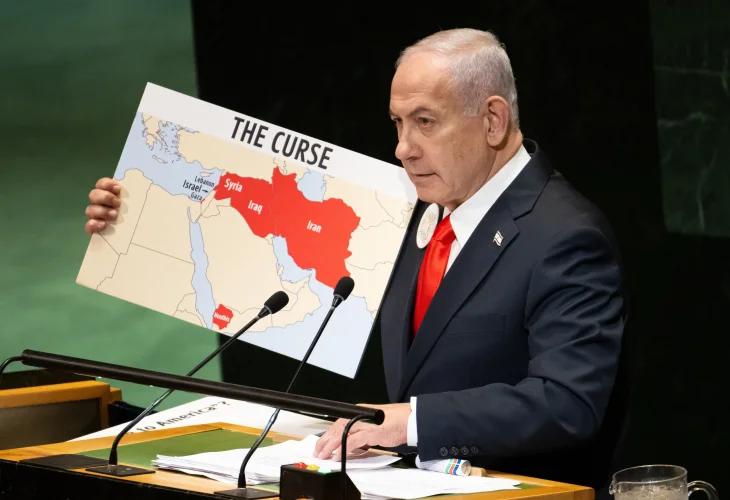 Shutterstock
Israel is warning that the emerging U.S.-Iran agreement could end the war on terms that leave its central security concerns unresolved. The deeper concern is that Israel, despite being the main country fighting Iran and its regional network, may have limited ability to stop the deal from moving forward.
That leaves Israel in a difficult position: it can lobby, warn and pressure, but it may not be able to veto an agreement that directly affects its war aims in Iran and Lebanon.
Senior Israeli officials told Channel 12 that the framework could give Iran immediate benefits while pushing Israel’s core demands into a later stage. Those benefits include the reopening of the Strait of Hormuz, possible sanctions relief or access to frozen funds, and a ceasefire that reduces military pressure on the Iranian regime.
“The Iranians are not agreeing to this framework for nothing,” the officials said. “The American side accepted their main conditions.”
Israeli officials described the arrangement as Iran “paying on credit.” In their view, Iran receives relief now, while the hardest issues like uranium, missiles, Hezbollah and Iran’s support for regional proxies are left for a future 60-day process.
“The uranium removal has become uranium dilution, and the missile system is not part of the agreement at all,” the officials warned. They added: “All the goals Israel set are not addressed immediately in the agreement.”
That is the central Israeli objection. Israel entered the campaign seeking to reduce Iran’s nuclear and missile capabilities and weaken the network of forces Iran supports across the region. But under the emerging framework, Israeli officials fear that those issues may not be resolved before the fighting stops.
The question of leverage is also troubling Israeli officials. Once Iran receives a ceasefire and economic relief, they argue, the U.S. may have fewer tools to force Iranian concessions in the next stage.
“What will be the Americans’ real leverage if, after 60 days of a ceasefire, the Iranians do not begin the steps required of them?” the officials asked. “The credible military threat has been worn down to almost nothing.”
Lebanon is the clearest example of how the deal could affect Israel immediately. Iran has pushed for Lebanon to be included in the arrangement, while Israel has opposed linking the Hezbollah front to the broader U.S.-Iran framework.
Israeli forces have reportedly been nearing the outskirts of Nabatieh in the past few days, the largest city in the area, and operating near the Ali Taher ridge by Kfar Tebnit, roughly two kilometers north of Beaufort. At the same time, Israeli security officials said the IDF would not withdraw from the security zone as part of the Iran agreement.
The issue is expected to be discussed with the Lebanese side in direct talks in the U.S. in about a week and a half, Israeli security officials told Kan News. According to the report, Israel is also preparing to reduce deep strikes in Lebanon in order not to undermine the U.S.-Iran deal.
That is why Lebanon is not a side issue for Israel. If Israel keeps advancing or striking deep inside Lebanon, it may be accused of endangering the diplomatic track. If it stops, Hezbollah may gain time and Iran can claim it protected its most important regional ally.
The deeper problem for Israel is that it does not appear to have a real say in the final decision. The agreement is not being written as an Israel-Iran ceasefire, but as a U.S.-Iran framework. Israel can object, lobby and warn, but if the U.S. decides to close the deal with Iran, Israel cannot veto it. The U.S. is focused on ending the regional war, reopening Hormuz and moving the nuclear file into negotiations. Israel wants military pressure maintained until the threats are reduced.
President Donald Trump reportedly made that dynamic clear in a call with Prime Minister Benjamin Netanyahu. “This is the deal. It’s an excellent deal, and it’s time to end this war,” Trump told Netanyahu in a phone call on Thursday, according to Channel 12.
A U.S. official quoted in the report said Netanyahu did not push back strongly. “Bibi didn’t say much in the call. Evidently, he understood that there’s going to be a deal, and that he can’t stop it.”
The U.S. presents the framework differently. American officials say it would reopen the Strait of Hormuz, extend the ceasefire, begin technical talks on Iran’s nuclear program and create an inspection track. For the U.S., the urgent priority is to stop the wider war.
But Israeli officials are warning that the broader framework may leave Iran’s missile program, proxy network and Hezbollah connection unresolved. Their concern is that once the agreement begins, Iran will gain time, Hezbollah will gain breathing room, and the U.S. will have less pressure available if Iran delays the next phase.
The next test will be whether the 60-day process produces concrete Iranian concessions, or whether the ceasefire becomes the new reality before Israel’s demands are met.

