

Science, Fossils, and the Big Challenge to Evolution
How could such an explosion of life have happened? Evolutionists have proposed all kinds of unusual explanations, but the one thing they share, according to this argument, is that they are ultimately unconvincing excuses.
About 150 years ago, Charles Darwin published his book, "On the Origin of Species," in which he argued that species developed from one another through a slow, lengthy process. Darwin wrote in the book that he was confident that once the remains of ancient species were studied, researchers would find gradual development in the evidence. Little by little, more and more new species would appear, and among them many remains of intermediate forms would be found.
At that very same time, British researchers were studying extremely ancient strata from a period called the "Cambrian," layers that are generally found beneath the ocean. To their surprise, they discovered in these layers most of the known forms of life. The science of paleontology was still in its infancy then, and the discovery was seen as unreliable. The rock layers in which these remains were found were stored in the basements of London’s National Museum of Natural History, because no one knew where to place them. The report about them was tucked away in a forgotten drawer, and Darwin’s theory returned to popularity.
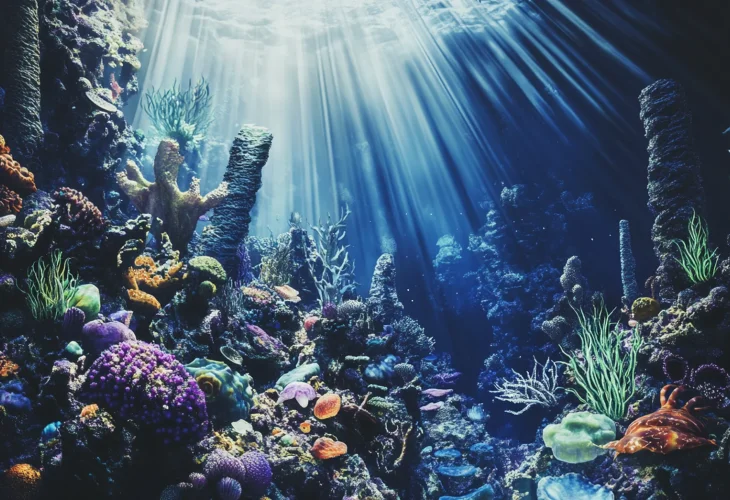
Decades later, more and more reports accumulated about strange things reflected in the Cambrian layer. This layer describes the appearance of life all at once, as though it had been said, "Let the waters swarm with living creatures" — and suddenly, all the complex life forms in the water appeared. No gradual process, no hundreds of millions of years, supposedly, between one stage and the next. Reality seeped in, the findings were pulled back out, and the phenomenon was called the "Cambrian Explosion." Just as the world was supposedly created in a "big bang," so too all the species appeared in their fully formed character at once in an "explosion."
How could such an explosion have happened? Evolutionists invent different and unusual explanations, and what they all have in common is that they are nothing more than unacceptable excuses. Darwin himself wrote that if the fossils told a different story, that would be proof that he was wrong. But for his followers, his theory is the only possible one, and it cannot be mistaken. The fossils can be explained away, as the saying goes: "Nature will confess to anything, if you torture it...".
In 2004, the physicist Professor Stephen Meyer published an article titled "The Origin of Biological Information and the Higher Taxonomic Categories." In the article, Meyer argues simply that no theory explains the sudden appearance of species. Every living species is designed and operates according to information found in its DNA. Evolution cannot explain how that information appeared so suddenly. The article was published in a respected biology journal called "The Proceedings," issue 217. This was a respected journal, peer-reviewed and published by the National Museum of Natural History at the Smithsonian Institution in Washington, D.C. The article sparked harsh reactions and controversy. In the halls of science, casting doubt on evolution is considered outright heresy, and in the end, instead of addressing Meyer’s arguments, it was decided to fire the editor, Dr. Richard Sternberg, for approving the publication of such a heretical article...
David Coppedge follows the chain of events from that point on and points to desperate attempts at excuses. Some evolutionists try to push and distort the dating, so that perhaps it will turn out that not all the types appeared at once — maybe it took more time. Others speak of mysterious radiation that appeared at the same time, which perhaps, supposedly, caused all the species to appear at once. Another well-known article says that at that very time, a great deal of oxygen simply reached Earth, and therefore many species suddenly "came into being." But, Coppedge says, none of these stories really answers the question. Oxygen cannot provide new information, and there is also no real sign of increased oxygen. It is all stories and excuses, just to avoid admitting the simple truth...

