

The Ninth of Av (Tisha B'Av)
What Are We Mourning on Tisha B’Av? Finding the Temple in Our Everyday Struggles
The true pain of the destruction is found in the suffering, distance, and brokenness we experience today
- Rabbi Shmuel Pollak
- | Updated
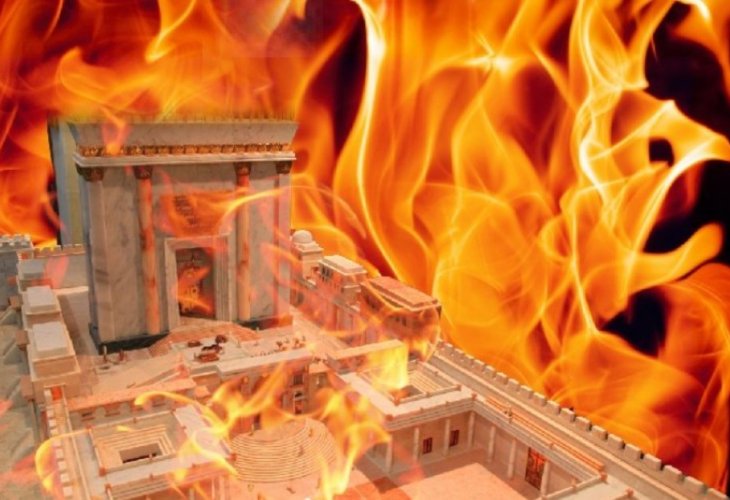
This year, for the first time, I decided to stop blaming myself.
Every year during the Nine Days leading up to Tisha B’Av, I find myself rebuking my own heart. How can I continue living an ordinary routine? How can I forget that the Beit HaMikdash was destroyed? Why am I not sitting and weeping over the destruction?
This year, I suddenly realized something: our mourning is ancient. Very ancient. We are nearly two thousand years removed from the destruction of the Temple. How can I be expected to feel its loss with the same intensity as those who witnessed it? How can I not become accustomed to a reality that has existed for so many generations?
The answer, surprisingly, lies in the Book of Lamentations itself.
A Surprising Discovery in Eichah
If you open Eichah and read it carefully from beginning to end, you will notice something remarkable. There is hardly a single verse that focuses on the destruction of the Temple itself. Instead, the book speaks about famine, suffering, humiliation, captivity, bloodshed, loneliness, and despair.
Jeremiah walks through the streets of Jerusalem describing the devastation before his eyes. He surveys a city shattered by tragedy and records the pain of its people. The suffering is not hidden behind the walls of the Temple. It is found in the streets. The hunger is in the streets. The bloodshed is in the streets. The grief and the fear are in the streets.
The pain is human. The pain is immediate. The pain is recognizable.
The Final Diagnosis
Yet at the very end of Eichah, Jeremiah reveals the true source of everything he has described. After recounting all the pain and heartbreak, he concludes: “For this our hearts are faint, for these things our eyes have grown dim... because Mount Zion lies desolate.”
Suddenly, the entire book comes into focus.
All the suffering. All the heartbreak. All the tragedy. Everything points back to one missing reality: Mount Zion lies desolate. The Temple is absent. The Divine Presence is hidden. The connection between Heaven and Earth has been severed.
Jeremiah teaches us that every symptom described throughout Eichah stems from a deeper root. The suffering in the streets is not separate from the destruction of the Temple — it is a consequence of it.
Why It Is So Difficult to Mourn
This explains why many people struggle to connect emotionally to Tisha B’Av.
If we insist on focusing exclusively on a Temple we never saw, it can feel distant and abstract. Our sages referred to this as an ancient mourning. It is difficult to cry over something we never personally experienced.
But perhaps Tisha B’Av is not asking us to imagine life in ancient Jerusalem. Perhaps it is asking us to look around us, and within us.
The people of Jeremiah’s generation did not spend their days crying about stones and walls. They cried about the suffering they saw around them. Yet they understood something crucial: all of that suffering ultimately stemmed from one source: the absence of God's revealed Presence among them.
Crying for What We See Today
What can we cry about?
We can cry about the suffering we see every day. We can cry for widows and widowers, for orphans, for bereaved parents, for broken families, for loneliness, illness, and pain. We can cry for young people searching for meaning, for financial hardship, for hatred and division, and for every form of suffering endured by the Jewish people today.
We can cry for those who are struggling emotionally. For those waiting for healing. For those waiting for salvation. For those carrying burdens no one else can see.
These realities are not separate from the destruction; they are expressions of it.
Your Personal Eichah
In truth, we do not even need to begin with the suffering of the nation. We can begin with our own.
Every person carries a private burden. Every person has their own struggles, disappointments, fears, and unanswered prayers. Tisha B’Av is the time to unpack those burdens, to place them before our eyes, and to ask where this pain comes from.
Every generation has written its own Eichah. Jeremiah wrote his. Centuries later, Rabbi Yehudah HaLevi wrote his lamentations. Other generations composed lamentations that reflected the tragedies they endured.
We too, have our own Eichah.
We have our own “Remember, O Lord, what has happened to us.” We have our own personal cry and our own private heartbreak.
The Distance We Feel
Imagine for a moment that the Beit HaMikdash still stood today.
A Jew could come to Jerusalem, stand before God, pour out his heart, bring his offering, and restore the connection. The relationship would feel immediate, personal, and alive.
Today, many of us carry our struggles and feel lost.
Why?
Because Mount Zion lies desolate and because we feel distant from our Father in Heaven.
Everything revolves around that distance. Our unanswered questions, our spiritual struggles, our confusion, and our longing. All of it circles around that missing connection.
The Conversation That Changed Everything
I once sat beside a friend on Tisha B’Av who told me, “I feel nothing. My heart is dry. I cannot connect to the destruction.”
I reminded him of a conversation we had only two weeks earlier. He had spoken through tears about his inability to feel vitality in serving God. He was deeply pained by his spiritual emptiness. He worried about a child who had lost interest in Torah learning and felt helpless watching it happen.
I asked him a simple question: “Where do you think that pain comes from? What is its source?”
The answer: “Because Mount Zion lies desolate.”
The spiritual darkness, the distance, the emptiness, and the disconnect, all stem from the same broken connection. I explained that the destruction is not merely a historical event. It is an ongoing reality that affects every area of our lives.
Five minutes later, he was crying.
Not because he had suddenly become interested in ancient history, and not because he had finally connected to a building destroyed two thousand years ago.
He was crying because he realized that the destruction was present within his own struggles, his own pain, and his own longing.
When Eichah Becomes Personal
When we understand this, Tisha B’Av becomes real.
“How does the city sit solitary?” is not only a description of ancient Jerusalem. It is also a description of loneliness in our neighborhoods, in our homes, in our families, and sometimes within our own hearts.
We do not need someone to tell us what is missing; we already know.
The challenge is recognizing that our struggles are connected to something larger.
Jerusalem was once the light of the world. If there is darkness today, it is because that light has not yet fully returned. If we struggle spiritually, it is because we no longer experience God's presence in the way our ancestors did. If prayer sometimes feels difficult, if joy feels incomplete, if redemption still seems distant, it is because the world is not yet whole.
Mourning the Present, Longing for the Future
The Beit HaMikdash is not merely a memory from the past. It is a reality that affects the present.
Tisha B’Av invites us to mourn not only the destruction of a building, but the brokenness of our world and the pain within our own lives. It asks us to recognize the connection between our personal struggles and the greater exile of the Jewish people.
Once we understand that connection, our mourning becomes authentic. We can truly pray, truly yearn, and truly believe that very soon, the Master whom we seek will suddenly come to His Temple, and the darkness of exile will finally give way to the light of redemption.

