

Wonders of Creation
The Poisonous Fruit Hidden in the Dead Sea Desert
The Sodom apple looks tempting from the outside, but inside lies a bitter, poisonous surprise. Discover the fascinating story behind this unusual desert plant.
- Yehosef Yavetz
- | Updated
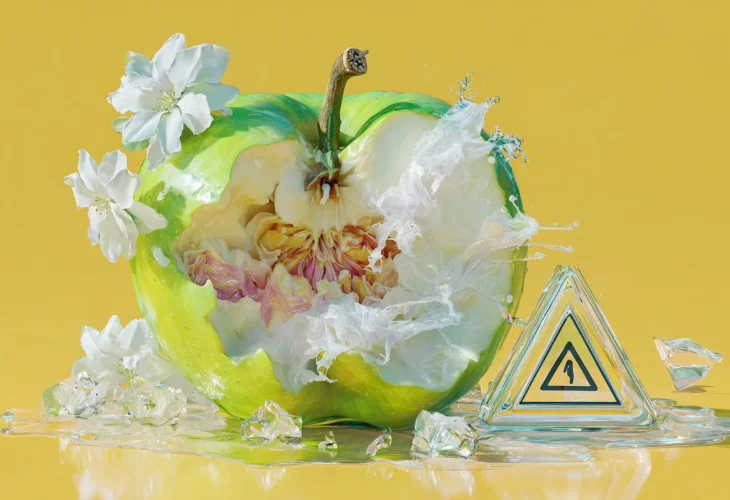
Imagine crossing the desert after many exhausting hours without food or water. The scorching sun beats down, and the landscape stretches endlessly in every direction. Then, in the distance, you spot a tree covered in what appear to be large, juicy apples.
One traveler excitedly points toward the fruit and rushes forward. But before he can take a bite, the caravan leader stops him.
"Don't touch it," he warns. "It's poisonous."
The fruit is known as the Sodom apple, a fascinating desert plant whose appearance is far more appealing than its reality.
A Fruit With an Ancient Reputation
The Sodom apple grows in the region surrounding the Dead Sea and has been known throughout history for its unusual characteristics.
Ancient writers described it with a mixture of fascination and caution. Nearly 2,000 years ago, Yosef ben Matityahu (Josephus) wrote that the fruit appeared beautiful but crumbled when touched. The Roman historian Tacitus similarly described fruit near the Dead Sea that looked appealing on the outside but contained no edible substance within.
At first glance, the fruit appears ripe and inviting. However, when opened, it reveals a mass of fibrous material and seeds surrounded by a bitter, milky sap that is considered toxic.
The plant's branches contain the same white latex-like substance. Contact with the sap can irritate the skin, while swallowing it can be dangerous.
Is This the "Vine of Sodom"?
Some commentators have connected the plant to a well known verse in the Song of Ha'azinu:
"For their vine is of the vine of Sodom, and of the fields of Gomorrah; their grapes are grapes of poison, their clusters are bitter."
According to this interpretation, the comparison is especially fitting. The fruit appears attractive and promising, yet inside it contains bitterness rather than nourishment.
Whether or not the verse refers specifically to this plant, the symbolism is striking.
The Sodom Apple in the Mishnah
Interestingly, the Sodom apple appears in another context in Jewish sources.
In the Mishnah's chapter of Bameh Madlikin, which many communities recite on Friday night, the sages discuss materials that may not be used as wicks for Shabbat candles.
One of the prohibited materials is called the "wick of the desert."
Many researchers identify this plant with Calotropis procera, the scientific name for the Sodom apple.
The fibers inside the fruit were once used by desert dwellers to make wicks. Some suggest that the Mishnah prohibited its use because handling the plant's irritating fibers and sap would be inconsistent with the honor and enjoyment of Shabbat.
What Does the Plant Look Like?
If you ever visit the Dead Sea region, you may encounter this unusual plant growing in the desert landscape.
The Sodom apple has large pale green leaves, delicate white and purple flowers, and inflated green fruit that resembles oversized apples.
Its appearance often surprises hikers because it seems so lush compared to the harsh desert environment around it.
Despite its attractive appearance, experts advise against touching the fruit or breaking its branches due to the irritating sap contained inside.
Why Is It Poisonous?
From a botanical perspective, the Sodom apple belongs to the dogbane family, a group that includes several toxic plants. One familiar example is oleander, a popular ornamental plant that can also be poisonous if handled improperly or ingested.
The Sodom apple is remarkably well adapted to desert life. Its large leaves are coated with a pale surface that helps reduce water loss, allowing it to survive in extreme heat and dry conditions where many other plants cannot.
But why would a desert plant develop poisonous properties?
A Brilliant Survival Strategy
The answer lies in survival.
Unlike many desert plants, the Sodom apple contains significant amounts of moisture. If it were edible, animals and people would quickly consume it, especially in an environment where water and vegetation are scarce.
Its toxic sap serves as a natural defense system.
By making itself unappealing and potentially harmful to predators, the plant protects its valuable water reserves and increases its chances of survival.
This strategy works remarkably well. Even in areas where camels and other animals have eaten nearly every available plant, clusters of Sodom apple trees often remain untouched.
Beauty With a Purpose
The Sodom apple offers a fascinating lesson from nature.
What appears attractive on the outside may conceal something very different within. At the same time, what seems dangerous or unpleasant may actually serve an important purpose.
Its poison is not a flaw but a carefully designed survival mechanism that allows the plant to thrive in one of the harshest environments on earth.
Standing alone in the desert, surrounded by heat and dryness, the Sodom apple remains a striking reminder that even the most unusual creations have a purpose and a place within Hashem's world.

