

Between the Straits (The Three Weeks)
The Three Weeks Explained: Customs, Halachot, and the Deeper Meaning
A practical guide to the Three Weeks, covering the customs of mourning, spiritual reflection, and the promise of redemption
- Yonatan HaLevi
- | Updated
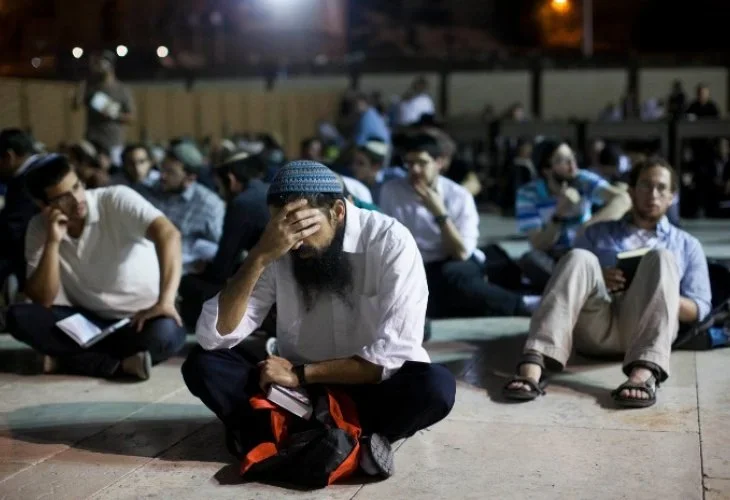 (Photo: Flash 90)
The three-week period between the 17th of Tammuz and Tisha B'Av has historically been one of the most tragic times for the Jewish people. During these weeks, both the First and Second Holy Temples were destroyed, along with many other national calamities throughout Jewish history.
This period is known as Bein HaMetzarim ("Between the Straits"), based on the verse: "All her pursuers overtook her between the straits" (Lamentations 1:3).
On the Shabbatot that fall during these three weeks, the Haftarot are selected from the books of Isaiah and Jeremiah, focusing on the destruction of the Temple and the exile of the Jewish people.
Throughout Bein HaMetzarim, Jews observe various customs of mourning, reducing expressions of joy and celebration. It is regarded as a time when Divine judgment is more pronounced, and for that reason special care should be taken to avoid unnecessary risks and dangerous situations.
Customs of Mourning Beginning on the 17th of Tammuz
1. Weddings
It is customary to refrain from holding weddings during this period.
Among Ashkenazic communities, the longstanding custom is to avoid weddings from the 17th of Tammuz until after Tisha B'Av.
The traditional Sephardic custom, particularly in Jerusalem, has been to permit weddings until Rosh Chodesh Av. From Rosh Chodesh Av onward, however, weddings are generally avoided. Although, according to the strict letter of the law, there may be room for leniency for someone who has not yet fulfilled the mitzvah of having children, the accepted custom is not to celebrate weddings during these days, as it is considered inappropriate to hold joyous celebrations while the Jewish people collectively mourn the destruction of the Temple.
2. The Blessing of Shehecheyanu
It is preferable to avoid reciting the blessing Shehecheyanu during Bein HaMetzarim — from the evening of the 17th of Tammuz until after Tisha B'Av, over a new fruit or a new garment.
Instead, one should wait until after Tisha B'Av to enjoy the new fruit or wear the new clothing, so the blessing can be recited at that time.
On Shabbat
During the Shabbatot that fall within the Three Weeks, it is permitted to recite Shehecheyanu over a new fruit or new garment.
However, after Rosh Chodesh Av, many authorities recommend avoiding the blessing over new clothing even on Shabbat.
3. Haircuts and Shaving
Because of the intensified mourning during this period, Ashkenazic custom is to refrain from haircuts and shaving from the 17th of Tammuz until the 10th of Av.
Sephardic Custom
Sephardic and many Eastern Jewish communities follow the original enactment of the Sages after the destruction of the Temple, as ruled by the Rambam and codified in the Shulchan Aruch. According to this custom, haircuts and laundering become prohibited only during the week in which Tisha B'Av falls.
4. Music, Singing, and Dancing
Dancing and festive celebrations are avoided from the 17th of Tammuz until Tisha B'Av, even without live musical instruments.
This applies even to gatherings conducted in accordance with Jewish standards of modesty, where men and women celebrate separately. Mixed dancing between men and women, however, is strictly prohibited throughout the entire year, regardless of the Three Weeks.
Although listening to recorded music is generally permitted during the rest of the year, including songs accompanied by musical instruments, Rabbi Ovadia Yosef ruled that one should refrain from listening to instrumental music during the Three Weeks.
An exception is made for celebrations associated with a mitzvah, such as:
Weddings
A brit milah (circumcision)
A pidyon haben
A bar mitzvah
A siyum (completion of a tractate of Torah study)
During these occasions, Jewish music accompanied by instruments is permitted.
5. A Time to Exercise Extra Caution
The Three Weeks are traditionally viewed as a period requiring greater caution.
Beyond avoiding unnecessary pleasures, many people devote this time to reflecting on the destruction of the Temple and the exile of the Divine Presence.
For this reason, many refrain from going to the beach during these weeks. Those who do swim should exercise particular caution, avoid venturing into deep water, and remain close to shore.
The book Orchot Rabbeinu relates that Rabbi Yaakov Yisrael Kanievsky (the Steipler Gaon) viewed this period as one of increased danger and instructed members of his household not to go to the sea during the Three Weeks.
Mourning That Leads to Consolation
The prophet Isaiah declares: "Rejoice with Jerusalem... all who mourn for her."
Those who genuinely mourn Jerusalem during its desolation will one day rejoice in its restoration.
The Zohar teaches that everyone who mourns for Jerusalem will merit sharing in the joy of the final redemption. It explains that not only the Jewish people grieved over the destruction of the Temple, but Heaven and earth, the ministering angels, the sun and moon, and all of creation mourned as well.
This is because the destruction allowed the forces of spiritual impurity to gain temporary dominance over the Holy Land and, as it were, over the Divine Presence itself. As long as the Shechinah remains in exile and the forces of evil appear to prevail, we are called upon to share in that sorrow.
The Zohar concludes that those who humble themselves and mourn together with the Shechinah will also rejoice together with her when she is restored and the world is filled with redemption and joy.
The sadness and restrictions of the Three Weeks contain within them the seeds of comfort and hope.
If we faithfully observe the laws and customs of mourning, sincerely grieve the destruction of the Holy Temples, the exile of the Shechinah, and the suffering of the Jewish people, we will merit the complete redemption and the true consolation with the rebuilding of Jerusalem, speedily in our days.

