

Health and Nutrition
Tiny Antarctic Sea Creature May Hold Clues to Fighting Cancer
Researchers exploring Antarctica discovered a marine bacterium whose natural compounds damaged melanoma cells in laboratory tests, raising hopes for future cancer treatments.
- Shira Dabush (Cohen)
- | Updated
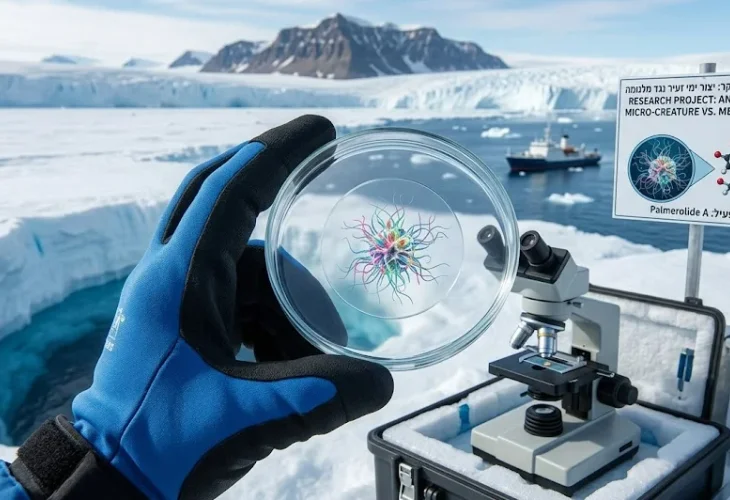
A team of researchers from the University of Florida recently returned from a six-week expedition to Antarctica with tiny marine organisms that may one day contribute to the development of new cancer treatments.
While exploring the seafloor beneath the icy waters, the scientists collected a variety of organisms that have adapted to survive one of the harshest environments on Earth. Among them, they identified a bacterium producing unusual natural compounds that showed promising anti-cancer activity in laboratory tests.
When the researchers exposed the compounds to melanoma cells, one of the deadliest forms of skin cancer, they found that the substances damaged the cancer cells while causing relatively limited harm to healthy cells.
A Hidden Pharmacy Beneath the Ice
Antarctica is one of the most extreme and least disturbed environments on the planet. The organisms that live there have evolved to survive freezing temperatures, months of darkness, and limited food supplies.
To cope with these conditions, many produce rare chemical compounds that are not found anywhere else in nature. Scientists believe these unique molecules could become valuable building blocks for future medicines.
The newly discovered bacterium is one example of how extreme environments may hold untapped medical potential.
Why Melanoma Remains a Challenge
Melanoma is one of the most aggressive types of skin cancer. It develops in the cells that produce the skin's pigment and can spread rapidly to other parts of the body if not detected and treated early.
Although major advances have been made in recent years, researchers continue searching for new therapies, particularly for patients whose cancers do not respond to existing treatments.
The newly discovered compounds could eventually provide another avenue for research, though scientists caution that much more work remains.
Still in the Early Stages
The researchers emphasize that these findings are preliminary.
So far, the compounds have only been tested on cancer cells grown in the laboratory. They have not yet been studied in animals or human patients.
Before any potential treatment could become an approved medication, it would need to undergo years of additional research, safety evaluations, and clinical trials to determine both its effectiveness and safety.
The Ocean's Growing Role in Medicine
This discovery adds to a growing body of evidence showing that the world's oceans are an important source of promising medical compounds.
Over the past several decades, scientists have developed medicines for pain, infections, and other conditions using molecules originally discovered in marine organisms. Researchers now hope that Antarctica's unique marine life could provide the foundation for future cancer treatments as well.
According to the research team, every discovery like this deepens our understanding of how natural compounds interact with cancer cells and brings scientists one step closer to developing more targeted therapies.
The long-term goal is to create treatments that attack cancer cells more precisely while minimizing damage to healthy tissue and reducing the side effects often associated with cancer therapy.

