

Parashat Va'etchanan
12 Fascinating Insights on Parashat Va'etchanan From Our Sages
Which month is the sun considered most harmful, and why is honoring one’s father and mother counted as a single mitzvah? These surprising teachings and midrashim on Parashat Va’etchanan will give your Shabbat table plenty to talk about this week.
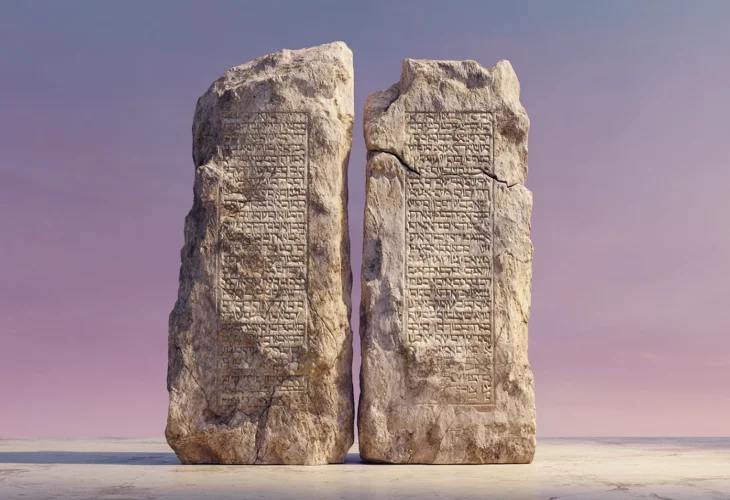
Parashat Va'etchanan is filled with timeless lessons and fascinating insights that have captivated Torah scholars for generations. From the power of prayer and the Ten Commandments to honoring parents and the deeper meaning behind familiar verses, our Sages uncovered remarkable teachings hidden within the parsha's words. Here is a collection of lesser known insights that offer a fresh perspective on this week's Torah reading.
Fascinating Insights on Parashat Va'etchanan From the Sages
"And I pleaded with Hashem at that time, saying" (Deuteronomy 3:23)
Who is especially encouraged to increase their prayers, and where is this hinted at?
Someone who is experiencing enmity or hostility.
Rabbeinu Maharash of Lublin notes that the initials of the words el Hashem ba'et hahi spell the Hebrew word eivah ("enmity"), hinting that a person facing hostility should increase their prayers and supplications to Hashem. (Sefer Gimatriot al HaTorah)
Moshe's Plea to Enter the Land
"Please let me cross over and see the good land that is on the other side of the Jordan..." (3:25)
How did Moshe try to persuade Hashem to allow him to enter the Land of Israel?
Moshe argued that Hashem forgives others repeatedly, asking, "You show mercy to everyone else two or three times. Will You not forgive me even once?"
Hashem responded:
"You committed six sins, and I did not reveal even one of them to you."
(Midrash Tanchuma, Siman 6)
The Sun, the Moon, and Their Influence
"Lest you lift your eyes to heaven and see the sun and the moon and the stars..." (4:19)
During which month is the sun considered most harmful?
According to Sefer HaBrit, the sun is considered most harmful during the month of Adar.
How does the moon affect a person's health?
Shevet Mussar teaches that blood pressure rises and falls in accordance with the phases of the moon.
Why Does the Verse Begin in the Plural and End in the Singular?
"From there you will seek Hashem your God, and you will find Him, if you search for Him with all your heart and with all your soul." (4:29)
Why does the verse begin with "you will seek" in the plural but conclude with "you will find" in the singular?
The Or HaChaim explains that many people pray, but only individuals who seek Hashem wholeheartedly merit a response.
Another explanation is that communal prayer is accepted even when concentration is lacking, while an individual's prayer requires wholehearted sincerity and focus.
(Nishmat Chaim, cited in Yalkut Alei Deshe)
When Was a Murderer Released Early From a City of Refuge?
"...He shall flee to one of these cities and live." (4:42)
Normally, someone who fled to a city of refuge remained there until the death of the Kohen Gadol.
However, the Chatam Sofer explains that if someone obtained the position of Kohen Gadol through bribery and died prematurely, the accidental killer would still be released upon that person's death, even if the individual truly worthy of serving as Kohen Gadol was still alive.
What Creates Distance Between a Person and Hashem?
"I was standing between Hashem and you at that time..." (5:5)
The Maharam of Kobrin teaches that pride creates the greatest barrier between a person and Hashem.
Who Was Present at Sinai but Did Not Hear the Ten Commandments?
"I am Hashem your God..." (5:6)
According to the Siftei Kohen, the erev rav did not hear the Ten Commandments.
How Can Someone Honor Parents They Never Knew?
"Honor your father and your mother..." (5:16)
What about someone who never had the opportunity to know their parents?
Sefer Chasidim teaches that honoring Torah scholars is considered a fulfillment of this mitzvah, based on the verse:
"He honors those who fear Hashem."
(Quoted in Vayikra Yitzchak and Doresh Tzion)
Why Is Honoring Parents One Mitzvah but Tefillin Counts as Two?
The mitzvah of honoring one's father and mother is counted as a single mitzvah because it has one underlying purpose: honoring those who brought a person into the world.
Tefillin, however, consists of two distinct mitzvot.
The arm tefillin corresponds to the heart, helping a person control their desires.
The head tefillin reminds us of Hashem's miracles and wonders.
(Yalkut Yosef, Kibbud Av Va'em)
Why Are There Four Extra Letter Vavs?
"And you shall not commit adultery... and you shall not steal..." (5:17–18)
The second version of the Ten Commandments includes four additional Hebrew letter vavs that do not appear in Parashat Yitro.
The numerical value of four vavs is 24, alluding to the 24 books of Tanach.
(Pesikta)
The Gemara teaches that had the Jewish people not sinned with the Golden Calf, Tanach would have consisted of only six books: the Five Books of the Torah and the Book of Yehoshua.
(Nedarim 22b)
What Does It Mean for the Heart to "Remain With Them"?
"If only this heart of theirs would remain with them..." (5:26)
The Chatam Sofer explains that the verse teaches that a person's heart should remain under their control.
Rather than allowing emotions and desires to rule over them, a person should learn to rule over their own heart.
Why Did Moshe Have to Stand?
"But you, stand here with Me..." (5:28)
The Yalkut HaMachiri explains that Hashem was teaching Moshe the scroll of the Beit HaMikdash, which may be studied only while standing.
How Long Would Moshe Remain on Mount Sinai?
The full spelling of the Hebrew word amod ("stand") has the numerical value of 120.
Rabbeinu Ephraim explains that this hints to the 120 days Moshe would spend on Mount Sinai.
Adapted from Me'Ever LaMefursam on Chumash Devarim, a collection of lesser known Torah insights from the teachings of our Sages on the weekly parsha and practical halachah.

