

The Three Weeks (Bein HaMetzarim)
Jerusalem of Gold: The Hidden Torah Behind Israel's Beloved Song
What makes Jerusalem of Gold so powerful? Explore the biblical imagery, teachings of Chazal, and themes of exile and redemption hidden within every stanza.
- Rabbi Raphael HaKohen Kook
- | Updated
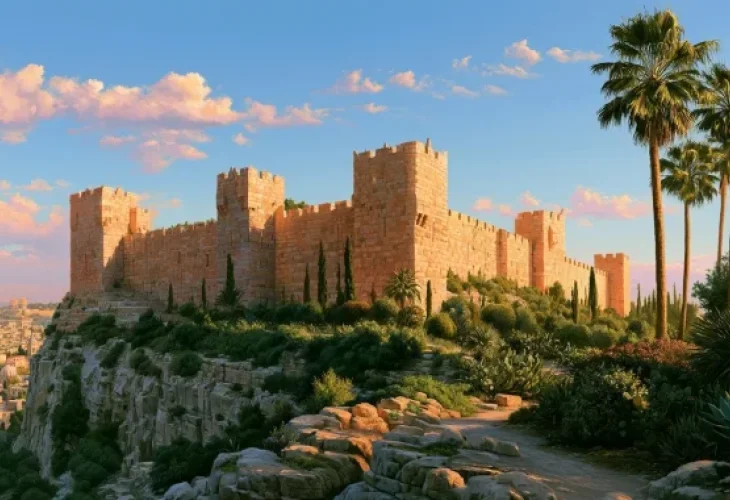
The Three Weeks confront us each year with the destruction of Jerusalem. We read the Book of Lamentations and mourn the city that "sat alone." Yet even during these days of mourning, the first glimmers of comfort and redemption begin to emerge.
Nearly sixty years ago, Naomi Shemer wrote Jerusalem of Gold, a song that became the anthem of the Jewish people's longing for Jerusalem and their return to its heart.
As we explore the song through the lens of Torah and Midrash, one point should be made from the outset. This does not mean that Naomi Shemer consciously sat with volumes of Gemara and Midrash while composing each line, intentionally weaving every source discussed here into her lyrics.
Rather, she possessed an extraordinary gift and rare siyata d'Shmaya. Her words captured the spiritual heartbeat of Jerusalem with remarkable precision, expressing ideas deeply rooted in Torah. About such inspiration, the Sages taught in Tractate Megillah (3a): "Even though he does not see, his mazal sees." Her soul seemed to sense the city's sacred frequency, and her lyrics gave voice to truths far deeper than she herself may have consciously intended.
Viewed through this perspective, Jerusalem of Gold becomes almost a modern Midrash, echoing themes of destruction, longing, and redemption that have accompanied the Jewish people for centuries.
The First Stanza: Jerusalem Sleeps, but It Dreams
"The mountain air is clear as wine"
The song opens by praising Jerusalem's air, but this is far more than a description of the weather.
The imagery recalls Rabbi Yehuda HaLevi's famous words in his poems of Zion: "The life of souls is the air of your land."
The comparison to wine also carries Temple imagery. In Tractate Menachot (86b), the Sages describe the exceptionally high standards required for wine used in the Temple's libations. It had to be pure, clear, and free of any imperfection.
Jerusalem's air is portrayed with that same purity, as though the city itself still carries the holiness of the Temple service.
"Carried on the evening wind with the sound of bells"
The song takes place at twilight, the sacred time when the afternoon offering was brought in the Beit HaMikdash.
The bells mentioned in the lyrics evoke the golden bells sewn onto the hem of the High Priest's robe (Exodus 28:34). As the Kohen Gadol entered the Sanctuary, Scripture tells us that "its sound shall be heard."
The gentle evening breeze becomes a reminder of those sacred sounds that once filled Jerusalem.
"And in the slumber of tree and stone"
Perhaps the most profound image in the stanza is the sleep of both the trees and the stones.
A tree appears lifeless during winter, yet beneath the surface it is quietly preparing for renewal. Pesikta Rabbati compares Israel's exile to just such a tree, which seems dry but eventually blossoms once again.
Naomi Shemer extends this image even further.
Not only the trees, but even the stones appear to sleep.
The stones of Jerusalem are not lifeless ruins. They, too, are waiting for redemption, quietly holding within them the dream of return.
"The city that sits solitary"
The closing line echoes the opening verse of Eichah: "How she sits alone."
When the song was first written, Jerusalem itself was divided. A wall cut through the city's heart, separating Jews from the Old City and the Western Wall.
According to the Mishnah, a wall is meant to surround and protect holiness.
Here, however, the wall has become the symbol of exile itself. Rather than guarding Jerusalem, it divides it from within.
The Second Stanza: A City Waiting to Be Remembered
"The water cisterns have dried up"
The dried cisterns recall the famous story of Nakdimon ben Gurion in Tractate Ta'anit.
During a drought, Nakdimon miraculously secured water for the pilgrims who came to Jerusalem for the festivals.
When the cisterns are empty, the city itself feels abandoned. Without water, there are no pilgrims, and naturally, "the marketplace square is empty."
"No one visits the Temple Mount"
The Hebrew word translated as "visits" carries enormous significance.
Rabbi Hillel of Shklov, in Kol HaTor, explains that redemption begins with pekidah—Hashem's "visitation" of His people, expressed through the rebuilding of Jewish life in the Land of Israel.
The lament that "no one visits the Temple Mount" therefore reflects something deeper than physical absence. It expresses the painful sense that redemption itself has not yet begun.
"Winds are wailing in the caves"
The image of winds crying through Jerusalem's caves recalls descriptions in Yosippon following the destruction of the Second Temple.
Those caves, once places connected to Jewish history and burial, became occupied by the Romans.
According to Eichah Rabbah, even the ancestors themselves rise from their graves to mourn Jerusalem's destruction.
The winds in the song therefore become far more than a natural sound. They echo generations of longing and grief.
"No one descends to the Dead Sea by way of Jericho"
The road through Jericho was once one of Jerusalem's great spiritual arteries.
The Mishnah describes how sacrifices, pilgrims, and even the fragrance of the Temple incense were connected to this route.
When that road is cut off, the city is not only geographically divided but spiritually disconnected as well.
The Third Stanza: The Return of Song
The third stanza marks a turning point.
Before redemption becomes visible, something changes within the singer.
"Today I come to sing to you"
Following the destruction of the Temple, the Sages limited expressions of joyous music as part of the nation's mourning.
Yet here, the poet declares that the time has come to sing again.
It is as though Jerusalem itself is awakening.
The city's name "burns the lips," and the silence of exile begins to give way to melody once more.
"To tie crowns for you"
The image of crowning Jerusalem recalls the teaching that the angel Sandalphon fashions crowns from the prayers of the Jewish people.
The song itself becomes one such crown, restoring beauty, dignity, and hope to the city.
The Final Stanza: From Mourning to Redemption
The final stanza was written after the Six-Day War and reflects the dramatic transformation brought by Jerusalem's reunification.
Every image of loss introduced earlier now finds its counterpart in redemption.
The dry cisterns are filled once again.
The marketplaces come back to life.
A shofar sounds on the Temple Mount.
The road to Jericho is reopened.
Even the caves that once echoed with mourning are transformed.
"Thousands of suns are shining"
The song concludes with one of its most powerful images.
Isaiah prophesies that Jerusalem will one day shine with extraordinary light, while the Sages describe precious stones illuminating the future city.
The deepest darkness becomes the place from which the greatest light emerges.
The caves that once held only silence and sorrow now radiate "thousands of suns."
In that final image lies the song's enduring message.
Jerusalem's redemption is not simply the rebuilding of stones. It is the transformation of mourning into joy, darkness into light, and longing into fulfillment—a process that continues to inspire the Jewish people to this very day.

