

World News
Report: Iran Moved Thousands of Centrifuges Into Deep Underground Tunnels Near Natanz
According to a Wall Street Journal report, Israel told the United States that Iran transferred thousands of centrifuges to Mount Kolang Gaz La, near Natanz. In the West, officials fear the move is aimed at rebuilding Iran’s nuclear program.
- Yuval Aviv
- | Updated
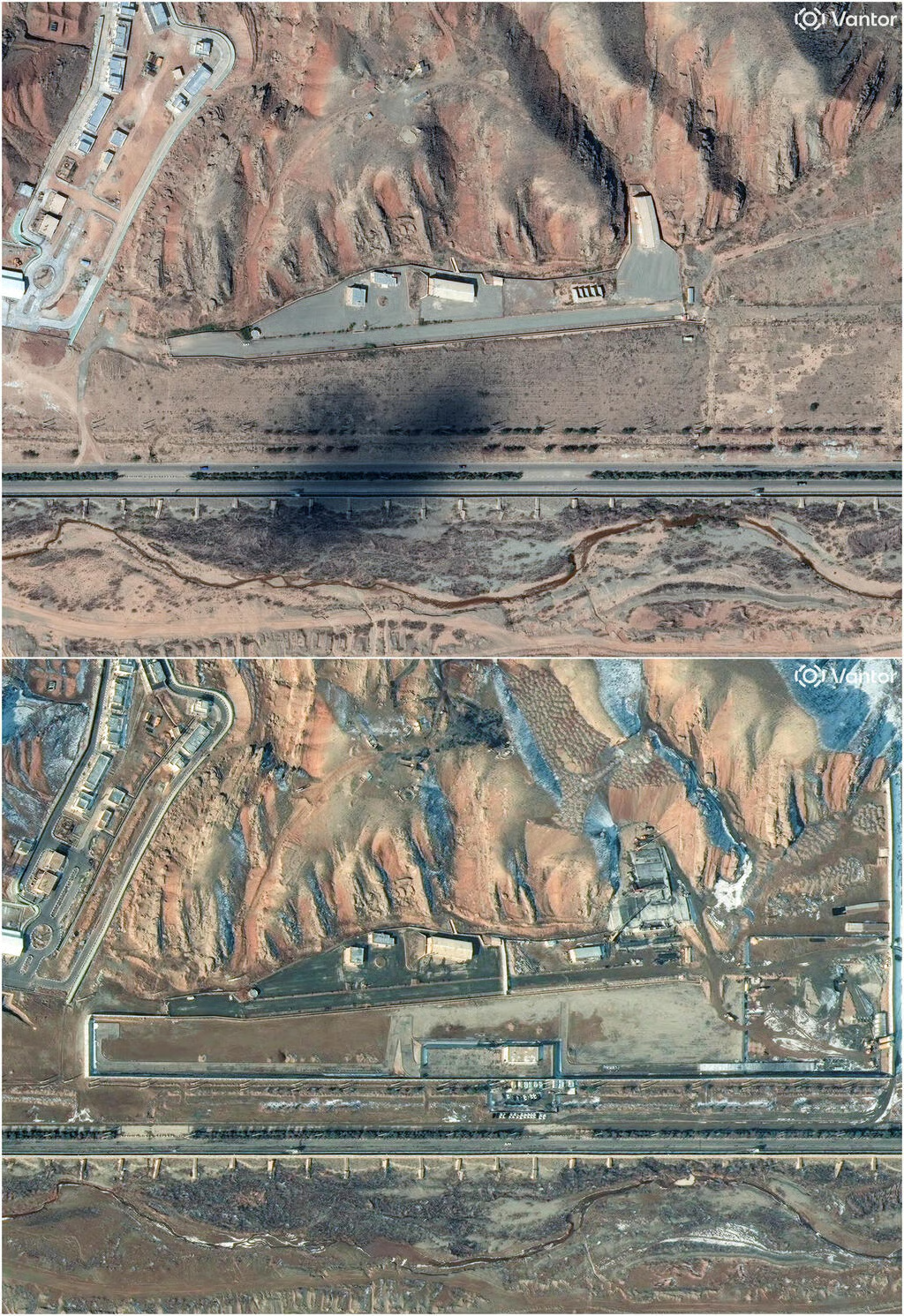 Before and after Israeli strikes on the military complex in Parchin (courtesy of ventor)
Iran has moved thousands of uranium-enrichment centrifuges into an underground tunnel network at Mount Kolang Gaz La, near the Natanz nuclear facility, according to a Wall Street Journal report published overnight Monday into Tuesday, citing Israeli and American officials. According to the report, Israeli intelligence passed the information to the United States and assessed that the centrifuges were transported after Operation "Rising Lion" and the 12-day war, during which Israel and the United States struck Iran’s three main nuclear sites.
According to the officials quoted in the report, the development is raising growing concern that Tehran is working to rebuild its nuclear program by relocating sensitive equipment to underground facilities that are extremely difficult to target. At the same time, the newspaper notes that moving the centrifuges there, if it in fact happened, does not necessarily mean Iran has already established a new uranium-enrichment facility at the site. It is possible that, at this stage, the location is being used mainly to protect the equipment.
Mount Kolang Gaz La, located near the Natanz nuclear facility, has for years been considered one of the most sensitive and secretive sites in Iran’s nuclear program. According to assessments, the tunnel system there is carved as deep as roughly 600 meters into granite rock—deeper even than the enrichment facility at Fordo—and is therefore considered one of the most difficult aerial attack targets.
Inspectors from the International Atomic Energy Agency (IAEA) have never visited the complex, because Iran has not declared it to be a uranium-enrichment facility. Since 2021, Tehran has claimed that it is only a plant for manufacturing and assembling centrifuges. In the West, however, officials have suspected for years that the site may also be used for uranium enrichment and other sensitive undeclared nuclear activity.
In recent weeks, satellite images have been published pointing to continued work at the complex and activity near the tunnel entrances. These developments come after the main facilities at Fordo, Natanz, and Isfahan were damaged in strikes carried out by the United States and Israel, reinforcing assessments that Iran is seeking to move part of its nuclear activity into better-protected facilities.
According to the report, Mount Kolang Gaz La was not considered a high-priority target during the strikes carried out by Israel and the United States against Iran’s nuclear program last year. Even so, Western officials and experts have warned for years that the tunnel network there could be used to store nuclear equipment, manufacture sensitive components, and even establish a small enrichment facility for producing fissile material.
U.S. President Donald Trump referred to the complex in recent days and threatened that it could become an American target: "Mount Kolang Gaz La is a possible target for one great, big, fat strike right through the front door," he said, adding that the United States is closely monitoring what is happening at the site.

