

Israel News
Israel Tells Supreme Court Foreign Countries Are Taking Fewer Gaza Patients
The state says it is not restricting medical evacuations, while petitioners are seeking access to Palestinian hospitals closer to Gaza
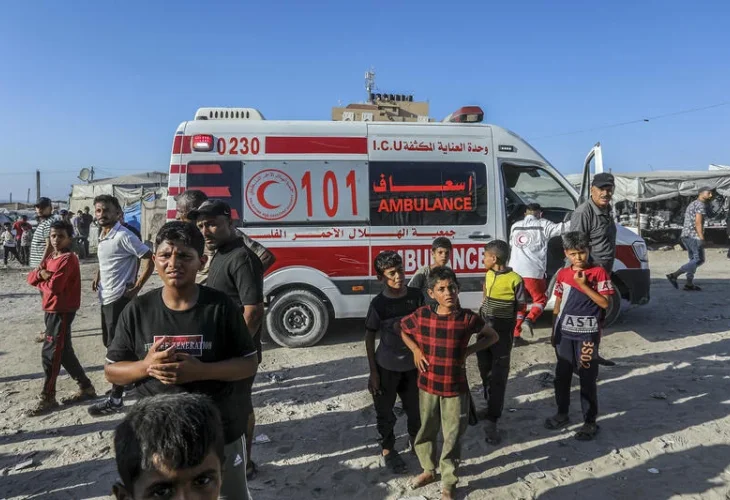 Gaza (Flash90)
The Israeli government told the Israeli Supreme Court during a hearing on Sunday that the sharp decline in medical evacuations from Gaza is being driven by a “significant decrease in the willingness of third countries” to receive patients.
The state said Israel is not imposing restrictions that prevent the existing evacuation framework from operating. Under that system, patients can leave Gaza once a foreign country agrees to receive them and the required security and transit approvals are completed.
The statement was submitted in response to a petition filed by five Israeli organizations seeking to restore medical referrals from Gaza to Palestinian hospitals in eastern Jerusalem and Judea and Samaria.
The petitioners are Physicians for Human Rights Israel, Gisha, HaMoked, the Association for Civil Rights in Israel and Adalah. They argue that relying largely on foreign countries has left thousands of patients without access to treatment available much closer to Gaza.
Approximately 18,500 patients require medical care unavailable inside Gaza, including around 4,000 children, according to figures cited by humanitarian organizations.
The government reportedly acknowledged that the current number of evacuations is only about 10% of the number of patients who received treatment outside Gaza before October 7, despite the increased medical need.
The evacuation process requires several stages. A doctor in Gaza submits a referral, Palestinian medical authorities determine the patient’s priority, and the World Health Organization seeks a country willing to provide treatment.
The receiving country must formally accept the patient and usually take responsibility for medical care, accommodation and the accompanying relatives. Israel then conducts security screening before approving transit.
The government’s statement does not mean that every country has stopped accepting Gazan patients. Egypt and several European and Arab countries have continued receiving limited groups, but the number of available places remains far below demand.
During Sunday’s proceedings, the judges reviewed classified security material without the petitioners present and declined to order an immediate change in policy.
“At this stage, at this time, we will not intervene,” the court said.
The judges requested an additional state update, leaving open the possibility that the issue could be reconsidered if circumstances change.
Members of the panel also questioned the role of foreign governments. Justice Yael Willner reportedly urged the petitioners to direct their “considerable efforts” toward convincing other countries to accept more patients.
Justice Yechiel Kasher questioned why governments that strongly criticize Israel were not doing more to receive Gazans in need of treatment.
The petitioners said the state’s policy leaves seriously ill patients waiting for care while nearby medical options remain unavailable to them.
Attorney Adi Lustigman cited the case of Hussein, a ten-year-old boy with leukemia who, according to the petitioners, died while waiting to access treatment.
“As long as the State is not required to even consider these requests, patients will continue to die while waiting for treatment that could save their lives,” she said.
The court is expected to review another government update before deciding whether further intervention is required.

