

World News
Nicaragua’s President Makes It Official: “There Will Never Be Elections Here Again”
Nicaraguan President Daniel Ortega has declared that his country will no longer hold elections. The announcement follows years of crushing the opposition, consolidating power, and steadily dismantling democratic institutions.
- Yuval Aviv
- | Updated
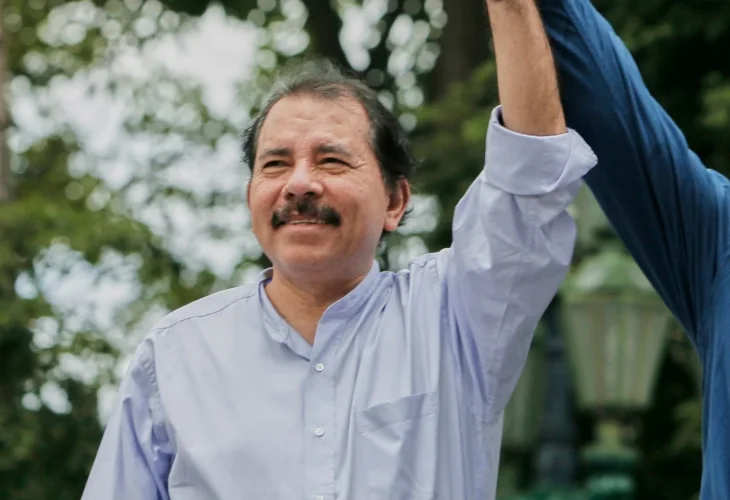 Ortega (Credit: shutterstock)
Daniel Ortega, the man who once led the revolution that toppled Nicaragua’s family dictatorship, has now declared that there will be no more elections in his country. At a ceremony marking the fall of the Somoza regime on Sunday, 80-year-old Ortega said: "Forget about it. There will be no more elections here in which they try to seize the government and power." Referring to the possibility of the opposition returning to power, he repeated three times: "Never again."
Ortega was one of the leaders of the "Sandinista National Liberation Front," the Marxist guerrilla movement that overthrew the Somoza dynasty, which had ruled the country for decades with U.S. backing. He led Nicaragua in the 1980s, but lost the 1990 election to Violeta Chamorro and handed power over to her. After several failed attempts to return to office, he won the 2006 election, and since 2007 he has ruled the country continuously.
During his years in power, term limits were abolished, state institutions were subordinated to the presidency, the courts and parliament were filled with his loyalists, and the independent media was nearly wiped out. At the beginning of 2025, parliament unanimously approved constitutional amendments that deepened the concentration of power in the president’s hands even further. As part of the reform, the presidential term was extended from five years to six, he was granted effective control over the legislative and judicial branches as well, and his wife Rosario was elevated from vice president to "co-president." It was also determined that if Ortega is unable to continue in office, she will inherit all of his powers.
This latest move is not seen as the starting point of the authoritarian regime. In 2018, protests against cuts to pension rights grew into a nationwide uprising against the government. Security forces and armed groups identified with the regime violently suppressed the protest, more than 300 people were killed, and hundreds of thousands were arrested or fled the country.
Ahead of the 2021 election, the regime arrested all candidates considered to have a real chance of challenging Ortega. Some opposition parties were outlawed, journalists and activists were imprisoned, and Ortega declared victory in an election that the U.S. and other countries defined as illegitimate.
Washington does not recognize his presidency and describes his government as a dictatorship. As part of sanctions imposed on the regime, more than 2,350 Nicaraguan officials and their family members have been barred from entering the U.S., among other reasons because of the death in custody of opposition leader Brooklyn Rivera.
At the same time, the regime continued expanding its internal crackdown. More than 5,000 organizations, including nonprofits, religious institutions, universities, and media outlets, have been shut down. Hundreds of regime opponents were expelled from the country, more than 500 people were stripped of their citizenship, and in some cases their property and homes were also confiscated. Just this month, the licenses of many lawyers were revoked, in what a U.N. expert described as "a purge of the legal profession." According to an organization monitoring the condition of detainees, at least 46 people are still being held for political reasons, while the government continues to deny the existence of political prisoners.
A U.N. report determined that the constitutional reforms turned parliament and the courts into bodies subordinate to the presidency, and that almost no basic safeguards remain in the country against arbitrary rule.
Alongside tightening control inside the country, Ortega has also moved Nicaragua further away from the U.S. and the West, while deepening its ties with Iran, Russia, China, and Cuba. In October 2024, Nicaragua cut diplomatic relations with Israel, accused it of "genocide," and expressed support for Iran and its allies in the region.

