

Parashat Va'etchanan
What Moses Teaches Us About Prayer in a Single Verse
The Ohr HaChaim uncovers four essential principles of prayer that can deepen your relationship with God and strengthen your faith
- Rabbi Moshe Sheinfeld
- | Updated
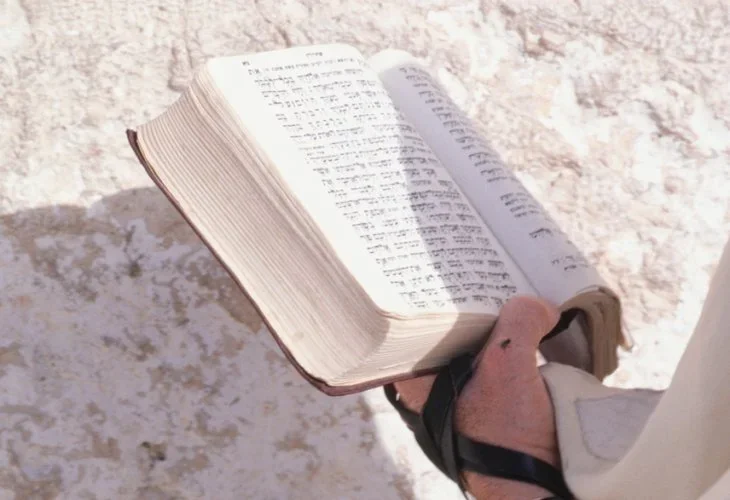
As Moses continues his farewell address to the Jewish people, he utters a verse that appears, at first glance, to be quite simple. Yet beneath its surface lie profound spiritual treasures that can enrich our lives and deepen our relationship with God. Moses says: "And I pleaded with the Lord at that time, saying..." (Deuteronomy 3:23). A simple sentence, isn't it? To us, perhaps. But not to Rabbi Chaim ibn Attar, the revered Ohr HaChaim. Looking deeply into these few words, he uncovers four foundational principles that teach us how to approach prayer.
Every one of us needs salvation in one area or another. We all pray for health, livelihood, peace, family, or spiritual growth. According to the Ohr HaChaim, Moses teaches us four timeless rules for effective prayer, all contained within this single verse.
Pray with Humility
The verse begins with the words, "And I pleaded." The Hebrew word va'etchanan comes from the language of supplication. When we stand before God in prayer, we must approach Him with humility, recognizing that He owes us nothing. The Ohr HaChaim compares us to a poor man knocking on someone's door. He knows the homeowner has no obligation to help him, yet he pleads with hope that the homeowner will graciously give him a gift out of kindness.
That is the proper attitude in prayer. If we approach God with the feeling that He owes us something, our prayers lose their essence. Prayer is not a demand but a humble appeal for Divine mercy.
Pray Only to God
The second principle is found in the words, "to the Lord." Our prayers should be directed only to the Source of all mercy. We do not turn to angels or to any other spiritual force. In His boundless compassion, God granted us the privilege of approaching Him directly, without intermediaries.
The Creator longs to hear the voices of His children speaking to Him personally, addressing Him in the second person as we say, "Blessed are You..." Prayer is a direct conversation between a child and his Father.
Recognize Special Moments
The third lesson comes from the words, "at that time." God accepts our prayers at every hour, in every place, and under every circumstance. Nevertheless, there are times that are especially favorable for prayer, moments known as et ratzon, times of Divine favor. King David wrote, "As for me, my prayer to You, O Lord, is at a favorable time." The Ten Days of Repentance are one example, as the prophet Isaiah says, "Seek the Lord while He may be found; call upon Him while He is near."
There are also personal moments of Divine favor. Whenever a person performs a mitzvah or overcomes temptation, he creates an especially auspicious time for prayer. Recognizing and taking advantage of these moments gives our prayers added power.
Be Specific
The final principle appears in the word, "saying." When we ask God for something, we should clearly explain what we need. Imagine a child asking his father, "Dad, I need new shoes. Could you please give me money so I can buy them?" That is how we should pray.
God certainly knows what we need. He examines every heart and understands us completely. Yet He wants to hear our voices. He established the world in such a way that we speak to Him openly, just as one friend speaks to another.
The Midrash illustrates this idea with a memorable story. A weary traveler prayed, "Please, dear God, send me a donkey." He never explained why he needed one. Moments later, a non Jew passed by with a donkey that had just given birth. The man forced the exhausted traveler to carry the newborn donkey on his shoulders. His prayer had been answered, but certainly not in the way he had intended.
The same principle applies to us. If we ask God for money without explaining why we need it, He may send us the money together with unexpected expenses such as dental work or a broken washing machine. It is worthwhile to specify our needs. This is how the Ohr HaChaim explains this remarkable verse.
Another Perspective on "At That Time"
There is another powerful and highly relevant interpretation of the words "at that time." Moses emphasizes that he prayed at a very specific moment. What moment was it?
Parashat Va'etchanan is always read around Tu B'Av, and this is no coincidence. The Mishnah teaches, "There were no greater festivals for Israel than Yom Kippur and Tu B'Av."
One of the events commemorated on Tu B'Av was the end of the decree that the generation of the wilderness would die before entering the Land of Israel. We all know that Tisha B'Av, our national day of mourning, marks the sin of the spies. Because the Jewish people cried without cause and rejected the Promised Land, God decreed that the generation between the ages of twenty and sixty would die in the wilderness.
The Midrash describes a remarkable annual event. Every year on the night of Tisha B'Av, each member of that generation dug his own grave by God's command and lay down in it overnight. By morning, fifteen thousand had died, while the rest emerged alive. Imagine those nights: the tears, the farewells, and the uncertainty as families embraced one another, wondering who would still be alive by sunrise.
Finally, in the fortieth year, only the last fifteen thousand people remained. On the eve of Tisha B'Av, they entered their graves convinced that this time they would all die. There was no longer any possibility that someone else would take their place. They were the last remaining members of that generation.
Then something extraordinary happened. Morning arrived, and every one of them was still alive. Moses assumed they had miscalculated the calendar, so they waited another night. Again they entered their graves, and again they survived. This continued until the fifteenth of Av, when the full moon made any mistake impossible. At that point Moses realized that the decree had been annulled, and the nation erupted in joy. That is one of the reasons Tu B'Av became a day of celebration.
The Prayer That Changed History
Is this merely an inspiring historical account, or does it contain a message for us today?
Rabbi Yechezkel Levenstein offers a remarkable insight. Why were these final fifteen thousand spared? Why was the decree lifted specifically for them?
It is explained that this was the first time they prayed with complete sincerity. In previous years, everyone feared he might die, but each person also knew that only fifteen thousand would perish. Deep down, there remained the possibility that perhaps he would survive without prayer. The final year was different. Every one of them knew that all hope was gone, and there was no one else to rely upon. Only God could save them. Their prayers emerged from complete dependence upon Him alone. Prayer offered with that level of faith and sincerity breaks through every barrier.
When Moses witnessed a Divine decree being overturned through prayer, the first thing he did "at that time" was pray that his own decree, preventing him from entering the Land of Israel, might also be rescinded. This is the deeper meaning of the verse, "And I pleaded with the Lord at that time." The Sages teach that had Moses continued praying, his request would ultimately have been granted. God therefore told him, "Enough for you. Speak to Me no more about this matter." (Deuteronomy 3:26).
The Lasting Lesson
Let us carry this precious teaching with us. Let us approach God with humility, pray only to Him, recognize and seize moments of Divine favor, and speak honestly and specifically. Above all, let us pray with the unwavering awareness that He alone has the power to help us. Such prayer has the strength to change reality.
To conclude, Rabbi Chaim of Volozhin writes in Nefesh HaChaim that there is a wonderful spiritual remedy capable of removing harsh judgments and negative influences from a person's life. When someone firmly establishes in his heart that God alone is the true power in existence, that no other force possesses independent authority, and wholeheartedly binds his thoughts to the Master of the Universe alone, God Himself removes every opposing force, leaving nothing with the power to harm him.
May we all merit to pray with humility, sincerity, clarity, and complete trust in God, and may our prayers be answered with mercy and blessing.

