

World News
WSJ Report: The Deadly Missile Iran Used in the Strike on the U.S. Base in Jordan
Experts believe Iran used one of the most advanced missiles in its arsenal to hit the American base in Jordan. At the same time, officials in the U.S. are pointing to erosion in regional air defense systems.
- Yuval Aviv
- | Updated
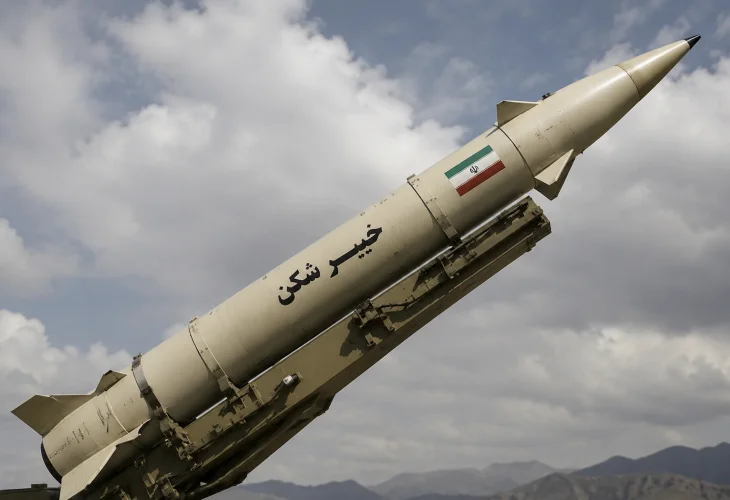
The deadly Iranian attack on Muwaffaq Salti Air Base in Jordan, in which three American soldiers were killed, was carried out using one of Tehran’s most advanced and lethal ballistic missiles, according to a report published overnight Tuesday into Wednesday in The Wall Street Journal. According to the report, the attack underscores that despite waves of U.S. and Israeli strikes against Iran’s missile infrastructure in recent months, the Islamic Republic still retains significant launch capabilities and may even be continuing to improve them.
According to assessments by military experts quoted in The Wall Street Journal, the attack carried out on Friday involved the medium-range ballistic missile "Kheibar Shekan." It is considered one of the most advanced missiles in Iran’s arsenal and is stored in vast underground facilities known as "missile cities." These facilities were targeted in prolonged U.S. and Israeli strikes during the fighting in March and April, but according to the report, Iran succeeded in reopening some of the entrances and resuming operations there.
The "Kheibar Shekan" missile, which entered service in 2022, is a ballistic missile with a range of at least 1,500 kilometers. It is powered by solid fuel and equipped with a satellite guidance system. Iran claims it carries a maneuverable warhead designed to help it evade air defense systems. The missile has previously been launched at Israel during earlier rounds of fighting.
In a video released in recent days, the Islamic Revolutionary Guard Corps claimed that the latest attacks also involved the ballistic missiles Fattah, Zolfaghar, Fateh 110, and Qiam, alongside Paveh cruise missiles and Shahed drones.
Brig. Gen. (res.) Ran Kochav, former commander of the Air Force’s air defense array, estimated in a conversation with The Wall Street Journal that the rise in the number of missiles penetrating defense systems stems, in part, from the damage sustained by radar and air defense systems in the very early stages of the war. According to him, radar systems and air defense batteries were hit both in Jordan and in other Gulf states, affecting interception capabilities.

